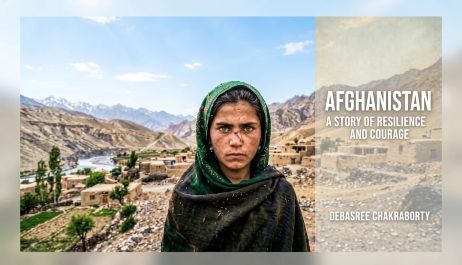
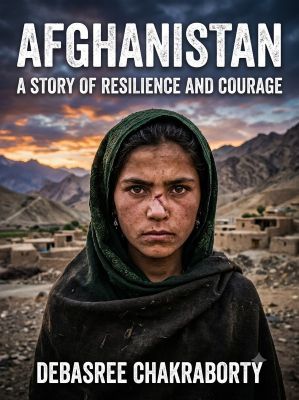
After twenty years in American newsrooms, Afghan-born journalist Nadia steps off the plane in Kabul with a single, urgent mission: to uncover the untold stories of her homeland’s forgotten daughters. Traversing a landscape of scarred palaces, dried rivers, and veiled shadows, her journey leads directly to the formidable walls of Badam Bagh Women’s Prison. There, amid the dust of a broken past, she prepares to face the raw, unyielding reality of the women left behind.
A Novel by Debasree Chakraborti
Part-1 of Chapter-2
 The long shadow of the gate of Badambagh Women’s Correctional Facility stretched across the road. Light from within the compound spilled onto the dark street. With a soft shuffling sound, Alem and Abesh made their way along the deserted road. Long plastic bags hung from their shoulders. The bags were much larger than their small bodies, dangling behind them and scraping against the road as they walked.
They stopped in front of the enormous gate and looked up at it for a moment. The towering shadow of the gate swallowed them completely. They were no longer visible.
Their eyes were fixed on a blue dustbin with a plastic lid placed beside the gate. Abesh walked up to it, lifted the lid and peered inside. He took something out and slipped it into his own plastic bag.
Then the two boys resumed their journey. Their bodies were growing numb with exhaustion after a long day’s work, yet they kept walking. Alem scratched his head with his left hand. He was terribly sleepy tonight. His body felt almost paralyzed with fatigue.
Through the darkness of the deserted street, childhood itself trudged forward, exhausted and helpless.
As they walked, one of their unsteady feet struck something. It went flying and landed some distance away. In the silence of the night, the sound of a tin can rolling along the road echoed through the darkness.
Their unsteady feet hurried after the sound. After walking quite a distance, they finally found the can by groping around in the dark. The hand that picked it up came into contact with the spit and phlegm lying on the road. They wiped their hands on their clothes and continued walking.
Ahead, the light from Rahim Chacha’s garage fell across the road. Inside, the final preparations for closing the garage were underway. The boys stopped at the spot where the light from the garage reached the street.
From inside, Rahim Chacha called out through a cloud of bidi smoke,
“Beta Abed!”
Abed was washing his hands and face in the water kept in a bucket. He knew why Rahim Chacha called him that way and what he wanted. Quickly picking up his cloth bag and slinging it over his shoulder, Abed hurried out of the shop.
Now Abed, Abesh and Alem began walking together.
Dogs were barking along the road. But this particular dog knew the boys, so it did not bother them. Its shadow fell upon the wall of a mud house. Following the dog, they eventually reached their home.
A light was burning inside the mud house, its glow spilling through a narrow gap in the nearby window and falling into the courtyard.
Abesh stepped forward and knocked on the door. It opened almost immediately.
Abesh’s Ammi came out and took something from his hands. The other two boys handed her their collections as well. Then they headed towards the bathroom.
Offering thanks to Allah, their mother carefully put away her sons’ earnings from the entire day inside a trunk.
She began serving chicken and biryani on plates for her sons. How many mothers were fortunate enough to have sons like these? Nasima wondered silently. Allah blessed so many mothers with sons, but how many were lucky enough to have sons like hers?
She looked at her own hands and then thought to herself: Whatever misfortune the Almighty might have written in her destiny, she had, after all, shaped these three sons with her own hands.
A candle was burning in one corner of the kitchen. Three shadows appeared on the kitchen wall—three figures with their heads covered in scarves.
Nasima pushed the plates of food towards her sons.
Then she asked, “Abed, is your stomach still hurting?”
Abed had already begun eating as soon as the food was served. He looked up and replied, “Yes, Ammi. Today, while removing a tyre at the garage, I had to put a lot of pressure on my stomach.”
Ammi said, “You’re still new to this work. You’ll have this problem for a few days. Everything will be all right after that.”
Abed replied, “Yes, Ammi.”
Nasima noticed Alem smiling mischievously. Even though her sons were away from her throughout the day, this was the time when they shared all the little incidents and stories that had accumulated over the course of their day’s work.
Something must have happened today. Otherwise, why would Alem be smiling like that?
Nasima knew her sons could never keep anything to themselves for very long.
She said, “Come on, my son, tell me what happened. Otherwise, Ammi will be very upset.”
Abesh pinched Alem, who let out a little cry of pain.
Then Alem blurted out, “Ammi, Abesh bought a pair of sunglasses today. He wore them while collecting rubbish all day long!”
A few wrinkles appeared on Nasima’s forehead. The smile vanished from her face. She listened silently to what her son had just said.
When the boys had finished eating and stood up to wash their faces, Nasima called out to them from behind. All three turned around.
Addressing her sons, she said, “Your hair has grown quite long. Have you even noticed? Today you buy sunglasses, and tomorrow you’ll be walking down the street with a scarf covering your head!”
The boys were old enough to understand the meaning behind their mother’s words. Every word struck the one at whom it was directed like an arrow. Abesh’s face turned crimson with embarrassment.
Nasima picked up the plates, deliberately making them clatter against one another. In the silence of the house, the sound of utensils had a terrible effect on the mind. It was the most frightening form of punishment in a mother’s reprimand. Without turning around, as she continued putting away the dishes, she said,
“Tomorrow morning, the very first thing you will do is go and get your hair cut. Understood?”
All three boys answered together, “Yes, Ammi.”
Nasima turned around again and said, “Take those scarves off your heads.”
Abed tried to explain, “Ammi, it’s cold, that’s why…”
Before he could finish, Nasima raised her finger and said sharply, “I did not raise you to keep your heads buried beneath hijabs.”
Then she looked directly at Abesh.
“If someone chooses this life of their own free will, they alone will be responsible for it. And if you have too much cloth to spare, then from tomorrow onwards, tie it between your two legs before going to the garage. It might come in handy there.”
Overwhelmed by shame and disgust, the boys went off to wash their hands.
After an entire day of hard work, there was something deeply comforting about returning to their room and lying down on the bed. The bed had a sweet, familiar smell that enveloped the body in a profound sense of happiness.
In the dark room, a little light filtered through the gap in the curtains and fell upon the glass window.
Every month, around this time, Abed suffered terribly from stomach pain. He would groan continuously throughout the night. Abesh felt miserable watching him suffer. Sometimes, Abesh would fill a bottle with hot water and press it against Abed’s stomach. It brought him at least some relief from the pain.
Alem was different. He had adapted himself beautifully to the circumstances. He never seemed to have any difficulty. Abesh often wondered whether life would have been so much easier if only he could be like Alem. Then perhaps there would be no problems at all.
Long after the night had settled in, Abesh remained awake. Sleep never came easily to him after dark. He could not understand why, despite the bone-crushing exhaustion of an entire day’s labor, he still found himself unable to sleep.
It was during these hours that he felt completely himself.
He walked towards the window and gently moved the curtain aside. His reflection appeared on the glass.
What a beautiful figure!
Oh Allah! Such a beautiful body is surely a blessing reserved for the fortunate.
Abesh took a broken mirror out of his collection bag. He had found it one day while clearing out a dustbin.
How many mirrors did people own? When they bought a new one, they simply threw away the old one because it had lost its value in their eyes.
But this single broken mirror was so precious to Abesh.
It was nothing less than a magical mirror, one that, under the cover of night, freed a cursed princess from her enchantment and restored her to her true form.
The light from the street fell upon the face in the darkness. The moment Abesh held the mirror before his face, the radiant beauty of Abesha seemed to spread all around.
Abesha took a blue scarf out of the collection bag and draped it around her head.
Oh Allah! What beauty! She looked like a heavenly hoor descended straight from Jannat.
For the past three months, the boys had not had their hair cut. Alem had left his hair untouched because his elder sisters had not cut theirs either. But Abesha had deliberately allowed her hair to grow a little longer.
Taking a comb, Abesha carefully parted her hair down the middle and arranged the scarf neatly over her head. Then she placed a small dot of kohl on her cheek.
Fireflies began settling on the glass window, their tiny lights flickering on and off in the darkness.
For a few precious hours each night, it seemed as though Jannat itself descended upon their little room.
Somewhere in the distance, there seemed to be a gathering filled with music. A beautiful melody drifted through the night and reached her ears.
Abesha spent the entire night savouring her womanhood in this way.
But with the arrival of the morning light, she would once again have to become Abesh, just as Ammi had ordered. She would have to get her hair cut, sling the collection bag over her shoulder and step out into the world once more.
Many Afghan girls like Abesha are forced to carry the burden of this abnormality throughout their lives.
All three of Nasima’s children were girls. After the birth of their third daughter, Nasima’s husband, Azad, had been utterly devastated. Nasima had tried to console him, assuring him that this time she would give him a son.
Sometime later, Nasima went into labor again. The pain was relentless. What unbearable agony it was! Azad brought a midwife from the military hospital to attend to Nasima during childbirth.
He spent the entire night sitting on the veranda, anxiously waiting for the delivery. Watching Nasima endure such excruciating pain, Azad believed that Allah had finally heard his prayers. This time, surely, he would have a son.
And that day, the Almighty did not disappoint him.
With the first light of dawn, Nasima gave birth to a beautiful, healthy baby boy.
That day, Azad distributed shir pira and jalebis throughout the neighborhood. His happiness seemed to know no bounds. For two whole months, celebrations continued in Azad’s little earthly paradise.
But two months later, one night, the baby developed a dangerously high fever. Neither the medicines prescribed by the doctor nor those given by the traditional healer seemed to work. Abdullah Hakim, the neighborhood’s traditional physician, said that the fever would not subside for at least two weeks. But keeping the baby alive for those two weeks itself seemed almost impossible. The child could be fed nothing except his mother’s breast milk. The hakim had strictly forbidden even goat’s milk.
Nasima herself was barely getting enough food to eat, and her breasts were not producing sufficient milk. How could she possibly feed her son and save his life? It became an agonizing question.
But Azad’s son could not be saved.
On the third day of the fever, the little boy breathed his last.
When Azad went to bury his son, Nasima sat at home with her three daughters beside her. That day, she made a firm resolve. She would raise her three daughters just as she would have raised sons. These three girls would become equal to three men.
That very night, the names of Abesha, Alema and Abeda were changed to Abesh, Alem and Abed.
When neighbors and people from the community taunted her children, calling them Bachcha Posh, Nasima held on to one conviction deep in her heart: one day, when her three daughters had completely grown into men, no one would ever taunt them again.
Every day, after the boys left for work, Nasima cleaned the glass windowpanes. She loved seeing the glass sparkle. Through a clean window, the outside world appeared much clearer.
And what did that outside world consist of? A mud courtyard where chickens wandered about, the road in front of the house, and, across the road, the house of Afron.
As she wiped the windowpanes, her eyes would often linger on Afron’s house. Afron was the first Bacha Posh in the neighborhood. She was now studying in college. Nasima had watched her grow up, little by little. Today, if anyone looked at Afron, they would never guess that she was a woman. Her movements, her mannerisms, her entire demeanour were those of a man.
At this hour, Afron would usually be leaving for college. She rode there on a bicycle, just like the boys.
As Nasima continued cleaning the window, she could hear Afron’s voice. On her way to college, Afron would joke and laugh with her mother. Nasima felt that even her voice had gradually begun to sound like a boy’s.
After Afron left, her mother would remain standing in front of the doorway for a while. Her face was covered, so it was impossible to tell what she was thinking. But Nasima could imagine how her heart must be swelling with pride.
Nasima’s circumstances were not like theirs. That was why her boys had never been able to pursue their education the way Afron did.
During the war, an explosion had completely destroyed their little one-room mud house. Fortunately, none of them had been inside at the time. Later, the government had helped them build this house.
It was a mud house, but its windows were made of glass. Through the glass, the world outside appeared remarkably clear. With the passage of time, even houses seemed to be changing their old clothes, taking on a new appearance.
The mornings, at this particular hour, belonged entirely to Nasima. Once Azad and the boys had left the house, she finally had time to herself, time to think about so many things.
After cleaning the windows, she began sweeping the room. As she moved the broom across the floor, her thoughts drifted back to her childhood, to her mother, and to those terrible days she had spent in a refugee camp in 1986.
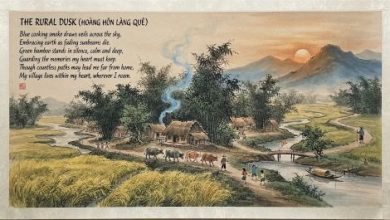
Their home had been in Chakari, in Khaki Jabbar district. Everything seemed like a picture from a distant past now.
She could still remember that yellow dome standing on the uneven, rocky expanse of yellow earth. Its golden colour seemed to pierce the vast blue sky, merging with the heavens themselves.
Colorful kites of every imaginable shade floated across the sky above her. Red, blue, green—so many colours against the vast azure expanse. Nasima would watch them through the narrow opening of her black veil, and everything seemed like a dream to her. She longed to reach out and touch those little paper birds with her hands.
As a child, while reading the Quran, she had learnt that men and women were garments for one another, complements to each other. They came into this world with equal rights. Yet, despite the words proclaiming equality, girls like Nasima had no right to fly kites.
Sometimes, she felt an overwhelming urge to run across the entire open landscape, chasing those kites wherever they went. But stepping out from behind her black veil was never that easy.
Nasima took off the scarf covering her head, held it in her hand and walked around the entire room once.
This was her little moment of peace, her own private paradise—a place where she could live on her own terms, and where she could even reshape her children’s lives according to her wishes.
Nadia woke up unusually early that morning. Every word Adira had spoken the previous night, every trace of her pain, emotion and feeling, was still vividly alive in Nadia’s mind.
As she opened her eyes that morning, one thought struck her: it would not be wrong to describe Badambagh Correctional Facility as an encyclopedia of women. Each chapter contained the life story of a different woman. Every possible human emotion lay hidden within its pages.
Nadia would have to study each chapter carefully, with complete attention. All the answers she had come looking for were hidden somewhere within these walls. (Continues)
_______________

Debasree Chakraborty is a renowned novel writer of Bengali language. Based in Kolkata, West Bengal, India, she has done Master’s in Modern History from the Kolkata University, and authored some thirty books, mostly the novels, with historical perspective and themes. Her novel is ‘Maharaja Dahir’ that covers the history of Sindh from 662, the year of first attack on Sindh by the Arab armies till date, was published last year and translated by Nasir Aijaz into Sindhi language. Her new novel “The Last People of Mohenjo Daro” in Bengali language, has recently been published.