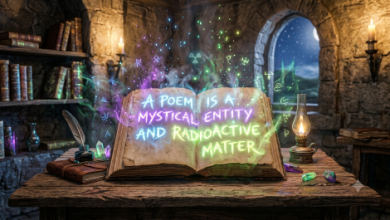
Dr. Jernail Singh Anand, President of the International Academy of Ethics, discusses the vital role of literature and the International Academy of Ethics in combating modern moral complacency.
Speaking with Dr. Manjeet Rathee, he explores how universal poetic consciousness and ethical education can restore humanity’s deep cosmic responsibility.
Dr. Anand, how do your epics challenge the moral complacency of contemporary society?
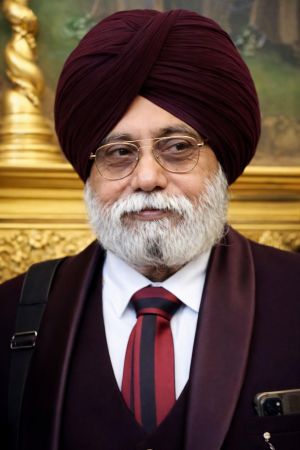
Literature has been perceived as a moral agency, which gives an ethical direction to social forces. But, of late, due to various movements in literature, committed writing is looked upon as second rate. Writers are not expected to be didactic, and write like preachers. Literature, on the other hand, is expected to remain neutral, and not give any moral instruction. Such a feeling is the result of the increasing sense of freedom and individuality among the people, and even among writers who want to assert their individuality against social forces, which shape the running narrative. This is the world of the wise, in which, it is expected, everyone knows enough, thanks to the mobile phone. But, in this atmosphere of the non-commital, we witness a consistent downfall in moral standards. The passion of success has obliterated all the boundaries between the desirable and the undesirable. In fact, our upcoming generations have no idea where the right ends and the foul begins. In such a scenario, if we do not apply brakes, we are hastening the fall. That is why I believe only Literature can do this arduous work of making the people realize the dangers of moral neutrality. We have set up an International Academy of Ethics, and introduced the Ethical Alphabet. We also have on our agenda that during the prayer time, all the students and teachers should read out in a single voice that they will not let their knowledge be misused for bringing harm to the society. It is only a reminder to remain committed to the ideals of humanity.
DECLARATION
I promise that I shall never use the knowledge I gain from my education to harm the society in any way.
As the founding President of the IAE, what new framework have you proposed to address the ethical dilemmas of the 21st century?
The IAE is trying to indulge in dialogue with people who influence large tracts of humanity. It is by word of mouth, and inspiration that we are trying to bring more and more people into the ambit of the Academy. The Academy stands for introducing the idea of Ethics in the curriculum of very small kids. For which, an ethical alphabet has been designed. We have several ambassadors who are spreading the word around. Good sense, right thinking, helping others, and compassion are the hall marks of ethical living. We want to create a happy atmosphere in society, and remove its toxicity with a spirit of doing the right. Articles by scholars and discussions are organized mostly online. Some international conventions are also held which create a favourable impact on the society, by altering their thought patterns. IAE believes in reformatting the minds of the young people so that they usher in a new brave world of beauty, joy and shared prosperity.
In what ways does your concept of “poetry as an instrument of planetary consciousness” contribute to global dialogue on literature and spirituality?
No doubt a poet is placed in a specific set of circumstances which are peculiar to his existence, yet, the feed of poetry comes from the water under the earth which has unitary cosmic consciousness, and from the skies, which know no human borders. Even birds do not bother about our borders at the line of control. Man, with his limiting processes, erects borders which define him, but the greatest cosmic activity, death, just throws all his borders open, and he meets the eternal as soon the soul leaves the death-trap, i.e. human body. Thus, poetry belongs to the cosmos, and unless it is written under social diktats, poetry in its original avatar addresses the cosmic reality, and tries to project human condition in the context of the divine. This helps poetry to rise above the divisions of human perception, and blend into a universal address to the cosmic forces, which necessitate this planetary consciousness from its poets.
How does your multidimensional work based on return to ethics, illuminate the responsibility of individuals in a globalized world?
When we arrive on the earth, we are accompanied by a package of a thousand benedictions, which help us grow into decent human beings. What is expected back from us? If somebody gives us some money, will he not expect anything from us? It is not commerce, I call it cosmic responsibility. We are not here on earth simply to learn and earn our livelihood. That is a very limiting view of human life. Man is considered a better organism than birds, animals and vegetation, though man’s rashness with regard to gaining knowledge and then using it for destroying nature and his own self, makes me think that he lacks the basic sense of dignity and responsibility which birds and animals possess aplenty. This awareness of cosmic responsibility, that man is related to the creation in more ways than one, that he derives his subsistence from nature, and to nature and God he must return their kindnesses, we wish to impart this sense of belonging and responsibility to man. IAE believes that man’s existence on the earth is not morally and ethically neutral. Our education which is increasingly becoming ambiguous so far as our moral responsibilities are concerned, is causing large scale damage to human stuff.
What does the wide range of international honours, from Serbia to Italy, Germany, Russia and India – reveal about the universal appeal of your literary and ethical vision?
As I said earlier, poetry possesses the power to transcend the immediate and interact with the ultimate [planetary consciousness]. Just as water below the earth, and the air above it do not accept any classification, poetry too needs no labels, no nationalities. It represents the human sentiment which is the same everywhere. It deals with issues of our existence on the earth, as well as beyond. This transcendental element of my poetry, appealed to the people from different climes, who possessed a similar poetic consciousness. That is why, my poetry found an echo and recognition from several countries as you have mentioned. In my opinion, just as in addition to being individuals, that too highly defined, poetically speaking, we, at the same time, are cosmic citizens, and if our writings are transfused with universal empathy, they will be admired by people situated far away from our national borders. The translation of my poems into Chinese, Vietnamese, Greek, Arabic, Persian, French, Italian, Serbian etc. only indicates universal acceptance of my poetry. For which, I am thankful to the Muse.
***
Dr. Jernail S. Anand, with 200 books to his credit [20 epics] is a Chandigarh-based polymath, and a vital architect of the 21st century ethical literature whose seminal work ‘Lustus: The Prince of Darkness’ challenges the moral complacency of our era. Founding President of the International Academy of Ethics, and Laureate of Charter of Morava [Serbia], Seneca [Italy], Franz Kafka [Germany, Ukraine, Czech Rep] and Maxim Gorky [Russia], his name is inscribed on the Poets’ Rock in Serbia. He is an Honorary Member of the Serbian Writers Association, Belgrade.
Email: anandjs55@yahoo.com.
Bibliography: https://sites.google.com/view/bibliography-dr-jernal-singh/home
https://share.google/QtiWrcFr7Sca7v0qC
Read: Poetry is not a Romantic Luxury
______________________
 Dr. Manjeet Rathee is a retired Senior Professor, Department of English, Maharshi Dayanand University, Rohtak, India. She specializes in Media and Gender Studies, has contributed more than 60 research papers & Poems in National, International Journals; Published 7 books, including 4 collections of poems in Hindi and edited 3 books. She is actively involved in Community participation/Outreach Programs related to non-formal education.