Throwing away all past wisdom just because it is old is just as foolish. A tree that cuts off its own roots so it can grow faster toward the sun will not grow—it will die.
By Noor Muhammad Marri Advocate | Islamabad
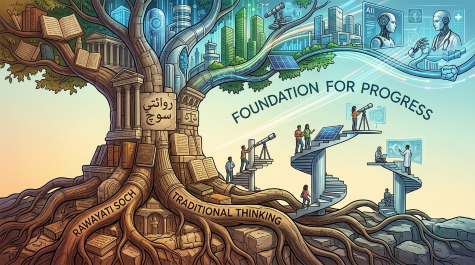
Today, almost everyone talks about leaving old ways behind to make room for progress. In Sindhi, this old-fashioned mindset is called Rawayati Soch (روائتي سوچ), which means “traditional thinking” or “conventional thought.” Most of the time, people use this phrase as an insult. They use it to describe someone who is stubborn, backward, or afraid of modern ideas.
We are told that to build a bright future, we must break away from the past. But this idea misses a simple truth: no new idea comes out of nowhere.
Every single breakthrough we celebrate today—whether in law, science, medicine, or technology—is built directly on top of old foundations. Progress does not drop out of thin air. It grows like a tree out of the rich soil of past human experience. When you look closely at any modern invention or idea, you will find Rawayati Soch underneath it, acting as the foundation that keeps it standing.
Law and Governance: Building on Old Justice
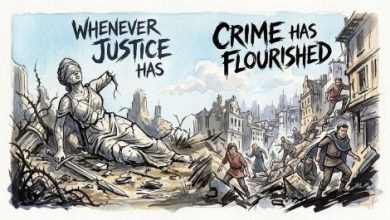
When we look at our modern legal system, we like to think it is entirely fresh and smart. But any lawyer will tell you that modern law sits on very old ground. Governments do not invent justice from scratch; they update principles that have worked for centuries.
Take written law, for example. The idea that laws should be written down and apply equally to everyone—rather than whatever a king feels like doing on a given day—goes back thousands of years to ancient Mesopotamia and the Code of Hammurabi. Later, the Roman legal system created basic rules for contracts, property, and civil rights that are still the backbone of laws across Europe, Asia, and Latin America today.
Our courts also rely on past legal decisions to settle new arguments. This is an admission that the accumulated wisdom of past judges is a safer guide than whatever emotion is popular today. Even international rules of war and diplomacy draw heavily on early natural law philosophies and early Islamic legal traditions. When we update a law today, we don’t throw out the old books; we read them again and apply their lessons to modern life.
Philosophy and Thought: An Unbroken Conversation
In the world of ideas, the illusion that everything new is completely original is even weaker. Modern discussions about democracy, human rights, and political freedom are not brand-new ideas invented out of thin air. They are part of a conversation that has been going on for thousands of years.
When European thinkers wrote about democratic rights and social agreements, they were responding directly to moral questions first debated in ancient Greece by Socrates, Plato, and Aristotle. Furthermore, those ancient Greek texts only survived because scholars during the Islamic Golden Age—like Ibn Rushd and Al-Farabi—translated, preserved, and expanded on them.
Great thinkers throughout history have shown that human thought moves forward by taking old ideas, questioning them, and building something better out of them. Progress in human thought happens not by ignoring past thinkers, but by talking back to them and learning from what they got right—and what they got wrong.
Science, Architecture, and Medicine: Learning from What Came Before
The physical sciences show us most clearly how traditional foundations make modern advances possible. Science moves forward step by step, testing old ideas and making them bigger, not throwing them into the trash.
Isaac Newton put it best when he said, “If I have seen further, it is by standing on the shoulders of giants.” When Albert Einstein introduced his theory of relativity, he didn’t prove Newton completely wrong. Newton’s laws of physics are still what engineers use every day to build bridges, design airplanes, and launch satellites. Einstein simply built a larger room on top of Newton’s house.
In architecture, the highest skyscrapers use lightweight metals and smart computers to stay steady in high winds. Yet their basic weight-bearing rules—pillars, arches, and strong bases—were perfected long ago by ancient Roman, Persian, and Ottoman builders. Trying to build a skyscraper while ignoring the basic laws of architecture is a recipe for collapse.
In medicine, modern laboratories routinely look back to traditional remedies. Many modern drugs are developed by studying ethnobotany—the traditional herbal wisdom (Rawayati) passed down by indigenous communities over generations. The Nobel Prize-winning cure for malaria was found by studying ancient herbal formulas recorded centuries ago. Modern science didn’t replace that traditional knowledge; it tested it, proved it worked, and made it stronger.
The Past powers the Digital Future
Even our newest technologies are built out of old human materials.
The digital world running on our smartphones and computers relies on binary logic (zeros and ones). That system is based on formal logic rules written down in the nineteenth century, which themselves came straight from ancient Greek logic.
Even Artificial Intelligence—the most modern tool we have—does not have some magic, non-human brain. AI systems work by reading, analyzing, and learning from the massive collection of human history: our written books, legal cases, scientific papers, and art. In a very real way, AI is powered by digesting our collective past.
Reclaiming Rawayati Soch: A Foundation, Not a Cage
Why do people treat Rawayati Soch—traditional thinking—like something bad?
Criticizing old ways is fair when tradition turns into blind stubbornness. Doing things purely because “that’s how we’ve always done it” can trap a society. When traditional thinking is used to block fairness, stop learning, or protect injustice, it turns into a cage.
However, throwing away all past wisdom just because it is old is just as foolish. A tree that cuts off its own roots so it can grow faster toward the sun will not grow—it will die.
Real progress comes from knowing the difference between tradition as a cage and tradition as a bedrock. Rawayati Soch is simply the collected experience, trial, error, and wisdom of generations who came before us. By respecting that solid foundation while remaining willing to adapt and improve, we make sure our progress is real, lasting, and meaningful.
Read: A Radical Challenge to Modern Ethics
__________________
 Noor Muhammad, Advocate and Mediator, Islamabad