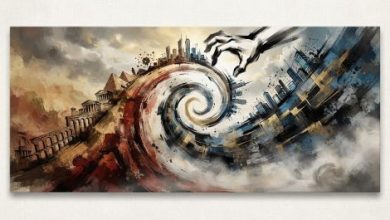
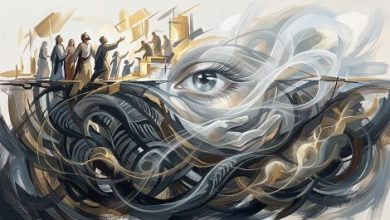
Beyond the habit of asking for personal boons lies the profound practice of prayer as self-abandon. True connection with the Divine begins when we shift our focus from selfish desire to selfless prayer for the entire cosmos.
Dr. Jernail S. Anand | India
Prayer as Self-Abandon
Prayer is a great way to connect with your Self and your own self with the great One. In every religion, prayers are offered after the evening holy chants, and people disperse for the night. We are told to pray to Gods when in extreme circumstances for divine help, where human help has exhausted all possibilities.
I believe prayer is self-abandon. We give ourselves away, shun our sense of pride to do something of our own, and then, appeal to the angels, now to step in.
The Problem with Boons
While praying, we often ask certain boons from gods, which are sometimes granted, and sometimes not granted, but it becomes a habit. Even after getting so many things, we add to our list more topics, and go on asking. Perhaps, man is meant to ask for boons from gods. And remains a supplicant all his life.
While thinking over praying for boons, a strange thought struck my mind, which changed my entire approach towards prayer.
Prayers are heard instantly and responded fast, when they involve the well-being of others. Prayers made for your own upliftment fall in the selfish category, and gods set them aside.
When somebody comes to our door, and asks for alms, how we look at him? A beggar. And often hurl him away. Though at times, we do give a small part of the fortune that angels have blessed us with. When we are asking gods, praying to them — give me this boon, give me that boon — Gods are fed up with our pestering, and they look at us as we look at beggars. Sometimes they give away something like alms too. But, as men, we belittle ourselves by asking boons for ourselves.
Why I say so?
Rizk, Detachment, and the Limits of Asking
We forget one thing. There is the concept of ‘Rizk’, which means the essential capital which God has earmarked for us. Now, if we are intelligent, we can expand on this capital. But if we are foolish, we will lose the ‘original’ amount also. As human beings, we are expected to be wise with our living capital, ‘saanson ki poonji’ — the wealth of our breaths. We come with limited breath. If we value it, we shall not waste it. This is the minimum awakened response expected from ordinary men, which is not coming in general, because men are prone to waste this capital on things which do not endure.
I am an ardent believer, and think that we are being monitored by the angels. And what we will get, is predestined. Only our efforts are required. Lord Krishna called it ‘detachment’. We need to do our job, our ‘dharma’, our action, and its results will follow, as desired by angels. We cannot say, two plus two should be four. It can be zero. It can be four hundred. So, what will be the fall out of our actions, is dependent on the will of gods.
Prayer for the Cosmos
So, where is the need to ask for boons for yourself? The best prayer is that is offered for the good of all. For the good of the earth. For the good of the universe. ‘Sarbat Da Bhalla’, as it is mentioned in the great Sikh scripture: Guru Granth Sahib. If we want to pray, let us pray for peace to the world, to the earth, to the vegetation, to the winds and to the cosmos. These prayers gods do listen and list us among the well-wishers of their creation.
Gods know what you deserve. It is often said: first deserve, then desire. It works in case of prayers also. How to deserve things? Working for them, sincerely and without any malice. If they come your way, well and good. But if you miss them, in spite of your labor, there should be no sorrow. Gods know what is good for us. So let your prayer begin with ‘May all beings be at peace’.
Read: The Dualistic Vision of Reality
_______________
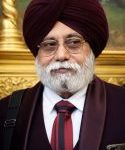 Dr. Jernail S. Anand, with 210 books to his credit [20 epics] is a Chandigarh-based top ranking author, whose seminal work ‘Lustus: The Prince of Darkness’ challenges the moral complacency of our era. He is founding President of the International Academy of Ethics, and Laureate of Charter of Morava [Serbia], Seneca [Italy], Franz Kafka [Germany, Ukraine, Czeck Rep] and Maxim Gorky [Russia] Soka Ikeda and Mahakavi Bharati (India) Awards, his name is inscribed on the Poets’ Rock in Serbia. Email: anandjs55@yahoo.com.