Restoring lost railway services and strengthening Pakistan’s place in regional and international trade
By Ramesh Raja
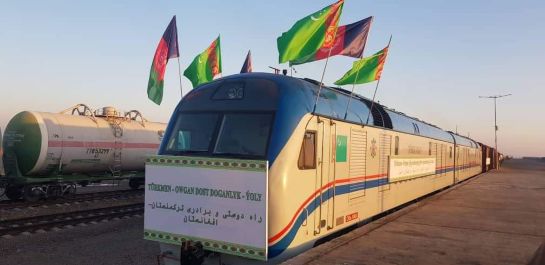
Afghanistan’s railway progress should be an eye-opener for Pakistan. On 28 September 2026, its 43-kilometre Khaf–Herat extension opened from Rozanak to Rabat-e Paryan at a reported cost of US$58.5 million. A less developed, landlocked country is building connections while Pakistan struggles to restore previously functioning lines. This contrast demands a serious response: restoring railway services and securing Pakistan’s place in regional and international trade.
The overall Khaf–Herat project stretches approximately 225–226 kilometers. Construction began around 2006–2007, and the initial connection to Rozanak opened in December 2020. The remaining 47-kilometre extension toward Herat Airport and its industrial area was contracted to Gamma Group in March 2024 for US$53 million. Iran financed the first three sections; Afghanistan financed the newly opened phase, built with Kazakh participation. These separate contracts should not be mistaken for one completed corridor.

Afghanistan did not previously have an integrated national railway network, but it was never entirely without tracks. A roughly seven-kilometer Kabul–Darulaman steam tramway existed in the 1920s. Short Soviet-era connections later reached Torghundi and Hairatan. The 75-kilometre Hairatan–Mazar-e-Sharif railway opened in 2011 with Asian Development Bank support. Afghanistan’s railway institution began as a department in 2004, became a directorate in 2009 and formally became an authority in September 2012.
Today, Afghanistan features in several overlapping transport arrangements. It joined the Central Asia Regional Economic Cooperation program, CAREC, in 2005. The Lapis Lazuli agreement, signed on 15 November 2017, links Afghanistan, Turkmenistan, Azerbaijan, Georgia and Turkey through multimodal transport. India, Iran and Afghanistan cooperate through the Chabahar transit framework. The proposed Five Nations Railway Corridor connects China, Kyrgyzstan, Tajikistan, Afghanistan and Iran. These initiatives offer options, although missing links prevent continuous railway operations across every proposed route.
Pakistan inherited the foundation Afghanistan is now trying to build. The first public line in its present territory opened between Karachi and Kotri on 13 May 1861, covering approximately 169 kilometers. The North Western State Railway followed in 1886. At independence in 1947, the western territory inherited approximately 8,122 route kilometers. The administration became Pakistan Western Railway in 1961 and Pakistan Railways in 1974. This inheritance excludes the separate railway system of former East Pakistan.

The 2025–26 Economic Survey reports 7,791 route kilometers, a net reduction of 331 kilometers against that inheritance. However, network length conceals service withdrawal. In August 2025, a Senate committee was informed that Karachi Division had 624 kilometers operational and 439 kilometers inoperative. While Afghanistan extends its reach, Pakistan has allowed established connections to fall silent. The loss includes suspended services, deteriorating infrastructure and diminished commercial relevance. Parliamentary replies identify road competition, obsolete narrow-gauge lines, inadequate investment, poor signalling and limited freight facilities.
Pakistan must turn its current projects into a credible recovery. The approximately 480-kilometre Karachi–Rohri section of ML-1 is being prepared with ADB support, with consultancy procurement and market engagement documented in 2026. The proposed 884-kilometre Rohri–Nokundi upgrade would support Reko Diq mineral transport. Thar coal connectivity includes approximately 105 kilometers of new railway toward Chhor; a Planning Commission statement placed the wider project at Rs53.7 billion. These are different packages with different stages of implementation, rather than completed achievements.

Pakistan’s official February 2026 restructuring plan places rail’s national freight share at approximately eight percent and proposes increasing it to 25 percent through modernization and private participation. That ambition requires practical reforms. Freight trains need published schedules, reliable locomotives, modern loading terminals and transparent tariffs. Karachi and Port Qasim should connect efficiently with inland dry ports. Gwadar railway development should proceed through realistic demand assessments and staged investment, ensuring that expensive infrastructure has commercially credible cargo.
Restoring once-functioning branch lines should become a joint federal and provincial responsibility. Decisions should consider agricultural markets, industrial demand and access for smaller towns, rather than passenger receipts alone. Each restoration should publish its cost, expected traffic and service obligations. This would connect railway recovery with local development while preventing politically attractive projects from becoming another permanent burden on public finances.
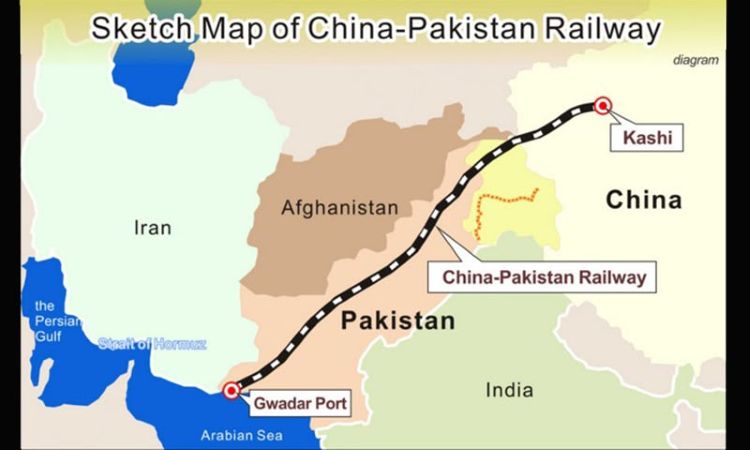
Pakistan must also secure a stronger regional and international position. The Uzbekistan–Afghanistan–Pakistan railway remains dependent on feasibility work, financing and operating agreements. Pakistan should settle border procedures, security responsibilities and technical arrangements before promising completion dates. Pakistan’s 1,676-millimetre gauge differs from neighboring railway systems, making transfer arrangements essential. Cooperation with Iran and Afghanistan should complement Central Asian access. Traders will choose routes according to reliability, total cost and border delays, rather than diplomatic declarations or geography alone.
The Railway Advanced Infrastructure Network program, RAIN, proposes GPS tracking, command centers and a 1,700-kilometre fiber network. Technology must accompany accountable management, protected maintenance budgets and independent safety oversight. Essential passenger services deserve transparent public funding, while freight should operate commercially. Afghanistan’s progress should prompt Pakistan to recover neglected capabilities and strengthen international connections. Its ports and railway inheritance remain valuable advantages, but advantages lose meaning when services fail. Pakistan must restore running lines, complete viable projects and offer dependable transit. Regional influence will follow cargo delivered reliably, rather than promises repeated indefinitely.
Read: British Infrastructure Legacy in Pakistan
____________
 Hailing from Gambat town of Sindh, Engr. Ramesh Raja, is a Civil Engineer, visionary planner, PMP certified and literary enthusiast with a passion for art and recreation. He can be reached at engineer.raja@gmail.com