Sindh should therefore consider legislation establishing equal inheritance rights for Hindu sons and daughters, strong protection for widows and mothers, safeguards for minors, protection against forced relinquishment, transparent property records and speedy dispute resolution.
Dr. Jaipal Chhabria
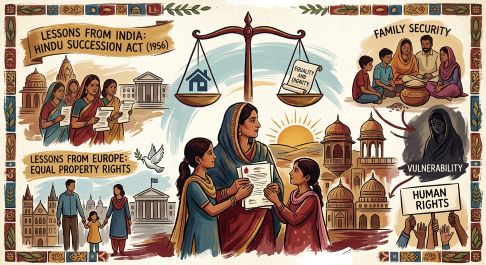
Inheritance is not merely a question of property; it is a question of equality, dignity, family security and human rights. For Pakistan’s Hindu minority, particularly in Sindh where a large Hindu population lives, inheritance disputes can create serious social and economic problems. Women, daughters, widows and children can become especially vulnerable when property rights are unclear or difficult to enforce.
Pakistan needs a modern, comprehensive and clearly codified Hindu Succession and Inheritance Law for Sindh, ensuring that every Hindu citizen—whether male or female—can inherit property without discrimination.
India provides an important example. The Hindu Succession Act, 1956, particularly after the 2005 amendment, significantly strengthened women’s property rights. Daughters were given equal coparcenary rights with sons in applicable joint Hindu family property. The traditional distinction that gave sons greater rights in ancestral property was substantially removed.
Pakistan should carefully study this model while developing legislation appropriate to its own Constitution and legal system.
The Situation in Sindh
Sindh has Hindu families whose property arrangements may involve agricultural land, residential houses, commercial property, businesses, bank accounts and other assets. However, the absence of one comprehensive and easily accessible Hindu succession statute can create uncertainty.
Marriage legislation exists for Hindus in Pakistan, including the Sindh Hindu Marriage Registration Act, 2016, but marriage registration should be accompanied by a clear framework for succession, property ownership and inheritance.
The objective should not be to create special privileges for Hindus. Rather, it should be to ensure that Hindu citizens have clear, predictable and enforceable inheritance rights consistent with constitutional equality and human dignity.
What Sindh Can Learn from India
India’s Hindu Succession Act provides several useful principles.
First, sons and daughters should have equal inheritance rights. A daughter should not lose her share simply because she is married. Marriage should never terminate a woman’s right to inherit from her parents.
Second, daughters should have equal rights in applicable ancestral or coparcenary property. The 2005 reform in India was a major step toward gender equality because daughters were recognized as coparceners on the same footing as sons.
Third, the law should clearly define the rights of widows, mothers, sons and daughters, reducing disputes over who inherits what.
Fourth, property rights should not depend on whether a daughter lives with her parents or lives separately after marriage. A daughter remains a daughter regardless of her marital status or residence.
Lessons from Europe
Europe does not have one single inheritance law. Different European countries have different succession systems. However, several European legal systems provide useful principles.
One important principle is protection of close family members from complete disinheritance. In countries with “forced heirship” or reserved-share systems, certain close relatives are legally entitled to a minimum portion of an estate.
Some European systems give the surviving spouse and children strong inheritance protection. In some systems, children and the surviving spouse inherit in equal proportions.
The lesson for Sindh is important: freedom to make a will should exist, but vulnerable close family members should also receive legal protection.
Recommendations for a New Hindu Inheritance Law in Sindh
- Equal rights for sons and daughters
The most important reform should be equality between sons and daughters. A daughter should receive the same statutory inheritance share as a son.
- Marriage must not affect inheritance
A Hindu woman should not lose her parental inheritance merely because she gets married. Her husband’s family should not automatically acquire her share.
- Equal protection for widows
A widow should have a clearly defined statutory share in her deceased husband’s estate. She should not be dependent on the goodwill of in-laws or other relatives.
- Protection of mothers
The surviving mother of a deceased person should receive a clearly recognized inheritance share where applicable, rather than being left financially dependent upon her children.
- Protection of minor children
Where children are minors, their inherited property should be protected by law. Guardians should not be able to sell or transfer substantial inherited property without judicial or statutory safeguards.
- No forced relinquishment
Women should not be pressured into surrendering their inheritance. Any relinquishment of inheritance should require a formal, independently witnessed and legally verified declaration before a competent authority or court.
- Simple property-transfer procedure
After the death of an owner, heirs should be able to obtain succession documentation and transfer property through a simple and inexpensive procedure. Delays in mutation and succession documentation can create opportunities for fraud.
- Special inheritance tribunals or fast-track courts
Hindu inheritance disputes involving women, widows and minors should be capable of being decided quickly. A specialized succession mechanism could reduce years of litigation.
- Protection against fraudulent wills
A will should be legally recognized, but allegations of fraud, coercion or forgery should be investigated seriously. Elderly persons should receive particular protection against fraudulent transfers.
- Mandatory registration and digital records
Land, houses and other immovable property should have transparent ownership records. Digitization of land records can help prevent fraudulent transfers and multiple claims.
- Legal aid for women
Poor women should receive free or affordable legal assistance in inheritance cases. Legal rights are meaningless if a woman cannot afford to enforce them.
- Public awareness
The Sindh Government, civil society, bar associations and Hindu community organizations should conduct awareness campaigns explaining inheritance rights in Sindhi, Urdu and English.
A Modern and Secular Approach
The proposed reform should not be viewed as a confrontation between religions. Pakistan is constitutionally committed to equality and protection of citizens. The purpose of a modern Hindu inheritance law should be to ensure that Hindu citizens can live with security, dignity and equal protection under the law.
India’s experience demonstrates the importance of removing gender discrimination from Hindu succession law. Europe’s experience demonstrates the value of protecting close family members while maintaining a reasonable right to make a will.
Sindh can develop its own progressive model by combining these principles with Pakistan’s constitutional framework.
Conclusion
Inheritance law must evolve with society. A daughter who contributes to her parents’ family, a widow who spends decades supporting her household, and a mother who raised her children should not become legally or economically vulnerable after the death of a family member.
Sindh should therefore consider legislation establishing equal inheritance rights for Hindu sons and daughters, strong protection for widows and mothers, safeguards for minors, protection against forced relinquishment, transparent property records and speedy dispute resolution.
A modern Hindu inheritance law would not only resolve property disputes; it would strengthen women’s empowerment, minority rights, family security and social justice.
The principle should be simple: inheritance must be based on equality and law—not on gender, marital status, family pressure or social custom.
Read: Forced Conversion of Non-Muslims
____________
 Dr. Jaipal Chhabria is based in Karachi