Outside the windows was northern Sweden. Inside the car were memories of Sindh, Pakistan, and our younger years. We listened to artists such as Sarmad Sindhi, Abida Parveen, Shaman Ali Mirali, Najaf Ali and Saif Samejo, among others.
Two journeys on one road from Bodø to Stockholm, through Scandinavian landscapes and roadside encounters
By Abdullah Usman Morai |Sweden
Some journeys have the destination as the main attraction. Then there are others in which the road itself becomes the destination.
Our drive from Bodø in northern Norway to Stockholm belonged to the second kind.
On the map, the distance looked almost intimidating: roughly 1,200 kilometers. Google Maps suggested that if we drove continuously, without meaningful stops, the journey could take around 14 hours. But anyone who has travelled through Scandinavia knows that a road trip is rarely about reaching the destination as quickly as possible. When the road passes through mountains, forests, lakes, rivers and small settlements, stopping becomes almost compulsory.

And when two people sitting in a car are also travellers, photographers, observers and occasionally philosophers, the journey naturally takes longer.
My travelling companion was Dr. Imran Jamali, and our destination was our homes in Stockholm.
We had already travelled through some remarkable landscapes during our Norway journey. But the final drive from Bodø to Stockholm gave us something different: a long, slow transition from the dramatic Arctic landscapes of Norway to the familiar forests and roads of Sweden.
It was not simply a drive home.
It became a journey through geography, friendship, music, memories, and life.
Leaving Bodø
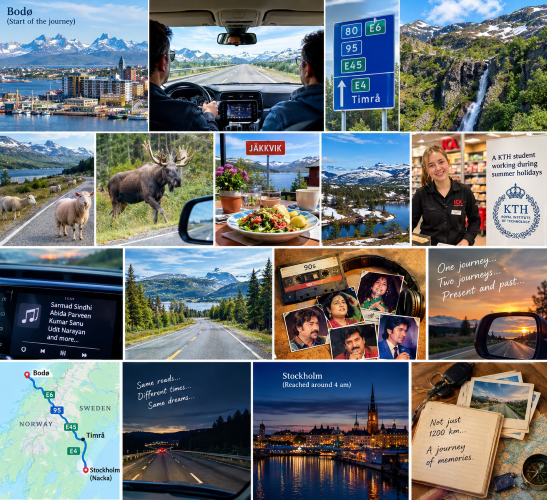
We woke up in Bodø knowing that we had a long road ahead.
After breakfast at Zefyr Hotel, we packed our belongings into the car and prepared ourselves for what would become one of the longest driving days of our trip.
It was around 10 in the morning when we finally started.
The weather was kind to us. Bodø was sunny, and the bright northern light made the beginning of the journey particularly pleasant.
There is something satisfying about starting a long road trip in sunshine. You have a full tank, food and water in the car, good company beside you and hundreds of kilometers of unknown road ahead.
The feeling is almost like opening a new chapter.
We left Bodø behind and gradually moved into the network of Scandinavian roads that would eventually take us all the way to Stockholm.
Our route included Road 80, E6, Road 95, E45, few other small roads, and eventually E4, after joining it around Timrå.
The road numbers changed, but the character of the landscape remained remarkably consistent: forests, mountains, water, small settlements and long stretches of almost empty road.
 The Road Was Almost Empty
One of the first things we noticed was the traffic, or rather, the lack of it.
Coming from cities like Stockholm, Karachi or Lahore, it is easy to become accustomed to seeing vehicles everywhere. Roads are often filled with cars, buses, motorcycles, trucks, and people.
But here, there were stretches where it felt as though the road belonged entirely to us.
There would be a vehicle in front of us for some time, then it would disappear around a bend. Another car might appear from the opposite direction several minutes later.
And then there was silence. Not complete silence, of course.
There was the sound of the engine, the tyres touching the road, the breeze moving through the trees, and occasionally the sound of another vehicle passing by.
But there were no crowds. No traffic jams. No horns. No impatient drivers. No shops fighting for attention. Just road and nature.
Sometimes we deliberately reduced our speed, not because we needed to, but because we wanted to look.
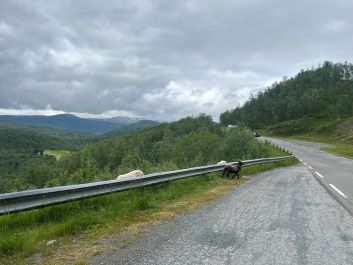
Mountains still carried patches of snow. Waterfalls appeared in the distance, sometimes dramatically falling from rocky slopes. Forests stretched in every direction. Lakes and rivers occasionally appeared beside the road before disappearing again behind trees.
The landscape seemed to tell us: You don’t have to hurry.
When Sheep Become a Reason to Stop
During a long road trip, you develop your own reasons for stopping.
Sometimes it is a café. Sometimes it is a viewpoint. Sometimes it is simply a beautiful mountain. And sometimes sheep.
We encountered sheep beside the road on several occasions. Their presence immediately changed the rhythm of our journey.
We would slow down, look at them, sometimes stop, and simply enjoy the scene.
It may sound ordinary, but perhaps that is exactly the point.
When you are travelling through such landscapes, even an ordinary animal beside the road can become part of the memory.
In a busy city, we might pass hundreds of people without noticing any of them.
Here, seeing a few sheep could become an event.
That is what travel does. It changes the scale of what we consider interesting.
Lunch at Jäkkvik
By the time we reached Jäkkvik, we had already travelled a considerable distance. It was time for lunch.
Jäkkvik was another reminder of how different this part of Scandinavia is from the densely populated places many of us are accustomed to.
Small settlements appear almost like islands within a huge sea of nature.
We stopped for lunch, took a break from driving, and allowed ourselves some time to relax.
After sitting for hours in a car, even a simple meal tastes different.
Perhaps hunger helps. Or perhaps it is the landscape. Or maybe it is simply the satisfaction of knowing that another part of the journey has been completed.
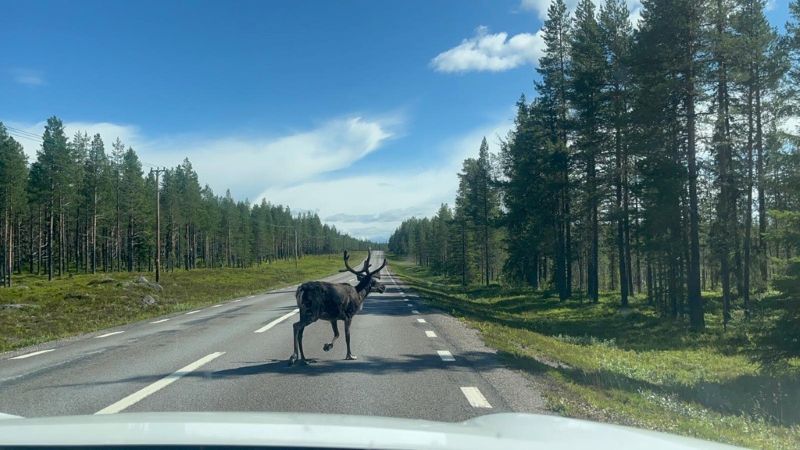 And Then Came the Moose
One of the most memorable moments of the journey happened on Road 95.
We suddenly encountered a moose.
For someone who has grown up in Sindh, where the roadside wildlife experience is obviously very different, seeing a moose in its natural Scandinavian environment is something special.
And this was not some tiny animal that disappeared before we could notice it.
It was big. Really big.
The appearance was sudden enough to give us that instant feeling of surprise that you get when nature unexpectedly crosses your path.
A road sign can tell you that moose live in the area. A documentary can show you what a moose looks like.
But seeing one while driving through the Swedish wilderness is completely different.
For a few moments, the road, the car, and everything else seemed less important.
The moose had entered our journey without making an appointment.
And then, like most beautiful encounters during travel, it became another story to tell.
Nature Was Our Companion
The further we drove, the more we understood that this was not merely a 1,200-kilometer distance. It was a moving panorama.
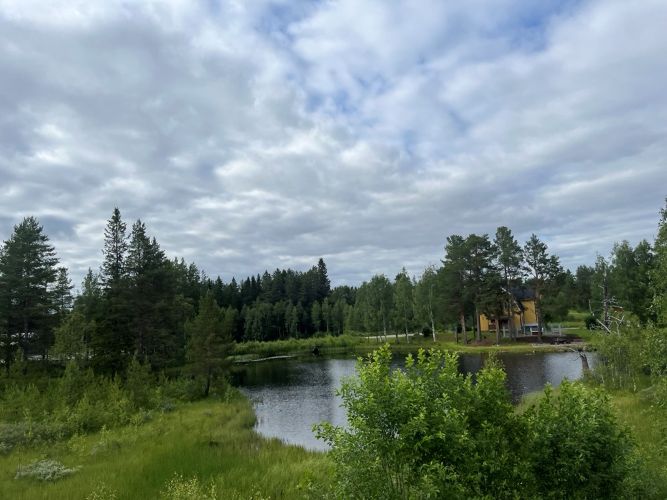 Mountains appeared and disappeared. Snow remained on distant peaks. Waterfalls cut through rocky landscapes. Forests seemed endless. Occasionally, a lake appeared beside the road, reflecting the sky. And between all of this were small villages and settlements.
There were many moments when we wanted to stop the car. But stopping every few kilometers would have meant arriving in Stockholm several days later.
So we continued. This is one of the strange compromises of road travel. You want to experience everything, but you also need to keep moving.
Young People Working While Studying
Another thing we noticed during our journey was something that had little to do with mountains or roads.
It had to do with people. In several stores, cafes and small settlements, we saw young students working.
Summer holidays are a period when many Swedish students take temporary jobs. Instead of simply spending the entire summer relaxing, many work in shops, cafés and other places. During our journey, we met several young people doing exactly that.
But one encounter stayed with me.
In an ICA store in Ramsele, we met a young girl who was working there during the summer.
While talking, we discovered that she was studying at KTH Royal Institute of Technology in Stockholm.
That immediately caught our attention. Because KTH was not simply an institute to us. It was part of our own story.
Dr. Imran and I had both come to Sweden to study in 2008, and KTH became an important part of our lives.
Standing in a small ICA store, hundreds of kilometers and many years away from the beginning of that chapter, meeting a young KTH student working during her studies felt almost symbolic.
Life has a strange way of creating circles. Years ago, we were students trying to find our own paths.
Now we were returning home from another long journey, meeting another student who was still somewhere near the beginning of hers.
It reminded me of a simple reality: Dreams require work.
Education does not always happen in comfortable surroundings. Many students work alongside their studies, save money, manage responsibilities, and slowly build their futures.
One day, perhaps, that young student will look back at her own journey and remember those summer jobs as part of the road that took her somewhere.
Just as we remember ours.
The Other Passenger: Music
But there was another companion in our car throughout this long journey.
Music.
And this is where the journey became something much deeper.
Driving through Scandinavia while listening to Sindhi and Bollywood music, particularly music from the 1990s, created an unusual combination.
Outside the windows was northern Sweden.
Inside the car were memories of Sindh, Pakistan, and our younger years.
We listened to artists such as Sarmad Sindhi, Abida Parveen, Shaman Ali Mirali, Najaf Ali and Saif Samejo, among others.
Then came Bollywood.
Kumar Sanu, Udit Narayan, Alka Yagnik, Sadhna Sargam, Sonu Nigam, Anuradha Paudwal and Kavita Krishnamurthy, among others.
Songs from an era that many of us associate with school, university, friendships, early adulthood, old romances, family gatherings, television, cassette tapes, and those years when life seemed much simpler.
And suddenly, something extraordinary happened.
The road was taking us forward. The music was taking us backward.
One Car, Two Journeys
Perhaps this was the most beautiful part of the entire drive.
We were physically travelling through the present. The car was moving from Norway towards Sweden. The kilometers on the dashboard were decreasing. The Swedish roads were taking us closer to Stockholm.
But emotionally, another journey happened at the same time.
A song would begin, and suddenly we were no longer sitting in a car in northern Sweden.
We were somewhere else. Perhaps in Sindh. Perhaps in a university corridor. Perhaps sitting with friends years ago. Perhaps listening to the same song on a cassette or through an old music system. Perhaps remembering people who are no longer around. Perhaps remembering a younger version of ourselves.
That is the strange power of music. A photograph can show you a place. A smell can remind you of a person. But a song can sometimes bring back an entire period of your life.
It does not simply remind you of a moment. It can bring back the atmosphere surrounding that moment. The people. The emotions. The age you were. The dreams you had. The things you worried about. The things you did not yet know. And perhaps even the person you used to be.
Driving Through the Present, Travelling Through the Past
At some point during the journey, I thought that perhaps long-distance driving with music is actually two journeys happening simultaneously.
The first is obvious.
You are driving through the present. You see the road, mountains, forests and signs. You watch the kilometers disappear. You calculate when you might reach your destination. You stop for food and fuel. You talk to your companion. You continue.
But the second journey is invisible.
It happens inside your head. A song starts, and suddenly you travel backwards. You revisit your childhood. Your student years. Your first friendships. Old cities. Old streets. Old conversations. People you haven’t seen for years. Some memories make you smile. Others make you quiet. Some remind you of mistakes. Others remind you of dreams that once seemed impossible.
And perhaps that is why music is such a powerful companion on the road. It gives a long journey another dimension.
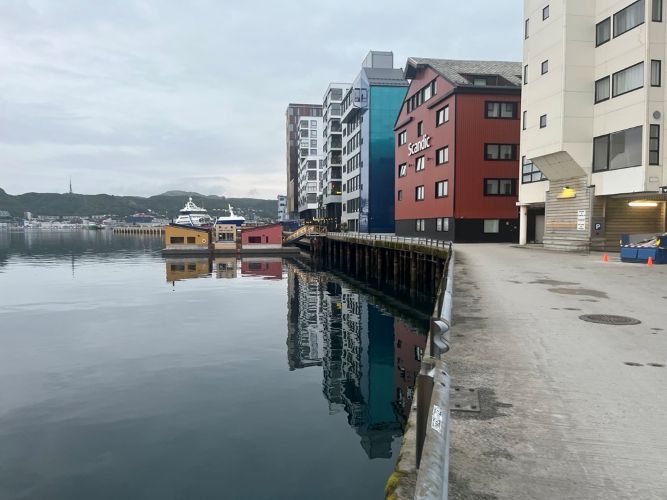 A Thank You to the People behind the Music
While listening to all those songs, I also found myself thinking about the people who created them.
We often remember the singer. We know the voice. We remember the lyrics.
But behind every song is an enormous amount of work.
There are lyricists who turn feelings into words. Composers who turn words into melodies. Musicians who give the melody its character. Singers who transform it into emotion. Sound engineers, producers, arrangers, and countless others whose names may never become familiar to the listener. Yet their work can accompany us decades later.
A song recorded many years ago can still enter our car today and change the mood of an entire journey. That is a remarkable achievement.
To all those artists and people behind the music, there is a simple thank you: Thank you for creating something that outlives the moment in which it was made.
You may have recorded a song decades ago, but sitting in a car thousands of kilometers away can still feel it today.
The Long Night
As the hours passed, daylight gradually gave way to evening and then a little bit of darkness.
We continued driving.
The landscape outside became less visible, but the road continued to stretch ahead.
There is a particular feeling during very long drives when you realize that you have already travelled hundreds of kilometers, but there are still many more ahead.
The body becomes tired. The mind moves between conversation, silence and music. Tea/ coffee becomes important. A short stop becomes valuable. And the destination starts to feel increasingly attractive.
But there is also satisfaction in knowing that the journey is nearing its end. We eventually joined E4 around Timrå, bringing us onto one of Sweden’s major north-south routes.
From there, the character of the journey gradually changed. We were moving towards the more familiar world of central and southern Sweden. The forests and long roads remained, but the feeling of being deep in the Arctic north slowly disappeared.
Home around Four in the Morning
We finally reached home in Stockholm around 4 in the morning.
By then, the journey had become much more than the distance shown on Google Maps.
Google could calculate the kilometers. It could estimate the driving time. It could show the roads.
But it could not calculate the sheep we stopped watching. It could not calculate the sudden appearance of the moose. It could not calculate the waterfalls and snow-covered mountains.
It could not calculate the conversation with the young KTH student in Ramsele.
And certainly, it could not calculate how many years we travelled backwards while listening to old Sindhi and Bollywood songs.
That is the limitation of maps. A map can tell you where you are going. It cannot tell you what the journey will mean to you.
The Road Remains
Looking back, the journey from Bodø to Stockholm was approximately 1,200 kilometers. On paper, it was simply a long drive.
In reality, it was several journeys at once. It was a journey through Norway and Sweden.
A journey through mountains, forests, rivers and snow. A journey through small Swedish settlements and roadside stores. A journey through our own memories. And perhaps most importantly, it was a journey through time. We began in Bodø as two travellers returning from northern Norway.
We arrived in Stockholm as two people carrying a collection of new memories and perhaps a few old ones that had unexpectedly returned.
The young KTH student we met in Ramsele reminded us of our own beginning in Sweden. The roads reminded us how far we had travelled geographically. The music reminded us how far we had travelled in life.
And somewhere between a moose on Road 95, sheep beside the highway, waterfalls in the mountains, a lunch stop in Jäkkvik and the familiar roads towards Stockholm, I realized something:
Sometimes the longest roads are not the ones measured in kilometers. Some roads take you from one country to another. Some take you from one city to another. And some, without you even noticing, take you from your present self-back to the person you once were.
That day, somewhere between Bodø and Stockholm, we travelled on both roads.
One road carried us home. The other carried us through our memories.
And perhaps that is why, when we finally reached Stockholm at four in the morning, despite the exhaustion, the journey did not really feel finished.
The car had stopped. But the music and the memories it had awakened were still travelling.
Read: The Journey That Never Ends
______________
Abdullah Soomro, penname Abdullah Usman Morai, hailing from Moro town of Sindh, province of Pakistan, is based in Stockholm Sweden. Currently he is working as Groundwater Engineer in Stockholm Sweden. He did BE (Agriculture) from Sindh Agriculture University Tando Jam and MSc water systems technology from KTH Stockholm Sweden as well as MSc Management from Stockholm University. Beside this he also did masters in journalism and economics from Shah Abdul Latif University Khairpur Mirs, Sindh. He is author of a travelogue book named ‘Musafatoon’. His second book is in process. He writes articles from time to time. A frequent traveler, he also does podcast on YouTube with channel name: VASJE Podcast.