Salem Al-Abbar is the Short Story Writer, Critic, and Voice of Narrative Experience in Modern Libyan Literature
Souad Khalil | Libya
The Libyan writer Salem Ali Al-Abbar represents one of the prominent figures in Libya’s cultural and literary scene. He has combined narrative writing, literary criticism, and cultural media work, becoming a model of the comprehensive intellectual who did not confine his experience to a single literary genre, but rather opened himself to multiple fields of creativity and knowledge.
 Al-Abbar began his literary journey in 1976, a period that witnessed significant cultural and intellectual transformations in Libya and the Arab world. His experience was therefore shaped within a dynamic context based on interaction between reality and the intellectual and aesthetic transformations taking place in writing.
He is considered one of the most important figures who contributed to shaping the features of modern Libyan narrative, particularly in the fields of short stories, cultural activity, and radio broadcasting. Born in Benghazi in 1958, Al-Abbar belongs to a literary generation that played a pivotal role in moving Libyan literature from the stage of foundation to the stage of experimentation and renewal, both in narrative form and in intellectual and aesthetic vision.
Al-Abbar studied law at the University of Benghazi; however, his literary and creative inclinations preceded his academic specialization. He developed an interest in writing at an early age, influenced by his social environment and by the cultural atmosphere that was emerging in Libya during that period. This dual formation—legal and literary—created an intellectual background that enriched his writings, characterized by precise analysis of reality and a profound humanistic dimension.
First: The Beginnings and the Formation of Narrative Awareness
Salem Al-Abbar began his literary career through the short story, a literary genre that requires linguistic intensity and a great ability to capture the human moment in its deepest dimensions. His early writings were connected to a critical awareness of reality and a clear tendency to question social and human structures through literary expression.
From the beginning, writing for him was not merely an aesthetic practice, but rather an act of knowledge that rereads reality and reshapes it through language. This approach contributed to building his distinctive narrative style, based on condensation, symbolism, and attention to details that reveal what lies beneath the surface.
Second: The Short Story Experience and Diversity of Themes
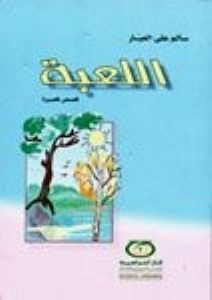 Salem Al-Abbar published a number of significant short story collections, including: Publications Against the State, Manifestations of an Arab Mare, The Game, The Shadow of the Sun, and Khadijar. These titles reveal a diversity of vision and concerns, where social questions intersect with human and symbolic dimensions.
His stories focus on human beings in moments of crisis and on the internal tensions experienced by individuals in their confrontation with society, history, and authority. His texts also reflect a clear critical sense that does not merely describe reality, but seeks to deconstruct it and recreate it narratively.
Some of his works have been translated into foreign languages such as French, English, and Kurdish, reflecting the ability of his texts to transcend the local context and open themselves to global readings.
Third: Critical Writing and Literary Awareness
Alongside his short stories, Salem Al-Abbar made an important contribution to the field of literary criticism. He published a number of critical works, including Studies in Literature, On the Margin of the Text, and Features of the Hero in the Libyan Short Story. These works represent an extension of his narrative awareness, yet they move from creative practice toward analysis and interpretation.
In his critical writings, Al-Abbar demonstrates a clear interest in the structure of the literary text, the construction of the short story character, and the relationship between form and content. He also examines the development of the Libyan short story through analytical readings that connect literary texts with the historical and social contexts that produced them.
He also contributed to the book Body Language alongside a group of Arab writers, reflecting his openness to collective intellectual work and shared critical experiences.
Fourth: Cultural and Media Work and the Role of Radio
 Salem Al-Abbar is considered one of the prominent figures who contributed to the development of cultural media in Libya, particularly through radio. He presented important literary and cultural programs, among the most notable of which was the program “What Listeners Write”, which was dedicated to discovering new literary talents and encouraging young readers and writers to participate in cultural life.
He also presented other programs such as: The Literary Forum, Writers and Opinions, The Paths of the Sun, The Shadow of the Sun, Words and Meanings, and Features and Dimensions. These programs were distinguished by their ability to create a dialogue space between the text and the audience, transforming radio into an active cultural and critical platform.
His role in media was not merely the presentation of programs; rather, it was a comprehensive cultural project aimed at building literary appreciation and expanding the circle of literary reception within society.
Fifth: Journalism and Institutional Cultural Work
Alongside his literary and radio activities, Salem Al-Abbar founded the newspaper “Benghazi News”, which continued to be published for more than twenty-three consecutive years, relying on its own resources without external support. This experience represents a rare model in local journalism in terms of continuity and independence.
He also served as editor-in-chief of several cultural magazines, including Al-Fusoul Al-Arba’a (The Four Seasons), published by the Writers and Authors Association, and Arab Culture Magazine.
He was also chosen as the president of the Benghazi Writers Association. He was among the founders of its branch in 1979, alongside a group of writers, including the poet Ali Al-Fazani, Saad Nafo, Mohammed Abdullah Al-Mahjoub, and Abdulrazek Boukheit.
 Sixth: Critical Recognition and Arab and International Presence
Salem Al-Abbar’s works have received wide critical attention, as they have been discussed by a number of Arab and foreign critics, including the Algerian critic Fadila Al-Farouq, the French critic Edgar Weber, the Iraqi critic Athab Al-Rukabi, and Abdulhakim Al-Maliki.
The renowned novelist Naguib Mahfouz also praised him, describing him as a distinguished Arab short story writer during an interview with Monte Carlo Radio following his receiving of the Nobel Prize for Literature.
In addition, his writings were studied by prominent critics from Morocco, Egypt, and Italy during the celebration of the translation of his short story collection The Game.
His writings were published in numerous Arab newspapers and magazines, including Al-Kifah Al-Arabi, Al-Mawqif Al-Arabi, and Al-Alam Al-Maghribi. He also participated in radio and press interviews in Iraq, Morocco, Egypt, Lebanon, Yemen, and Oman, where some of his stories were broadcast on Omani radio.
Seventh: The Cultural Dimension and Intellectual Message
Salem Al-Abbar’s experience extends beyond literary writing to become an integrated cultural project based on supporting creativity, nurturing talents, and restoring the value of writing as both a human and cultural act.
He does not view literature as an individual product alone, but rather as an interactive movement between the writer, the reader, and society.
His presence in the Libyan cultural scene is not only connected to his personal creativity, but also to his role in establishing cultural and media institutions that contributed to shaping the modern literary landscape in Benghazi and Libya as a whole.
Salem Al-Abbar’s experience represents a complete model of the intellectual who combined narrative creativity, literary criticism, media work, and institutional cultural practice. Through this diversity, he succeeded in building a lasting cultural presence based on interaction between text, thought, and society, and between writing and living cultural action.
His experience remains one of the important experiences in modern Libyan literature, not only because of the texts he produced, but also because of his contribution to forming an integrated cultural and literary awareness that transformed writing into a human and cultural project open to the future.
Eighth: The Human Dimension… When Writing Becomes an Existential Experience
Salem Al-Abbar’s experience does not stop at creativity, criticism, and cultural work; it extends into a profound human dimension, manifested in the fact that he is the father of a martyr. This personal experience left a clear existential impact on his understanding of life and death, and on the meanings of loss and immortality.
In a post he published in 2012, I was deeply moved by what he wrote. I attempted to reread and analyze his words in order to understand these expressions that emerged from the depths of pain.
He expressed this dimension through a symbolic and contemplative language, in which he views true condensation as reaching the essence of things, where the word becomes a point, and the point becomes a concentrated meaning carrying life and mortality together.
In his reflection, words such as the soul, the cell, paradise, fire, the atom, and the seed become extensions of this profound reduction that reveals the essence of existence.
In this context, “fire” acquires a special significance, not merely as an element, but as a living and captivating force that settles deep within human emotion. It intertwines with sorrow and longing, and burns within the soul when it is ignited by loss.
Al-Abbar wrote:
“Condense greatly… and you will discover that you are profound. Condense even more… and you will discover that you are greater. Contemplate the point, how it draws the sentence toward itself until it stops at the essence of meaning, and contemplate it as it breathes the spirit into the bodies of letters.
 Like the point, we can present many examples of profound condensation: the soul, the cell, paradise, fire, the atom, the seed… everything that represents the origin of life and mortality.
And when we turn away from appearances to see with the eye of the inner self, we realize that what we consider differences are nothing but ornaments; the most present truth is that which metaphor cannot reach.
Fire is the most present and seductive feminine force; we stand before it astonished, uncertain of its meanings, and our wonder increases when it blazes within the depths of our being, fueled by tears.
Ah… how much water increases the flame of fire.
Within my heart burns the fire of losing my martyred son…
Those who, while still in the age of flowers, discovered the path to paradise, became the profound and meaningful condensation itself.”
Through these words and their existential resonance, shaped by the experience of loss, he was writing about his martyred son.
To conclude what I have written, if we wished to write about this great literary figure, the number of pages would never be sufficient. In brief, we can say that Salem Al-Abbar’s experience appears, at its core, as a literary and critical journey formed through many years of engagement with narrative and thought, before being touched by the most painful personal experience.
His fictional and critical production was built upon an early awareness of language and the structure of the text, as well as a continuous engagement with questions of humanity and reality. This is what granted him his distinguished position within the Libyan literary scene.
However, the human dimension that later emerged does not reinterpret this experience as much as it illuminates its horizons and grants it an additional contemplative depth. Between writing as an act of knowledge and reflection as an echo of human experience, the image of the writer becomes complete, without one dimension reducing or replacing the other.
Thus, Salem Al-Abbar’s experience remains fundamentally based on a clearly defined literary project, while the human voice within it—with all the loss and questions it carries—remains an extension of this project, not an alternative to it.
Read: Literature and the Arts: A Creative Relationship
______________________
 Souad Khalil, hailing from Benghazi Libya, is a writer, poet, and translator. She has been writing on culture, literature and other general topics.