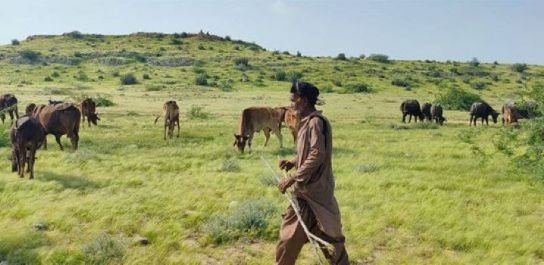
The antiquity of the names Kachho (in Sindh) and Machhko (in Punjab) dates back to at least 500 BCE
Aziz Kingrani
The term Kachho derives from Kachh, which literally means “armpit.” The desert land along the edge of the Kirthar Mountain Range has traditionally been called Kachho. Similarly, in Pali-language dictionaries of Buddhist religious texts, Kacch (Kaccho) carries the meanings of both “armpit” and “low-lying, soft, marshy land” along riverbanks. In other words, the Kachho/Kacho region refers to low, soft, muddy terrain.
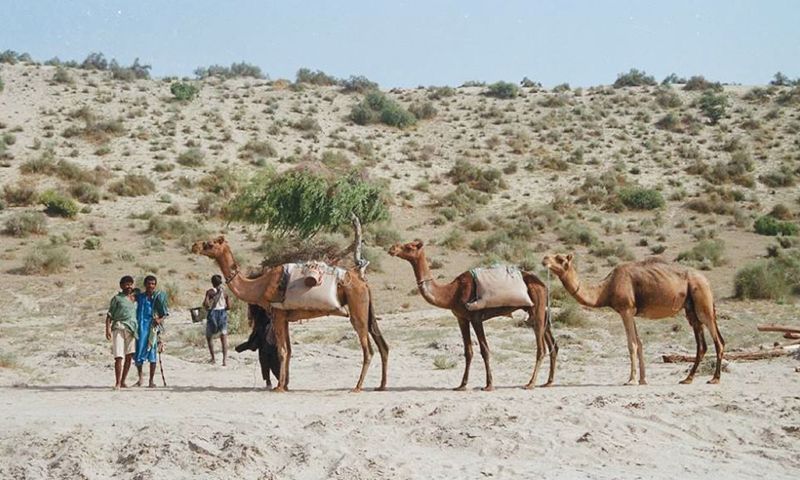 More specifically, the term denotes the area between the riverbanks and the central Kirthar hills—a region that becomes flooded or waterlogged due to river overflows and runoff from the hills. Historically, this area was known as Kacho or Kachho. After the construction of barrages and canal systems in 1932, the region was classified into three categories: Kacho (low-lying land), Pako (developed land with barrages or canals), and the desert area along the Kirthar edge, which continued to be known as Kachho.
In Buddhist dictionaries, the word Macchko (Machhako) is often defined as “fish,” which appears to be a misinterpretation. In Pali dictionaries, the terms for fish are Min (in Dravidian and Proto-Dravidian languages) and Macchi. In Sindhi, the word Macchko is pronounced as Machhko. Early English and Buddhist lexicographers were unaware of the regional significance of the terms Kachho and Machhako.
 In Machhako (Punjab, Pakistan), the Solangi community identifies itself as Machhi Solangi. This became evident when a trader from Machhako visited my village, and upon inquiry, he confirmed that his caste name was Machhi Solangi. I clarified to him that only Solangi is the correct caste designation.
Previously, I traced the antiquity of Kachho back to the Kalhora period, based on a verse by the Kalhora-era poet Shah Inayat Rizvi Nasarpuri:
“Nasriyo Nasir, Kachho korhi mein kary.”
However, the antiquity of the names Kachho (in Sindh) and Machhko (in Punjab, Pakistan) should be understood as dating back to at least 500 BCE, the period during which Gautama Buddha preached his teachings. His dharma mentions Kachho and Machhako, which were recorded in the Pali language—the vernacular of the common people—in accordance with his instructions. It is also possible that these names were already in use prior to his time.
References
Mahāthera, A. P. (1949). Concise Pāli–English Dictionary.
Childers, R. C. (1875). A Dictionary of the Pāli Language.
Read: Sindhi and Pāli: A comparative Study
________________
 Aziz Kingrani, hailing from village Haji Manik Kingrani, Johi, Dadu District, Sindh, Pakistan, is poet, short story writer, playwright and a researcher. He has been contributing in the fields of history and literature. He has served as a professor as well. His 17 books are published in English and Sindhi language.