Didda drew her son close to her chest and broke into a triumphant smile. It felt to her as though she had taken her first step toward the ultimate success of her life
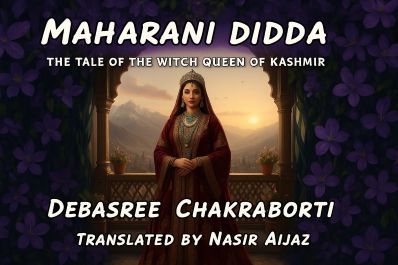
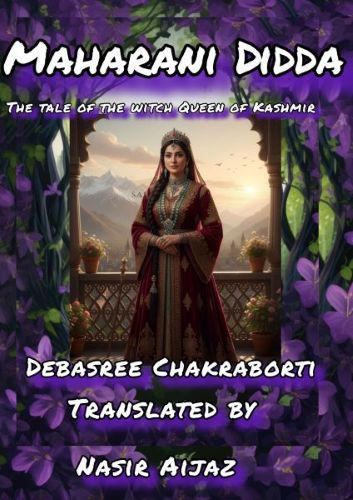
Maharani Didda: Witch Queen of Kashmir
By Debasree Chakraborti
With the change of seasons in Kashmir, nearly a year had passed since the marriage of Didda and Kshemagupta, yet there was still no news of an heir. This was not how things were supposed to be. Every queen in this family had given birth to a child before completing a year of marriage.
 Even Chandralekha’s first daughter had been born before a year had passed since her wedding. Why was there such a delay in Didda’s case? This question tormented the Queen Mother endlessly. Seeing Didda’s physical build and her somewhat masculine bearing, a new hope had arisen in the Queen Mother’s heart. She was extremely optimistic that this time she would finally see the face of the family’s heir. The Queen Mother’s own health was failing, and before death she longed to see her grandson. There was a belief that if she did not drink water touched by her grandson’s hand, she would find no place in heaven. Lost in such thoughts, her patience finally broke. One day, without informing anyone, she arrived at dawn at Didda’s chambers accompanied by the royal physician.
The untimely arrival of the Queen Mother and the royal physician caught both Didda and Kshemagupta off guard. Yet Didda’s behavior revealed nothing of her inner turmoil. After much hardship she had finally earned a place in the Queen Mother’s heart, and she was determined not to lose it. Although Kshemagupta raised some objections, Didda agreed to the Queen Mother’s proposal.
After examining both Didda and Kshemagupta, the royal physician declared that there was nothing wrong with Didda’s body—she was fully capable of becoming a mother. However, Kshemagupta did indeed have a problem, and the physician had no solution for it. Didda could not comprehend the meaning of the royal physician’s words at all.
No. In order to understand the meaning of these words, she questioned the royal physician, “What problem does His Majesty have in his body? Is there any obstacle to his becoming a father?”
The royal physician was about to reply when the Queen Mother intervened. She said, “The purpose for which you were brought here has been fulfilled. Now Kshem and Didda should rest. With proper rest, all physical ailments can be resolved.”
The royal physician was an intelligent man; it was not difficult for him to grasp the Queen Mother’s hint.
After they left, a deep suspicion began to take root in Didda’s mind. Kshemagupta had already fathered children twice before. Moreover, he possessed more than adequate masculine vigor. Then where lay the problem? Didda felt that only Chandralekha could answer this question. Didda did not like to waste time. That very day, when Kshemagupta went to the royal court, Didda went straight to Chandralekha’s palace.
Chandralekha had just finished bathing and was fumigating her hair with incense when a maid came to inform her of Didda’s arrival. At first she could not believe it when she heard that Didda had come to her chambers, yet she gave permission for her to enter. When Didda stood before her, Chandralekha remained lost in thought for a long while, wondering whether the woman standing before her was truly Didda or merely a figment of her imagination.
On seeing Didda, she rose to her feet. When Didda stepped forward and embraced her, she realized that this was no illusion—Didda was indeed standing there, holding her. There was no inherent complexity in Chandralekha’s mind; her greatest weakness was that she had always been guided—and controlled—by her father. Personally, she had never formed any strong opinion about Didda, but her father had convinced her that Didda was her greatest rival, and so she had come to regard Didda as an enemy. Yet the way Didda came today and held her in an embrace brought tears to Chandralekha’s eyes. She had never received affection from any woman in her life. Her mother had died long ago, and since then her father had been her only support. But in Didda’s embrace, she felt the touch of love.
Chandralekha seated Didda beside her and said, “I knew you would come.”
Didda replied, “You are my elder sister. How could I stay away without coming to you?”
Chandralekha said, “I know the reason for your visit.”
Hearing this, Didda immediately realized that she was on the right path. Still, to be certain, she asked, “Sister, do you know everything?”
Chandralekha answered, “I do. I have walked this path before you, so how could I not know?”
Didda asked, “Then what is the way out?”
Chandralekha said, “At first I could not understand anything. Later my father learned from the royal physician that due to excessive drinking and an undisciplined way of life, certain problems had developed in him, because of which he would never be able to father a child. Then my father began searching for a kshatraja father—someone who could preserve the royal lineage.”
It was as though Didda had already mentally prepared herself for such a situation. She asked, “Where did you find this kshatraja father?”
Chandralekha replied, “I know nothing myself. One day my father took me to the Nageshwar Shiva temple in Anantnag. The priest of that temple had arranged everything. I know nothing about the man who came. After staying for three days in the priest’s house, when I returned to the royal palace, within a month the royal physician informed me that I was going to become a mother.”
Didda asked, “And the time of the second child? Was it the same kshatraja father?”
“No,” Chandralekha said. “Since the first child was a daughter, my father made arrangements again in the hope of a son. This time everything was arranged in a village near the Martand Sun Temple, and it was a different man altogether. I do not know him either. You too will have to find someone like this.”
Didda smiled gently and said, “When you know so much, then why did you tell me on the very first day that once a child was born, His Majesty would cast me aside?”
Holding Didda’s hand, Chandralekha replied, “You can see my condition, can’t you? By looking at myself, I foretold your future.”
This time Didda laughed out loud and said, “Everyone’s fate is not the same. His Majesty has no such problem at all. I have no need of any kshatraja father, because I have recently conceived, and the father of this child is my husband, His Majesty Kshemagupta. I wanted to share this auspicious news with you first. You have been pregnant twice, so I had come to you seeking advice.”
Didda removed a diamond necklace from her own neck and placed it around Chandralekha’s neck, saying, “This is the custom of the Lohara dynasty.” Saying this, she left Chandralekha’s chambers.
Chandralekha could not understand what had just happened. Yet the act of placing the necklace around her neck felt deeply humiliating to her, for she had often seen her father give such gifts to servants. It seemed to Chandralekha that Didda had reduced her to the status of her own servant. Such things always happened in Chandralekha’s life—only after everything was over did she grasp the chain of cause and effect.
That day’s meeting between Didda and Chandralekha was an extremely significant event. Didda now had to make a very important decision in her life, and so she summoned Naravahana. When His Majesty was in the royal court, she took all her most important decisions. That day Didda said to Naravahana, “Naravahana, I need you to find the most learned man in all of Kashmir—someone who, along with extraordinary scholarship, also moves at the highest level on the spiritual path. Bring me such a person.”
Naravahana replied, “Maharani, there is no need to conduct any search. Every person in Kashmir knows that in the land of Kashyapa there is no scholar equal to Abhinavagupta.”
Didda’s eyes lit up. She said, “Naravahana, I wish to meet him tomorrow.”
Naravahana replied, “One cannot obtain an audience with him so easily. Whoever you may be, meeting Abhinavagupta depends entirely on his own will. It is not something that can happen merely because you desire it. Moreover, after the meeting he will ask certain questions. Only if you can answer them appropriately will he fulfill the purpose for which you approach him; otherwise, he will not.”
Didda said with great composure, “Naravahana, tomorrow, as soon as the sun rises, we shall set out for Abhinavagupta’s abode. Only you and I will go—no one else will accompany us.”
Though Didda spoke with remarkable calm that day, Naravahana noticed a terrifying restlessness flickering in her eyes. Naravahana was an exceptionally intelligent man. He understood very well why Didda sought an audience with Abhinavagupta. Didda was no ordinary woman; Naravahana had seen ample proof of that. The welfare of Kashmir was this woman’s sole objective. And for Kashmir’s welfare, she wished to leave behind an extraordinary heir—an heir endowed with exceptional qualities. For this reason, she was searching for a kshatraja father who was both a great scholar and spiritually accomplished, someone capable of begetting a remarkable successor for Kashmir.
The next day, at sunrise, Didda set out for Abhinavagupta’s abode. Before leaving, she informed her husband, Kshemagupta, that in order to conceive and carry a worthy heir, she would have to undertake penance for several days at the temple of Mother Kheer Bhavani. Only if she performed this penance properly, she said, would Kashmir receive a deserving successor. Didda was adept in tantric knowledge; through this art, bringing anyone under her control was an exceedingly easy task for her. Just as she had brought Chandralekha under her control and learned the secrets of her mind, in the same way she had completely brought Kshemagupta under her sway. Kshemagupta was compelled to obey each of her words to the letter. When Didda departed for Kheer Bhavani, Kshemagupta went to his mother and informed her about Didda’s penance. On hearing this news, the Queen Mother felt deeply satisfied.
When the Queen Mother learned that Didda was not only a valiant warrior but also a devoted seeker of God, her heart made an even greater place for Didda. This was precisely the kind of daughter-in-law she had wished for—intelligent, brave, and devout. Chandralekha, on the other hand, possessed none of these qualities. She was merely a woman absorbed in poetry and completely controlled by her father, naïve and lacking independence. For all these reasons, Chandralekha had never truly found a place in the Queen Mother’s heart. Above all, after marriage she had given birth to two daughters; a woman who could not produce an heir was never worthy of being Kshemagupta’s wife.
At that time, Abhinavagupta was staying at the temple of Kheer Bhavani. Several ancient manuscripts had been recovered from the surrounding villages and placed in the temple’s repository, and he was residing there to decipher them. He spent the entire day at the temple and, after sunset, returned to the village of Tulmula.
He spent the night in a small hermitage attached to a Shiva temple in that village. During Kshemagupta’s reign, a certain group regarded Naravahana as their leader. They believed that Naravahana alone possessed all the qualities required for leadership, and they followed his every word without question.
Through these people, Naravahana created a strict security cordon around the temple of Mother Kheer Bhavani. His men remained stationed around the temple in disguise, ensuring that no one else could enter.
When Didda entered the Kheer Bhavani temple, no one else was present in the temple complex except Abhinavagupta; Naravahana’s men had cleared everyone away. Naravahana himself did not enter the temple either. Didda moved forward, focusing all the power of her mind on Abhinavagupta. Just as iron is drawn to a magnet, she turned the force of her mind into a magnet. Didda knew exactly where Abhinavagupta was; she went and stood at the door of the temple’s repository.
At first, Abhinavagupta could not comprehend what he was seeing. On beholding an extraordinarily beautiful woman in royal attire, his first thought was that perhaps he was dreaming. Then, as Didda entered the repository …entered and bowed to him in reverence, he realized that a living woman was standing before him. Without speaking a word to Didda, he began calling out to the temple officials, but no one came. Didda said to him, “At this moment there is no one in this temple except you and me. No matter how hard you try, no one will come.”
Abhinavagupta said irritably, “It was not right for you to come here like this, without my permission.”
Didda’s eyes were utterly steady. With great calm she said, “The future of Kashmir rests in your hands. I am Didda, the wife of His Majesty Kshemagupta, the king of Kashmir. I have come to you with great hope. Do not turn me away like this. If you feel even the slightest sense of responsibility toward this kingdom, then please listen to my prayer.”
Abhinavagupta was a learned man; he understood the reason for Didda’s arrival. He said, “I understand everything. But before I fulfill your request, you must answer a few questions. Only if you answer correctly will your desire be fulfilled.”
Didda said with firm resolve, “Ask. I am ready.”
“My first question: What is the principal purpose of life?”
“The principal purpose of life is spiritual evolution.”
“And the path to this evolution?”
“Action (karma) is the only path. By walking this path and gaining experience, spiritual evolution becomes possible.”
“What is the result of spiritual evolution?”
“Liberation. When the soul, through spiritual evolution, attains supreme knowledge, liberation becomes possible. All attachments fall away, and one is freed forever from the cycle of life and death.”
“And what is your purpose?”
“I too am fulfilling my duty as a queen. Kashmir needs a worthy heir. His Majesty Kshemagupta suffers from certain physical limitations, which make this impossible for him. The rest now lies in your hands.
Abhinavagupta was a learned man, and he had no desire to waste time in prolonged conversation with Didda. Thinking of Kashmir’s future, he felt it was his duty to respond to Didda’s call. Moreover, it was not possible for him to ignore the compelling pull of Didda’s mental strength. In this meeting, Didda’s wish was fulfilled. Before she was to return from Kheer Bhavani to the royal palace three days later, Abhinavagupta said to her, “Maharani, you will become the mother of a son. Before you depart, I wish to tell you a few things. This child will be one destined for a brief span of life. I do not wish to tell you much more; I will say only this—name him Abhimanyu. The rest is in your hands.”
Didda set out for the royal palace with a heart full of joy, for she believed in action. Her action was to hold the reins of Kashmir’s governance firmly in her own hands, and for that, she first had to give birth to an heir—an heir meaning a son. Didda had already understood that she was pregnant, and that the child was a son. Whether this child would be short-lived or long-lived was of no concern to her. Whatever needed to be done to bring power into her own grasp—that alone was, to her, the supreme action. She had successfully completed the first step of that action.
Within a month of her return from Kheer Bhavani, the royal physician declared Didda to be pregnant. In these few days, the people of the kingdom had already begun to regard Didda as their mother, and the news of her pregnancy filled them with great joy. An atmosphere of celebration spread everywhere. Villagers from far and wide began sending milk, apples, rice, vegetables, and mutton for their queen-mother. The Queen Mother herself attended to Didda day and night, for in her heart she firmly believed that Didda was about to give her a descendant. Maharaja Kshemagupta, too, devoted all his remaining time—apart from the hours spent in the royal court—to his wife Didda.
One day, husband and wife were sitting together playing dice, when Prime Minister Phalguna arrived. Phalguna came to the Maharaja and Didda with a tray of sweets and informed them that, with the intention of praying for the well-being of Didda and the Maharaja, he had offered them to Mother Bhavani …had offered prayers at the temple. That was why he had come personally to feed this prasād to the King and the Queen with his own hands.
Maharaja Kshemagupta had remained under Prime Minister Phalguna’s influence for many years, and a certain dependence on him had stayed ingrained within him. So, as he unhesitatingly extended his hand to accept the prasād, Didda firmly seized his hand.
She then summoned Bhalaga. Bhalaga knew exactly what he had to do, for it was she who had taught Didda all these methods. Bhalaga came and stood there holding a medium-sized basket with a lid. Didda said, “Prime Minister, you eat this prasād first. Then we shall eat.”
Prime Minister Phalguna was momentarily startled, but he quickly composed himself and said, “No, no, Maharani, that cannot be done. This prasād has been offered in worship especially for you. You must partake of it first; whatever remains, we shall then share.”
Didda’s eyes gleamed. With great firmness she repeated, “Prime Minister, I am asking you to partake of this prasād first.”
“No.” Phalguna replied with extreme politeness that it was not possible for him to do so.
At that moment, Bhalaga stepped forward toward Didda with the basket. Didda picked up a piece of prasād. Seeing her do so, Kshemagupta was about to pick up a piece as well, when Didda said, “No, Maharaj, now is not the time to eat this prasād. Please wait a little while.”
Bhalaga then lifted the lid of the basket, revealing several rats inside. Didda broke a portion of the prasād and gave it to the rats, then waited.
Within a short while, the rats began to writhe in agony and died. Didda then handed the remaining prasād to Bhalaga and said, “Bhalaga, dispose of this poison in a place that is extremely safe, so that no other life may be destroyed.”
After Bhalaga left with the prasād, Didda said to Prime Minister Phalguna, “You wished to kill three birds with one stone. But by God’s grace, that was not possible.”
Kashmiris regard a pregnant woman as Parvati herself. Therefore, a pregnant woman is never allowed to bow down and touch anyone’s feet
Didda was about to say more, when Phalguna, with a look of intense hatred, stared at her …left that place on seeing Didda. Didda understood very well that Phalguna’s mental strength was extremely firm, and therefore bringing him under control would be a very difficult task. Moreover, a certain section of people held Phalguna in great reverence. Hence Didda decided to wait for the right moment—when she would be able to eliminate Phalguna completely. But not now. For now, her sole duty was to bring the crown prince safely into the world.
Kashmiris regard a pregnant woman as Parvati herself. Therefore, a pregnant woman is never allowed to bow down and touch anyone’s feet. Before one could realize it, Srinagar was adorned with decorations of bluish flowers—it was the day of Didda’s sādh-bhakṣaṇa (the ceremonial feast for an expectant mother). The royal cooks were preparing all kinds of delicious dishes for her, while Naravahana personally supervised and oversaw every arrangement. His men stayed close to the cooks, for everyone remained alert after having narrowly escaped a previous mishap.
The Lohar king Simharaja and Queen Shreelekha arrived for their daughter’s ceremony, bringing abundant gifts on elephants and horse-drawn carriages. Shreelekha had never personally cared for her daughter, for from birth Didda had been regarded by them as a burden of sin. The people of the Lohar kingdom had never looked upon Didda kindly; they always considered her a witch, because she had been born with a physical disability. But upon arriving in Srinagar, Queen Shreelekha and Simharaja were astonished. The Queen Mother was tending to their daughter as if she were cradling her in the palm of her hand.
Shreelekha herself did not even know what foods Didda liked, yet in these few days her mother-in-law had mastered all of Didda’s preferences. Thus food was being prepared exactly according to Didda’s tastes; even the entire city of Srinagar and the royal palace were being decorated according to her liking. At the time of Didda’s marriage, her own parents had never once asked her what she wanted. Yet in her husband’s home, people gave her such importance.
The people of the Lohar kingdom had never looked upon Didda kindly; they always considered her a witch, because she had been born with a physical disability
They saw how subjects from far-flung villages were arriving with all kinds of gifts for their queen-mother. Within these few months after her marriage, Didda had become the apple of everyone’s eye. Today Didda was dressed in white garments, adorned with sapphire jewelry and a garland of blue lotuses around her neck and in her hair. The maidservants applied red sandalwood paste to Didda’s …foreheads. Kshemagupta too was dressed entirely in white that day. He and Didda were seated side by side; today they were being worshipped in the forms of Shiva and Parvati. Scholars had arrived from Sharada Peeth, and together they performed a yajna, chanting Vedic mantras. At the end of the ritual, the Queen Mother placed a bundle of assorted fruits wrapped in a red cloth on Didda’s lap—this was a symbol of the child to come, a symbol of the family’s happiness and prosperity.
When the worship concluded, conch shells were blown. Then, seating Didda and Kshemagupta side by side, the Queen Mother served them various kinds of food and said, “Today you are the embodiment of Mahadeva and Parvati. Please accept this offering and bless us. May your blessings help this family flourish in happiness and prosperity.”
Chandralekha was also present there. She too had undergone the sādh ceremony twice, but there had been no such grandeur on those occasions. Chandralekha was always guided by the words of others, and ever since Didda’s pregnancy she had been hearing that this time a crown prince was coming. Thus, seeing Didda and Kshemagupta seated together at the auspicious moment of Didda’s sādh-bhakṣaṇa, she was reminded of Kalidasa’s Kumārasambhava:
“My understanding is that Parvati’s two arms must have been even more delicate than the siris flower, for though Cupid was defeated by Mahadeva, he transformed those very arms into a garland for Mahadeva’s neck.”
When Didda’s sādh-bhakṣaṇa was completed, elderly women came and washed her feet with milk and alta, then fed her betel leaves and led her to the bedchamber for rest. Along the path, flowers were showered, while the palace resounded with the blowing of conch shells and horns. As Didda proceeded toward her bedchamber with the maidservants, time itself seemed to shift.
On the canvas of eternity appeared a birthing chamber, where Didda writhed in the agony of labor. Bhalaga sat by her head, giving her strength of mind, while Didda cried out in anguish. Maidservants surrounded her on all sides. The royal physician and the Queen Mother were present in the room. The physician strove to ease the delivery, while the Queen Mother watched with her own eyes the arrival of her lineage. Kshemagupta and Naravahana stood outside the birthing chamber… …waiting anxiously. Queen Chandralekha too was silently praying for Didda’s well-being, for Chandralekha knew that when a child loses his mother, his future often turns bleak. A mother’s role is unparalleled in shaping a child’s destiny. Thinking of the welfare of the child about to be born, she prayed for Didda’s safety.
Soon, on the canvas of time, from within a dark, black cavern, through a crimson surge, came the arrival of Kashmir’s heir—Abhimanyu. Inside the birthing chamber, the Queen Mother herself was the first to blow the conch shell. Then she stepped outside and proclaimed in a loud voice, “Queen Didda has given birth to the crown prince of Kashmir. Through Didda’s blessing, Kashmir has been honored with its heir.”
In no time, the news spread throughout the kingdom, and celebrations erupted across the land. From distant regions, artists advanced toward the royal palace, dancing and singing as they came. Exhausted, Didda drew her son close to her chest and broke into a triumphant smile. It felt to her as though she had taken her first step toward the ultimate success of her life. All of Kashmir seemed to rejoice in the celebration of her victory. (Continues)
Click here for Part-1, Part-2, Part-3, Part-4, Part-5, Part-6, Part-7, Part-8, Part-9, Part-10, Part-11, Part-12, Part-13, Part-14, Part-15, Part-16,
__________________
 Debasree Chakraborti is a renowned novel writer of Bengali language. Based in Kolkata, West Bengal, India, she has done Master’s in Modern History from the Kolkata University, and authored some thirty books, mostly the novels, with historical perspective and themes. Her novel is ‘Maharaja Dahir’ that covers the history of Sindh from 662, the year of first attack on Sindh by the Arab armies till date, was published last year and translated by Nasir Aijaz into Sindhi language.