“Tears stream from the King’s eyes. In a voice heavy with remorse, he says, “The daughter whom I wished to kill at her birth—today I feel pride because she has gone out on a hunt. What a strange irony of fate!”
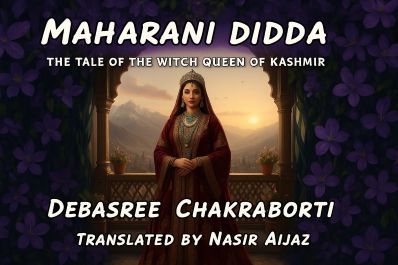
Maharani Didda: Witch Queen of Kashmir
By Debasree Chakraborti
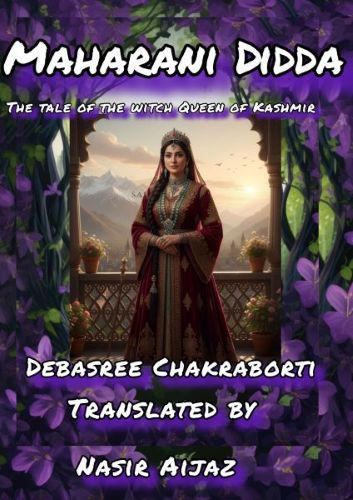 Shivaratri is being celebrated in the snow-covered land of Kāśyapa. Queen Śrīlekhā of the Lohar dynasty is worshipping Lord Shiva in her private chamber. She believes that by the blessings of Mahādeva she has given birth to two healthy, normal sons. The Lohar kingdom lies on the mountains to the north of Śrīnagar. The people of this region believe more in the power of male deities than in female goddesses; therefore, there is no temple of Mother Bhavānī here. On the forest-covered mountain peaks stand only temples of Mahādeva. The sacred shrine of Amarnath is situated in this region. In the surrounding villages, Shivaratri fairs are being held today; the roads on both sides are decorated with blue and white flowers. The villagers have lit lamps in their homes and along the roadsides.
The domain of the Lohars is gleaming with light. The Queen sits before Mahādeva, lighting a lamp, while at regular intervals the royal priest comes and performs the rituals. A short while ago the priest took his leave. Two more watches of the night remain; after that, the Shivaratri worship will be complete. The Queen gazes intently at the Shiva liṅga, lost in thought. A shadow of anxiety is visible on her face. From all around comes the sound of devotional songs in praise of Shiva. On Shivaratri night, according to the Purāṇas, people must not sleep; throughout the night they sit in all the Shiva temples of the region, singing bhajans and calling upon Mahādeva with single-minded devotion. Then, it is believed, He fulfils all the desires of the heart.
The Queen, too, seems to be calling upon Mahādeva with unwavering focus. Just then, the King enters the Queen’s chamber. He stands behind her for a long while, but the Queen, outwardly oblivious, appears to be immersed in another world. After watching her for some time, the King places his hand on her shoulder. The touch is familiar from many years, so the Queen is not startled. As she gently tilts her head into his hand, tears from her eyes fall upon his palm. The King sits beside her and says, “There is no benefit in worrying so much; it brings nothing but harm to one’s health. Nothing lies in your hands anyway. So remain quiet, and sit surrendering all your worries and thoughts at His feet.”
 The Queen said, “Twenty-six years have passed before our very eyes, yet none of your aghori father’s words have come true.”
“Who says they haven’t?” the King replied. “She cannot be compared to any ordinary woman. Conquering all her physical limitations, she has become a valiant warrior. If the strength of my two physically perfect sons were placed on one pan of a balance, and my daughter on the other, then in terms of strength and skill my daughter would stand far ahead of them.
“But marriage! This society does not make a brave woman the goddess of its household by looking at her valor; it looks only at her physical beauty. There may not be another woman as graceful as our daughter in the Lohar kingdom, yet because of her physical disability she has found no place in any noble lineage till today. What, then, is her future?”
“Queen, you are worrying about the future of a heroine?” the King said. “I can truly see a royal mark upon her forehead. Perhaps, in my absence, Didda will have to manage my kingdom.”
Didda said, “Bhalaga, I wish to cremate this dead animal with due honor, as a warrior deserves. To it, hunting humans was the same as hunting deer to us—both are relationships between food and consumer. Because it hunted humans, I, as a human, have punished it. But it fought with heroic valor and accepted death. Therefore, this measure of honor is its due.”
Wiping away her tears, the Queen said, “Your words calm my heart and reassure me, but where your daughter is? For the past few days she has not been seen at all!”
A sorrowful smile appeared on the King’s face. He said, “For five days now our daughter has not been in the palace, yet all this time you neither worried about where she had gone nor asked for any news. So do not worry now either. She has spent twenty-six years of her life amid neglect and disregard—let her be as she wishes.”
Clutching the King’s hand tightly, the Queen said, “You always keep track of everything, and my faith in Bhalaga is greater than in myself, so I remain at ease. When I see her, my worries only grow, so I keep a certain distance. But truly, today I wish to know—where has Didda gone? Until now, she has never stayed away from the palace.”
Lowering his head and speaking in a subdued voice, the King said, “Didda has gone on a hunt. By the banks of the Shatadru there is a deep forest; she has gone there to hunt, taking Bhalaga with her. The journey is long, and because of the distance, her return will be delayed.”
Tears stream from the King’s eyes. In a voice heavy with remorse, he says, “The daughter whom I wished to kill at her birth—today I feel pride because she has gone out on a hunt. What a strange irony of fate!”
The King and the Queen sit before Mahādeva, submerged in their sorrow, while from outside the sound of the people’s Shiva kīrtans echoes from terrace to terrace of the mountains, rushing onward into the far distance. Far away from these mountains and the banks of the Vitastā, on the banks of the Shatadru River, deep inside a dense forest, the hunting festival is underway. After arriving there, the place where the princess has set up her camp is surrounded by villages whose inhabitants are tormented by the menace of leopards.
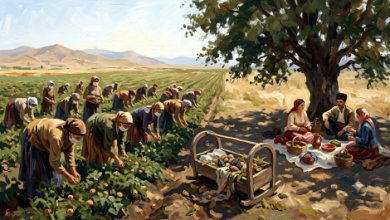
As the princesses were establishing their camp, the villagers came to Bhalaga and informed him that leopard attacks in this region are extremely frequent. Whenever they get the chance, the animals carry off villagers and livestock. Some days ago, a young village bride was dragged away. She had left her one-month-old infant son with her husband and stepped outside the house to relieve herself; it was then that she was taken. A few days later, parts of her body were found on the banks of the Shatadru. The villagers believe that a male leopard is responsible. But because the animal flees with incredible speed and is adept at climbing trees, it has been impossible to hunt it.
After hearing them out, Bhalaga decides that they will hunt the leopard. Because of his age, he will not be able to participate directly in the hunt; Didda will bring down the animal using her own skill.
 Didda considers every moment of life as a lesson. She tries to learn from every incident and every object. When the opportunity to hunt a leopard presents itself, it feels to her as if she has grasped the moon itself. She has hunted many deer in her life and once killed a tiger by a stealthy method, but this is the first time she has been given the chance to hunt an animal as swift as a leopard. Bhalaga tells her that this time she will not help her in any way. All that he and Vikrama Sena have taught her so far must now be put to use. She must accomplish this task by relying solely on her own intellect and judgment. Didda first begins to survey the surrounding area… She established contact with the villagers and questioned them carefully, trying to learn where exactly the bodies had been found.
By surveying the villagers, Didda discovered that deep inside the forest a branch of the Shatadru River flows, and all the bodies had been found in that very area. Without wasting any time, Didda went to this region with her companions. Bhalaga went with them as well, for he wanted to inspect the place and give Didda some important advice. Standing on the bank of this stream of the Shatadru in the heart of the dense forest, Bhalaga said to Didda, “Princess, observe this place very carefully. The branches of the tall trees here are interwoven with one another, forming an extremely dense canopy of shade. These branches are very strong, and being linked together they create a firm and secure platform. A leopard can carry its prey in its mouth and climb a tree at great speed, then place the carcass in such a shelter and feed in safety. They are also very fond of river currents and such shaded environments. While hunting this animal, you must keep an eye not only on the tree branches but also on the areas around the river. At the same time, pay attention to the calls of the birds and animals of the forest. If a leopard is nearby, you will understand from their cries.”
Princess Didda dressed in black garments, adorned herself with leaves, and smeared black paint on her face. Her companions prepared themselves in the same manner and entered the forest. It was a full-moon night; the moonlight reflected on the waters of the Shatadru and spread all around. Thus, even in the darkness of night, nature was remarkably luminous and the surrounding scene clearly visible. Didda and her companions hid themselves in concealment on all sides.
Just then, sharp and collective cries of monkeys and deer were heard in the forest. Didda remembered Bhalaga’s words of caution. She heightened all five senses and tried to perceive the changes in the environment. At that moment, she heard something moving at great speed over dry leaves. Fully alert, Didda tried to fix the direction from which the sound was approaching.
Then, in the moonlight, she saw it for the first time. Now the moment of extreme tension had arrived.
It was only a matter of time. The animal was passing beneath a huge tree when, with lightning speed, someone seemed to leap down upon it from above. For a few moments there were roars and a desperate struggle for survival. Didda’s companions rushed in from all sides and surrounded it. After a brief fight, it was all over. Didda stood up holding a blood-stained knife in her hand. That day, the terror that had haunted the villages along the Shatadru came to an end. When Didda’s companions went to deliver the dead animal to the villagers, Didda returned to her own camp.
Bhalaga had been deeply anxious that day, for the battle Didda had undertaken was an unequal one. The movements of humans can still be studied by understanding the nature of human thought, but tracking and killing an animal like a leopard is extremely difficult. Moreover, thinking of Didda’s physical disability, he had been particularly worried. Torches burned in the camp as Bhalaga paced from one end of his tent to the other. Just then, Didda entered.
She stood before Valaga with her body smeared in blood; droplets of blood fell from her onto the ground. Bhalaga rushed forward, took some of the blood from her body, and drew a tilak on her forehead. Then he said, “Princess, today your military training is complete. You have defeated one of the fastest and most ferocious creatures on earth; therefore, the strategies of fighting humans are now firmly within your grasp. First, tell me—how did you accomplish this?”
 Princess Didda replied, “I took shelter atop one of the tallest trees in that area, from where it was very easy to keep watch over the surroundings. It was a full-moon night, and nature was bright with moonlight. By listening to the cries of animals and birds and the sound of dry leaves rustling, I located the creature. Then, just a moment before it reached the base of that great tree, I leapt down. A thick rope was tied around my waist, and by judging the timing correctly I landed directly upon the animal; otherwise, death would surely have been my fate. After that, I seized it from behind and first drove my knife into its eyes…”
“…I blinded it, and then a terrifying counter-attack began. But seizing the opportunity, I drove the knife into its throat. The animal was a great warrior; fighting back to survive, it embraced death like a hero.”
Bhalaga said, “Princess, your treatment must begin immediately. These wounds are very deep.”
Didda stepped forward and said, “Before that, I have two most urgent duties to complete. First, I must offer guru-dakṣiṇā to my two teachers.
“Let that begin with you.”
Folding her hands, Didda sat at Bhalaga’s feet and said, “Bhalaga, using every ounce of your strength, you have given completeness to my life. You yourself said that today my training is complete. So the time has come for me to offer guru-dakṣiṇā. Tell me—what guru-dakṣiṇā do you desire from this humble disciple of yours?”
Deep tears of inner fulfillment flowed from Bhalaga’s eyes. One night he had saved Didda’s life, lifting her up with his own hands; after that came a long period of austerity and discipline. Today, that path of penance had reached its fulfillment. The completeness he had wished to see in Didda—she had attained it today. There could be no greater moment of joy, no greater guru-dakṣiṇā than this.
Holding Didda by both arms, Bhalaga raised her to her feet and said, “I have already received my guru-dakṣiṇā. I ask for only this—that you apply the teachings I have given you in the proper way. Now complete your second task without delay.”
Didda said, “Bhalaga, I wish to cremate this dead animal with due honor, as a warrior deserves. To it, hunting humans was the same as hunting deer to us—both are relationships between food and consumer. Because it hunted humans, I, as a human, have punished it. But it fought with heroic valor and accepted death. Therefore, this measure of honor is its due.”
Bhalaga realized that only a true warrior can bestow such honor upon another warrior.
That night, on the banks of the Shatadru, the leopard was cremated with full honors and respect was thus done. After that, Didda’s treatment began, with various kinds of herbal pastes being applied by the local herbal healer. (Continues)
Click here for Part-1, Part-2, Part-3, Part-4, Part-5, Part-6, Part-7, Part-8, Part-9,
______________________
 Debasree Chakraborti is a renowned novel writer of Bengali language. Based in Kolkata, West Bengal, India, she has done Master’s in Modern History from the Kolkata University, and authored some thirty books, mostly the novels, with historical perspective and themes. Her novel is ‘Maharaja Dahir’ that covers the history of Sindh from 662, the year of first attack on Sindh by the Arab armies till date, was published last year and translated by Nasir Aijaz into Sindhi language.