


An article on the reasons why human beliefs on faith, often change provoking many to switching to a new religion. This is happening in the Western World.
By Nazarul Islam | USA
People who cross over the boundaries of faith, embracing another religion, truly convert to another religious or spiritual tradition. Some are motivated to do so after experiencing a ‘fascinating, light bulb’ moment.
Switching religions in good faith involves trusting a new path, embracing transformation, and finding deeper meaning, with quotes highlighting faith as a guiding force, a personal journey of learning, and a source of inner strength, emphasizing letting go of the past for a guided future with God.
Several important themes could be attributed to the human motivations by trusting the unknown future to a known God, recognizing faith as an oasis of the heart, and understanding that change brings transformation.
The following quotes have shed light on the matter:
On Trust & Guidance:
“Never be afraid to trust an unknown future to a known God.” – Corrie Ten Boom.
“Put your trust in Allah and let him guide you. Don’t drag the past with you.” – Quranic Wisdom.
“God always takes the simplest way.” – Albert Einstein.
On Transformation & Learning:
“Conversion brings a drive to learn. Conversion is an offering of self… in gratitude for the gift of testimony.” – Catholic Teachings.
“By changing nothing, nothing changes.” – Jim Rohn.
“Be faithful in small things because it is in them that your strength lies.” – Mother Teresa.
On Inner Strength & Faith
“Faith is an oasis in the heart which will never be reached by the caravan of thinking.” – Kahlil Gibran.
“We are twice armed if we fight with faith.” – Tertullian.
“Faith makes all things possible.” – Unknown.
On the Journey Forward:
“Your life does not get better by chance; it gets better by change.” – Jim Rohn.
“Let go, and let god.” – Unknown.
Many people are born into their religion. For them it is mostly a matter of legacy and convenience. Their belief is based on faith, not just in the teachings of the religion but also in the acceptance of that religion from their family and culture. For the person who converts, it is a matter of fierce conviction and defiance.
Our belief is based on a combination of faith and logic because we need a powerful reason to abandon the traditions of our families and community to embrace beliefs foreign to both. Conversion is a risky business because it can result in losing family, friends and community support.
A new study from UK’s Leeds Beckett University has shared that almost half of them were motivated convert because they are turned off by the actions of people belonging to their own religion they are rejecting.
The study, by psychologists Dr. Glenn Williams and Dr. Leonie O’Dwyer, surveyed 118 people across the world, exploring how, and why, people convert to another religious or spiritual tradition. The findings are being presented this week at the sixth International Conference on Religion and Spirituality in Society in Washington DC, USA.
Dr. Williams has further explained: “About Two-thirds (65%) of those surveyed reported making the change in their belief system after experiencing a ‘flash, lightning moment’ in which it had felt like the right thing to do. For the two-thirds of those surveyed, this life changing event also took place after a considerable period of reading about the chosen belief system and becoming more acquainted with what it entailed.”
Almost half (44%) of those who took part in the study reported that they made the change because they were turned off by the views or the actions of people who belonged to the religion or spiritual tradition that the participants had rejected.
Other reasons attributed to switching to a new faith include a common urge to find meaning or purpose in one’s life. Moreover, interpersonal experiences of connecting with other people by talking to a scholarly person who had shared the high ideals, expectations and rewards about the chosen belief system. Again, this change could have been resulted through participation at a religious congregation event, with like-minded people.
Dr. Williams, the Chair of Department has commented: “This is a particularly hard-to-reach group of people and we are very pleased to have been able to obtain a cross-section of people’s experiences in this worldwide survey. Usually, studies in this field have tended to have a focus on people converting to just one religion; whereas we have been able to get people from across different belief systems to take part in our study.
“We have had participation from those who identify as having switched to Atheism, Agnosticism, Buddhism, Christianity, Islam, and Paganism and the experiences that they have reported have been fascinating. The age range of people who took part was very diverse, ranging from 18 years all the way to 79 years. We asked participants to respond to a comprehensive questionnaire regarding their motivations for converting, the sources of stress they faced, and the effects of conversion on their wellbeing.”
“One intriguing finding that has emerged is—the more often and more intensely a person draws on their new belief system, the better their level of wellbeing is. This is particularly true in relation to an individual’s ability to derive a sense of purpose in life and feeling better able to cope. It really does seem as if being fully immersed in a spiritually or religiously-focused belief system is pivotal for the wellbeing of the particular group of people we have surveyed.”
The challenges of making the shift were particularly pronounced for some survey respondents. The most common source of stress was feeling wary about revealing one’s beliefs to other people, which was reported by 45% of the people surveyed. This related to another stress factor – that of feeling driven to hide one’s beliefs and feeling that one is not being genuine – which was experienced by nearly 40% of those studied.
This in turn related to a further source of stress for respondents: having to hear family members, colleagues and friends making negative comments about the newly-adopted belief system. One third of the sample believed that they had made sacrifices by changing their belief system and this appears to be connected to feeling socially isolated because of the decision they have made.
Despite these challenges, many survey respondents believed they had made the change for the better. Common perceived benefits included participants feeling that they have a sense of purpose in life, that they have better tools available for coping with life stresses and that they deal with people in a more peaceful way than previously.
Dr. Williams further added: “We are only beginning this journey into unearthing the psychological mechanisms behind the phenomenon of spiritual or religious conversion and we are keen to continue our work to get even deeper insights into the psychological needs of those who convert.
In the coming months, Dr. Leonie O’Dwyer will be interviewing a sample of people who have taken part in the initial survey to listen to, and learn from, those who made the shift by adopting a new religious or spiritual belief system.”
The research team is also inviting new participants to an extension of their global survey. To be included in this, participants must not have taken part in the previous survey held in January-March 2016 and they need to identify as having changed religious or spiritual beliefs from that of their upbringing.
This can also include conversions to, or from, atheism, agnosticism, humanism or any other belief system that might be understood, as a spiritual or moral philosophy.
Research on conversion has demonstrated that, long after such an experience, a convert tends to confuse what actually happened in light of everything that occurs in its aftermath.
That is to say, years later, the accounts people tell, to both themselves and others, have been slanted by all they have learned, thought, and experienced in the interim.
Religious conversion evidently transforms not just the soul but also facial appearances. “What if I’m wrong?” This is the question that quickly runs through the mind of a skeptic. It’s important to go over the arguments and thought process time and time again, reaffirming that it’s logical, sound, evidenced, and is a proper conclusion to our observations and science. This is the seed that will eventually grow into a more proper faith.
There is an uncertainty there. Anxiety, worries, a lack of confidence in one’s beliefs and views. The “leap” into a new worldview is always one that starts with rocky ground and unsteady footing. It has to, by its very nature.
Read: Our Failure To Address Autism
____________________
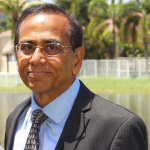 The Bengal-born writer Nazarul Islam is a senior educationist based in USA. He writes for Sindh Courier and the newspapers of Bangladesh, India and America. He is author of a recently published book ‘Chasing Hope’ – a compilation of his articles.


