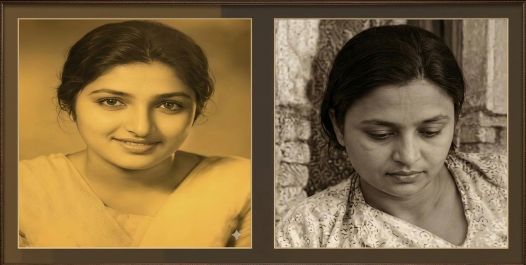
Nasim Thebo represents a rare intersection of academic rigor, literary talent, and social awareness in Sindh. She remains one of the most influential figures in modern Sindhi literature.
By Kalavanti Raja
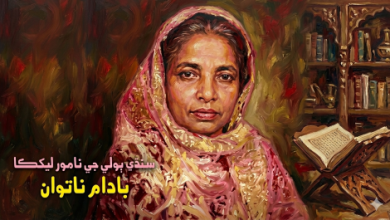
Nasim Thebo (1 April 1948 – 19 March 2012) remains one of the most influential figures in modern Sindhi literature. Born in the village of Ghari (Thebo village) in Mehar taluka, Sindh, she was nurtured in a family deeply rooted in intellectual and cultural pursuits. Her father, Mir Abdul Baqi Thebo, was a respected local notable in Mehar, providing an environment that valued education, social awareness, and community engagement. Her mother, Begum Badam Natwan (Madam Thebo), hailed from Shikarpur, a historic center of Sindhi culture and learning. Begum Badam Natwan was herself a pioneering female writer, best known for her book “Khush Khaslat Khatoon”, which established her reputation in Sindhi literary circles and laid a foundation of literary consciousness in her children.
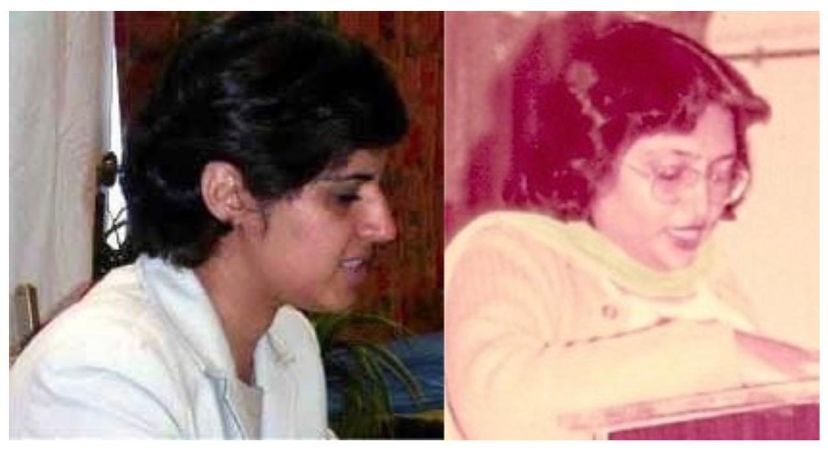 Nasim Thebo grew up surrounded by literature and progressive ideas. Her family was not only culturally active but also politically aware. She was the sister of Mir Thebo, a noted communist leader and progressive political activist in Sindh, whose work focused on social justice, equality, and grassroots mobilization. Her household, thus, combined a blend of literary refinement and political consciousness, shaping Nasim’s understanding of society and human psychology, which later became central to her writing.
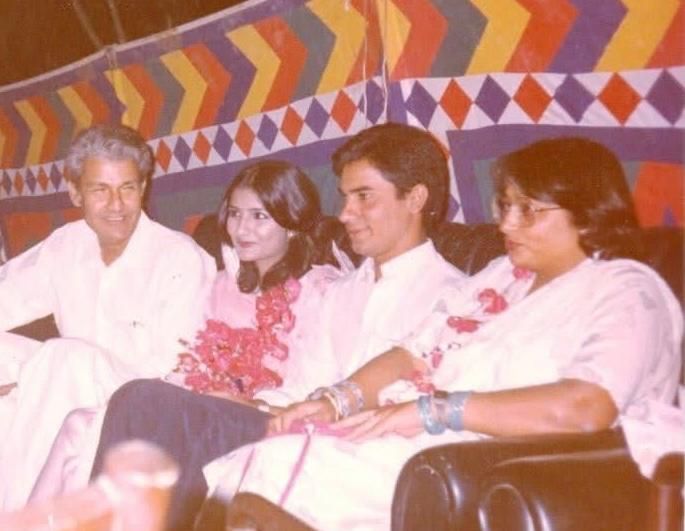 In 1968, Nasim Thebo married the prominent politician Rasool Bux Palijo, a lawyer by training and founder of the Awami Tahreek, a progressive political party in Sindh. This union further embedded her in the social and political fabric of Sindh, though her writing remained largely independent and focused on human experiences rather than direct political commentary. From this marriage, she had two daughters: Tania Thebo (later Tania Saleem) and Anita Thebo (later Anita Aijaz Mangi).
Nasim Thebo pursued a professional career in academics. She served as Assistant Professor in the Department of Economics at the University of Sindh, contributing to education until her retirement in 2000. Alongside her academic work, she became a prominent literary figure, particularly recognized for her short stories. Her writing career peaked in the 1970s and 1980s, a period in which Sindhi literature was undergoing a modernist transformation. She wrote around 25 short stories, reflecting social realities, women’s inner lives, and human psychology. Her work was notable for its psychological depth, subtle critique of social norms, and rich exploration of female experience, distinguishing her as a writer who could convey profound social insights without overt political rhetoric.
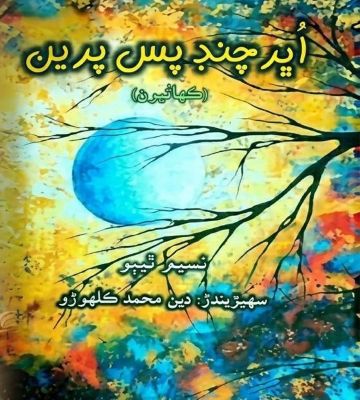 Her most celebrated collection of short stories, “Ubhar Chand Pas Pireen”, was published posthumously in 2013 by the Sindhi Adabi Board, compiled by Deen Muhammad Kalhoro. The stories reveal the influence of her upbringing: the moral and intellectual grounding from her mother, the social awareness of her father, and the political consciousness present in her brother and husband’s lives. A significant part of her life was spent in Shikarpur, her mother’s ancestral city, and later she settled in the Sachal Goth area of Karachi after retirement, reflecting the trajectory of many educated Sindhi families who combined rural roots with urban professional lives.
Nasim Thebo passed away on 19 March 2012 at the age of 64. She left behind a legacy of literary sensitivity and social reflection, and she is remembered as a talented, thoughtful, and courageous voice in Sindhi literature. Her work, though relatively modest in volume, continues to influence writers and readers interested in women’s experiences, human psychology, and social realities in Sindh.
Professional and Educational Legacy
* Academic career as Assistant Professor, Department of Economics, University of Sindh
* Retired in 2000
* Literary contribution: 25 short stories, recognized for their psychological depth and social insight
 Significance
Nasim Thebo represents a rare intersection of academic rigor, literary talent, and social awareness in Sindh. Her family exemplifies a multi-generational intellectual and cultural lineage—from her mother’s pioneering writing, through her own literary and academic accomplishments, to her daughters’ continued engagement with Sindhi culture and literature. Even decades after her passing, she remains a symbol of literary sensitivity, intellectual courage, and deep engagement with the human condition.
Read: The Pen That Spoke for Women
__________________
Kalavanti Raja, based in Gambat (Khairpur Mirs) is a researcher on Sindh’s political movements and gender history. She can be reached at kalavanti.raja@gmail.com