

The loss of educational purpose in Pakistan has created serious challenges for higher education and overall societal development.
Kashif Rauf Niazi
Education is the cornerstone of the national growth but its real aim is much deeper than attaining the degree or successfully passing the exams it is supposed to develop minds, characters, and create critical thinking, creativity, and leadership qualities. Nevertheless, the education system in Pakistan has lost its way in these ideals, and is currently mainly a producer of rote learners rather than innovative thinkers. This has undermined the capacity of students to use knowledge in practical life and it has had severe social, economic, and political impacts on the nation.
The real meaning of education is to be able to think critically so that one can challenge ideas and view information and make rational judgments. It encourages innovativeness and creativity, enabling the learner to come up with new ideas, inventions and technologies that advance. Education also develops good leadership skills, decision-making skills and the strength of going through challenges in life with self-confidence. More to the point, it conditions the mind to be resistant to manipulation and think on its own, giving people the ability to retain control over their thoughts and actions. Essentially, education sharpens the mind, enhances the power of reasoning and cultivates a balanced, rational and responsible lifestyle.
Although these are evident goals of education, Pakistan has not been able to realize the real aim of education because of a number of structural and policy-related problems. This is mostly due to low priority to education in national planning. The expenditure on education by the government has been below average over the decades, spending an average 3% of its GDP on education sector since its inception leading to poor facilities, lack of trained teachers and lack of educational resources. The lack of sufficient investment leads to the inability to have a good educational base.
Domination of teacher-centered teaching methods is another critical issue. Most classrooms will have students who are passive but not active learners and spend most of their time depending on what the teachers have to say instead of comprehending textbooks. This vice undermines inquisitiveness, critical thinking, and turns learning into a competition over marks rather than learning. Besides, students are increasingly using AI tools like ChatGPT and Gemini in order to finish their homework very fast, without necessarily learning the material. As much as technology can encourage learning, its abuse to achieve just grades and impressing teachers or parents further alienates education with its actual meaning.
The situation is exacerbated by poor infrastructure. In rural areas, many schools do not have proper classrooms, laboratories, libraries, clean drinking water and even basic technological equipment. These shortcomings cause severe inequality in education opportunities and deter the students to further their education.
The problem is further aggravated by the presence of ghost schools and ghost teachers, where institutions exist only on paper but fail to provide real education. This situation is a clear violation of Article 25A of the Constitution of Pakistan, which guarantees the right to free and compulsory education for children aged 5 to 16. Such neglect not only wastes public resources but also deprives children of their constitutional right to education.
The loss of educational purpose in Pakistan has created serious challenges for higher education and overall societal development. Due to weak teaching standards, lack of engagement, and poor learning environments, dropout rates continue to rise, with around 26 million children currently out of school, which severely affects the country’s educational progress.
Read: Education System of Pakistan: Issues, Problems and Solutions
These challenges not only limit access to higher education but also weaken the quality of learning at advanced levels. According to the 2023 Census, the higher education participation rate in Pakistan is approximately 9.08%, which is far below the level required for a stable democratic society, where nearly 19% participation is considered important.
This low educational attainment negatively impacts democratic awareness and political maturity. As a result, citizens often lack political rights and political understanding, leading them to vote based on personalities and charismatic leadership rather than policies. According to the V-Dem (Varieties of Democracy) survey, recent elections in 2024 also reflected a strong influence of personality-driven voting behavior, highlighting how weak education continues to shape Pakistan’s democratic structure.
The weak educational bases are also closely associated with social problems like gender inequality and violence. It is important that education should be used to foster respect, equality and awareness on basic rights. But in the case that education does not inculcate such values, women empowerment will still be minimal and gender discrimination will still be in place.
Consequently, some of the international pledges like Millennium Development Goal 2 (Education for All) and Goal 5 (Gender Equality) are still undercut in practice. The low development in these spheres also manifests itself in the low position of Pakistan in the world ranking; it is ranked approximately 148th in the Gender Inequality Index, which indicates serious structural issues.
In order to overcome these issues, Pakistan needs to give urgent reforms to its education system and get back to its actual mission. Education- 6% of GDP is necessary to enhance infrastructure, modern tools and training of teachers as in other countries such as Sri Lanka and Malaysia. Reforms in the curriculum must be based on changes in the rote learning and conceptual learning and student-centered teaching practices should be encouraged. Pakistan also ought to implement mandatory technical and vocational education and implement a dual system as in Germany that combines education with industry experience. Well trained teachers, more so at the primary level are required to create a good foundation. The future of any country is made in its classrooms; when education becomes meaningless, the society becomes lost. Education, therefore, should be a national priority in Pakistan to create a skilled, independent and progressive nation.
Read: Reimagining Higher Education in Pakistan
____________________
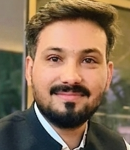 Kashif Rauf Niazi is a graduate of Political Science from the University of Peshawar. He is currently pursuing MPhil in Strategic Studies at the National Defence University (NDU), Islamabad. His academic interests include international relations, strategic affairs, and public policy.


