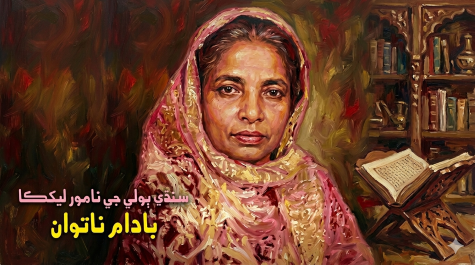
Badam Natawan’s pen never rested. She wrote with speed and with fire. She wrote about women’s morals, character, faith, courage, duties, and knowledge.
- She was the first woman in Sindhi literature to give essays the form of fiction. She left the old style of essay writing. She chose a new path
By Kalavanti Raja
In the wide river of Sindhi literature, the name of Badam Natawan shines like a quiet lamp. She was a brave, thoughtful, and creative woman. With her pen, she gave voice to the feelings, pains, and inner lives of women. She wrote in a new way. She wrote with courage. Her words still live in the heart of Sindhi letters.
 Her Early Life and Family
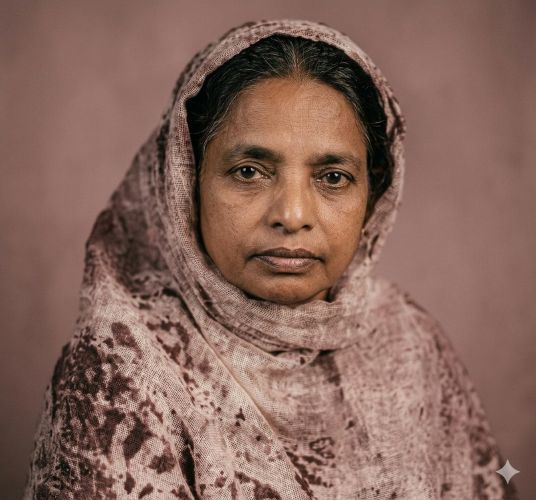
Badam Natawan was born on 7 March 1924 in Shikarpur, Sindh. Some records also say she was born around 1930. Shikarpur was an old city of learning and books. She was born into a Mughal family. Her father’s name was Muhammad Hasan. Her mother was a strong influence in her life. Her mother worked as a headmistress in a school.
As a small girl, Badam loved books. She started reading early. She started writing early too. The world of words became her home.
She studied in Shikarpur. Later, she passed her Matriculation from Bombay University. She did not stop at school learning. She read widely. She thought deeply. She knew Sindhi, Urdu, Persian, and English. These languages gave strength and color to her writing.
The Story of Her Name
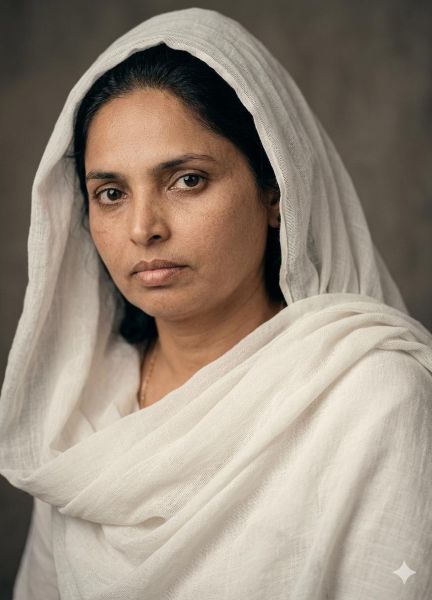 Her real name was “Badam.” People often asked, “Why Badam?” She gave a clear answer in an interview. The interview was published in the monthly magazine Adiyoon long ago.
She said, “In winter, Pashtun families came to Shikarpur from Quetta. Their daughters joined our school to study. Some of those girls had the name ‘Badam.’ My mother was the headmistress of the school. She liked that name. She chose ‘Badam’ for me.”
She chose her pen name herself. She took the name “Natawan.” Natawan means weak or frail. She said she chose it because society calls a woman natawan. She made that truth a part of her name. In literary circles, she became famous as “Badam Natawan.”
Her Kith and Kin
Badam Natawan built her own family with love and care. She married Abdul Baqi Thebo. He was a landlord from Mehar, Dadu.
Together they had seven children — five sons and two daughters. Two of her children became well known.
Her son Mir Thebo became a famous leader of the Pakistan Communist Party. He now lives in the USA.
Her daughter Naseem Thebo walked on her mother’s path. Naseem became a progressive Sindhi story writer. She filled Sindhi literature with her stories. Naseem married Rasool Bux Palijo, a famous Marxist-Leninist-Maoist leader.
Badam Natawan also had a sister she loved deeply. Her sister was Roshan Ara Mughal. Roshan Ara also wrote. She left a short but strong mark on Sindhi literature. When Roshan Ara died, Badam’s heart broke. She turned her grief into words. She published a magazine called Tuhnji Yaad Mein — “In Your Memory.” It was full of love, loss, and sorrow.
Her Books and Famous Stories
Badam Natawan’s pen never rested. She wrote with speed and with fire. She wrote about women’s morals, character, faith, courage, duties, and knowledge. She was the first woman in Sindhi literature to give essays the form of fiction. She left the old style of essay writing. She chose a new path. Her style was emotional. Her style was symbolic. She wrote about society’s problems in a way no one had tried before.
Shikasta Zindagi — “Broken Life” (1950)
 This was her first book. It came in two volumes. Each volume had 250 pages. For a woman writer at that time, this was a great feat. The book was published by Bashir Ahmad & Sons, Karachi. In this book, she wrote about broken dreams. She opened the inner world of women. She showed the hard face of society.
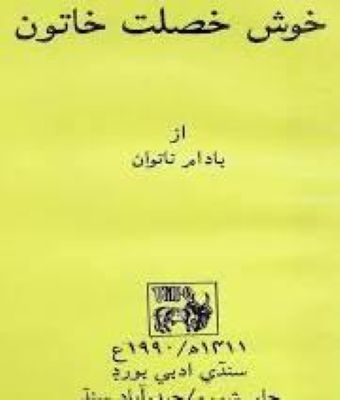
Khush Khaslat Khatoon — “A Woman of Good Character” (1956)
This was her second major book. It was published by the Sindhi Adabi Board in 1956. The book held ten essays. Badam Natawan herself said about this book: “In writing this book, instead of ink, I have used the blood of my liver.” The Sindhi Adabi Board honored her. They gave her an award. The Board’s Secretary, Muhammad Ibrahim Joyo, sent her 200 copies of the book and the prize. At that time, this was rare praise for a woman writer.
The scholar Syed Miran Muhammad Shah reviewed the book. He wrote: “This work is far better than the previous ones… For such effort and perseverance, this lady deserves praise and congratulations.”
Qalbi Ujj — “The Thirst of the Heart” (1966)
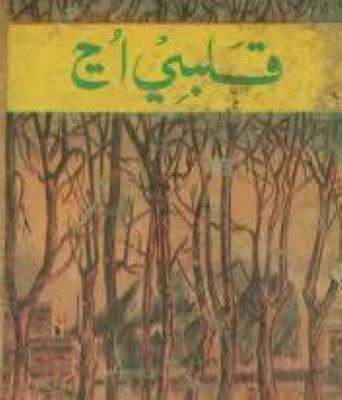 This was her third book. It was published in 1966 by Moulvi Muhammad Azeem & Sons, an old publisher in Shikarpur. This book showed the best of her pen. The great scholar Allama I. I. Kazi wrote his opinion on it. His praise gave her work high honor.
In this book, her essays burn with passion and zeal. She looked at society with the eye of a poet. She saw the evil around her. She picked up her pen and wrote with truth. She told women to walk on a spiritual path. She told them to fulfill Huqooq Allah, the rights of God. She told them to fulfill Huqooq-ul-Ibad, the rights of people. She told them to push ignorance away. She told them to light the lamp of knowledge.
Her books show deep study. She used quotes from Persian, English, Arabic, and Sindhi literature. She used verses and stories. She made her essays rich and beautiful.
Other Important Works
She wrote more books. Three of them are still unpublished. Their names are:
- Nimani Nar or Namani Naar — “The Helpless Woman”
- Khalwat Mein — “In Solitude”
- Runam Rat Phura or Runam Rut Phira — “Tears of Blood Drops”
These books look deep into a woman’s heart. They show her pain. They show how society treats her. These books should be published. The world should read them.
She also wrote many stories and essays. All of them speak of a woman’s life. They speak of her courage. They speak of her silence. They speak of her strength.
Her Place in Sindhi Literature
Badam Natawan did work that no one can forget. She woke up the women of her time. She called them toward knowledge. She called them toward books. She wrote for their rights. And through her writing, she earned her own place.
There was a time when Mohtarma Zeenat Abdullah Channa wrote much in Nain Zindagi and other magazines. People were amazed by her. In those same days, Badam Natawan rose from Shikarpur. She gave advice to women. She wrote for their rights. Her talent came before all eyes.
As her books came one by one, people saw her deep study. People saw her sharp eye. Her writings took an important place in Sindhi literature. At the same time, her words reached the women of Sindh. Those women who could read books found truth in her pages. They found courage. They found knowledge. They found counsel. Because of her, many women learned to stand for their duties. They learned to ask for their rights.
Her style was new. She made essays look like stories. She filled them with feeling. She filled them with meaning. This was a new test in Sindhi writing.
Her Final Years and Legacy
Badam Natawan’s pen ran fast. But just as fast, we forgot her. This is a sad truth. Her work should be in school books. It should be taught in colleges. It should be taught in universities. But this did not happen. Her books are not easy to find today. Her life story is not fully safe. Her unpublished books are still waiting for light.
This is a loss for Sindhi literature. She gave her life to books and to society. Yet we did not keep her memory as we should.
Badam Natawan died on 8 February 1988. She died in Shikarpur, her own city. She left this world. But she left her words behind.
Today, her name is a bright chapter in the story of Sindhi women’s writing. She was a daughter of Shikarpur. She was a mother of brave children. She was a teacher for all women. She was a light for all who read.
Her work tells us to be strong. Her work tells us to be true. Her work tells us to learn, and to teach.
Read: Restoring Democracy: Leadership, Strategy
__________________
Kalavanti Raja, based in Gambat (Khairpur Mirs) is a researcher on Sindh’s political movements and gender history. She can be reached at kalavanti.raja@gmail.com