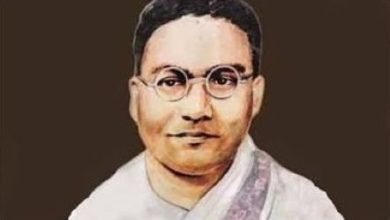
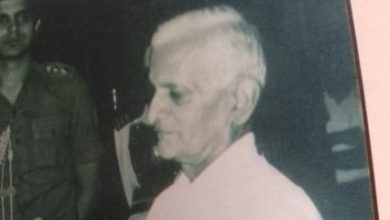
Bhagat Kanwar’s begging cloth is no longer with us, but its question remains: Of all that you received, what did you give to others? When Sindh answers that question through its actions, Kanwar’s song will be heard again, far beyond the silent tracks of Ruk.
By Ramesh Raja
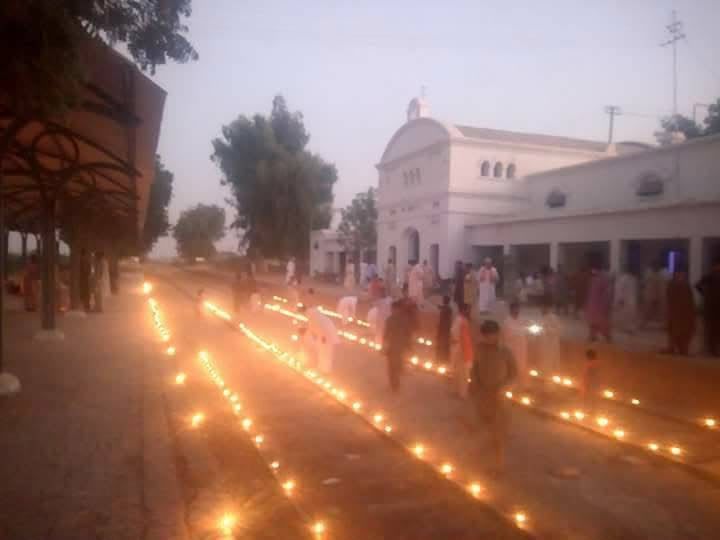
On the first of November, Sindh’s memory awakens once more to that night at Ruk Station, when the train continued along its tracks, but a traveller of love lay drenched in blood. The bullet that struck Bhagat Kanwar Ram’s chest on 1 November 1939 ended a human life, but it could not separate his voice from Sindh. Today, on 1 November 2026, eighty-seven years have passed since his martyrdom. Yet his melodies carry the same longing, his memory the same tenderness, and his name the same blessing. Reading Kanwar’s story brings before us not only a singer, but also a Sindh where people of different faiths sat together in one gathering, each remembering God in their own way.
 That voice was born from the soil of Jarwar on 13 April 1885. This village near Mirpur Mathelo was then part of Sukkur district and now lies within Ghotki district. According to Raharki tradition, the child born to Bhai Tarachand and Mata Tirath Bai was named by Sant Khota Ram Sahib, the spiritual head of Sant Satram Dham. The Dham’s spiritual accounts also associate his birth with Khota Ram’s blessings. Those blessings belong to the cherished memories preserved by his family and devotees, memories that sheltered Kanwar in love from childhood.
His early years were not spent in wealth or comfort. He drove birds away from his father’s small holding, operated the Persian wheel and helped support the household. Later, he went into the markets carrying a basket of boiled pulses. Nature had placed such sweetness in his street cries that a call to earn a living became a song. He learned Sindhi and Persian, studied Gurmukhi under Bhai Hasaram at the darbar in Hayat Pitafi, and, through service, absorbed lessons that written words alone cannot teach. However, no firm record of a modern academic qualification or certificate is available.
Tradition relates that when his melodious street cry reached the ears of Sant Satram Das Sahib, it drew his attention. Kanwar’s voice carried more than a vendor’s call. It echoed a heart still searching for its path. Their acquaintance gradually developed into a bond between spiritual guide and disciple. Raharki became his spiritual home, where, alongside devotional training, he learned that one doorway of worship opens towards the service of humanity.
Sant Satram Das was born on 25 October 1866 and passed away on 25 January 1910. After his departure, Kanwar Ram carried forward this tradition of service and spiritual leadership. If the succession is counted from Sant Khota Ram, Kanwar Ram was the third spiritual head; if counted from Satram Das, he was the second. Published accounts of the succession place his tenure between 1910 and 1939. Following Khota Ram and Satram Das, the names in this lineage are Kanwar Ram, Chandiram, Bhagwan Das, Kanya Lal, Saadh Ram and Rohit Lal. Chandiram’s succession after Kanwar also illustrates why inheritance of a spiritual seat should not be confused with descent through one’s own children.
 Kanwar’s life also embraced a home and family. In 1903, he married Ganga Bai, the daughter of Bhai Oto Mal, a landowner from Manghrian. His son, Bhagat Peso Ram, was born in Jarwar on 8 August 1917. In 1935, Peso Ram married Pritan Bai, the daughter of the landowner Jethanand. He followed his father’s path of music and generosity. After Kanwar’s martyrdom, he worked for several years as an accounts clerk in Pakur, towards Calcutta, before returning to Sindh. Around 1957, ten years after Partition, he settled in Amravati, India, where a spiritual center associated with his father’s memory stood in Kanwar Ram Nagar. The claim that the entire family left Sindh in 1947 is therefore incorrect.
When Kanwar entered a gathering wearing a long kurta or robe, a red turban and ankle bells, devotion appeared in all its colour. Music, storytelling, dance and spiritual feeling flowed into one another like separate currents becoming one river. His voice gave an intimate warmth to the poetry of Shah Abdul Latif Bhittai, Sachal Sarmast, Sami, Kabir and Mirabai. Listeners arrived with their different beliefs, but rose from the gathering carrying a shared sense of humanity.
Whether it was the prayer of “Naale Alakh Je Bero Taar Muhinjo” (“In the Name of the Unseen One, Carry My Boat Across”), the pleading of “Keenh Rijhayan Tokhe, Keenh Parchayan” (“How Shall I Please You, How Shall I Win You Over?”), the maternal tenderness of “Loli Lal Noon Deewan” (“Let Me Sing My Child a Lullaby”), the yearning of “Aa Kanga, Kar Galh” (“Come, Crow, Bring Me News”), or the soaring notes of “Uddar Wanj Totil” (“Fly Away, Little Parrot”), words in his singing seemed to become the heart’s own voice. Musical catalogues also include “Jedo Tuhinjo Naan,” “Sacho Sain Satram” and “Satram Parupkari.”
Sindhi music of that period had other shining names too. Master Chander of Tharushah, who lived from 1907 to 1984, released his first record in 1932. Kanwar Ram heard his voice and encouraged him. Jiwani Bai, born in 1901, became known through her kafis and gramophone recordings, while Ustad Bibo Khan of Shikarpur, who lived from 1904 to 1952, commanded dhrupad, khayal, thumri, dadra and Sindhi kafi. These were Kanwar’s contemporaries.
The other defining feature of Kanwar’s gatherings was his jholi, the cloth held out to receive offerings. When devotees presented money, gold, silver and gifts, these did not remain in his possession. They passed onwards, becoming food for someone hungry, freedom for someone burdened by debt, or help towards a daughter’s wedding. Accounts state that he kept nothing from these offerings even for his own family. Sometimes, he would hold out his cloth before the gathering to meet another person’s need. One account describes him collecting jewellery and 1,100 rupees and giving them to someone seeking help with a wedding. No verified total exists for the wealth he distributed throughout his life, but the memory of that generosity remains alive.
The difference between Kanwar Ram and today’s custodians of the spiritual seat is expressed in the words: “Kanwar only gave, while these custodians receive.” Sain Satram Das established the tradition of entrusting the spiritual seat to a true devotee, but it has now been made hereditary.
 There is also a written account recognizing his work in bringing people together. The British Governor of Sindh presented him with a certificate of appreciation, a ceremonial cloth or shawl, and a coconut in recognition of his promotion of Hindu-Muslim unity, opposition to untouchability and service to the disadvantaged. Sindhi Shaan likewise mentions his being honoured with a ceremonial shawl, certificate and coconut. Neither these offerings nor this recognition awakened any desire for possession within him.
He has also left today’s religious institutions a simple but searching question: how much of the wealth received through devotion has reached those in need? Kanwar’s life remains a moral measure for everyone. If his name is associated with a spiritual seat, its true inheritance lies in keeping alive both his music and his giving hand.
His final devotional performance took place in Manjhand. From there, he travelled to Dadu and boarded another train for Sukkur. On the night of 1 November 1939, as the train began leaving Ruk Station, a gunshot rang out. According to Noor Ahmed Janjhi, two men had asked him for a blessing before the attack. The same account identifies Jan Muhammad Jalbani as the gunman and names Suleman Bhayo as the other man accompanying him.
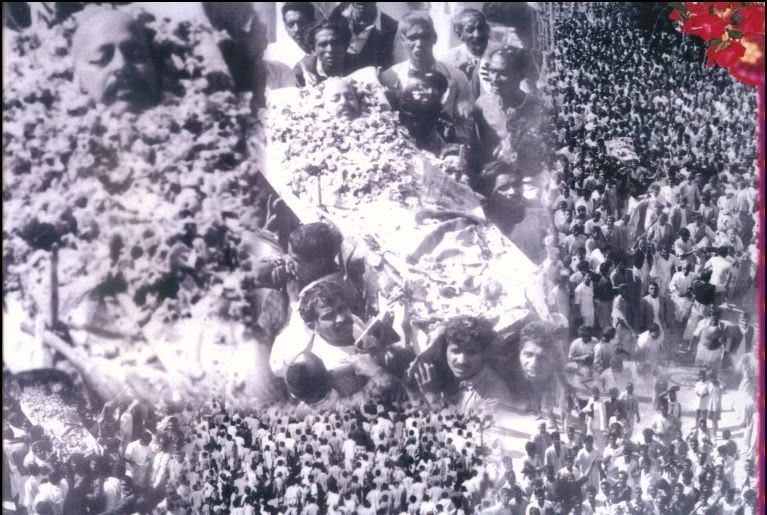
The wounded Kanwar lost a great deal of blood, and by the time the train reached Bagarji, his journey through life had ended. He departed from Sindh at the age of 54 years, 6 months and 19 days. His cremation took place on 2 November, and his final memorial shrine stands in Raharki. “May compassion awaken in you” is reported to have been his final utterance.
Regarding the killer, Sindhiana and Voice of Love name Jan Muhammad, also known as Janu Jalbani, and associate him with Bharchundi. In The Sindh Story, K. R. Malkani links Janu to the murders of Kanwar Ram, Allah Bakhsh Soomro and Hasaram Pamnani. These are statements made by those sources. Accounts also circulate concerning Suleman Bhayo’s involvement, Janu’s connection with Ratodero, the planning of a conspiracy at a shrine, and his subsequent skin disease and remorse.
According to the judicial inquiry report on the Sukkur riots, Kanwar Ram’s killers were not arrested. The report records speculation that the murder was revenge for an altercation in Sukkur on 13 July 1939 between the son of the Pir of Bharchundi and a Hindu over the repair of a gramophone. The report did not determine whether that theory was true. There is no need to dress uncertain claims in the clothes of certainty to convey the gravity of an innocent person’s martyrdom.
That night, Sindh was governed by Allah Bakhsh Soomro, whose first term lasted from 23 March 1938 to 18 April 1940. The British Governor of Sindh was Sir Lancelot Graham, the Viceroy of India was Lord Linlithgow, and Britain’s Prime Minister was Neville Chamberlain. Churchill became prime minister in May 1940. To place him in that office at the time of the November 1939 incident would be a historical error.
Through confidential communication P-25-H(S)/39, dated 22 November 1939, the Sindh Government reported the murder and the assailant’s escape to the Government of India’s Home Department. The district magistrate prescribed a route for the funeral procession. A statement by Congress leaders, published on 10 November, criticized the police for failing to pursue the killers. According to that statement, threats before the murder had led to an armed guard being posted at Kanwar’s home and a gun licence being issued to him. Even so, his life could not be saved, and the path to justice remained incomplete.
 On 8 October 1940, the Pir of Bharchundi was arrested under Bombay Regulation XXV of 1827 and brought to Karachi. This action arose from the wider context of murders and unrest in the Rohri area. It was not a judicial conviction for Kanwar Ram’s murder. The Governor’s letter to the Viceroy dated 6 November 1940 also mentions efforts to arrest the Pir’s son and political representations seeking the Pir’s release. That letter reveals the government’s thinking at the time; it cannot be treated as a court judgment.
Kanwar’s martyrdom occurred when political and religious divisions were widening within Sindh’s shared social life. The Manzilgah movement and riots of 1939, Kanwar Ram’s murder, and Allah Bakhsh Soomro’s assassination in Shikarpur on 14 May 1943 inflicted deep wounds upon society. Sir Abdullah Haroon, G. M. Syed, Ayub Khuhro, Hashim Gazdar and Pir Ali Muhammad Rashdi played important roles in the Manzilgah movement. Research discusses the political use of the issue against Allah Bakhsh’s government. However, leading a movement and bearing legally established responsibility for commissioning a murder are separate matters.
Ayub Khuhro and his brother faced a conspiracy case concerning Allah Bakhsh Soomro’s murder, but were acquitted for insufficient evidence. The execution of Soorhiah Badshah, Pir Sibghatullah Shah Rashdi, by the British authorities on 20 March 1943 was another great tragedy of that period. Further documentary evidence would be required to describe these events as links in one proven conspiracy or as the result of a direct order from Churchill to commit murder. The statement, “Had they remained alive, Pakistan would not have been created,” is likewise a speculative political opinion, rather than an established conclusion about the past. Caring for history’s wounds requires fidelity to truth as well as remembrance.
Miracles, including bringing rain and restoring a child to life, are also attributed to Kanwar. These are expressions of devotion and folk memory, which may be understood in their own context. His greatness, however, needs no miracle to sustain it. Feeding someone hungry, lifting the burden of debt from another, and bringing people of different faiths together in a season of hatred were themselves profound acts of humanity.
After his departure, words, images and music preserved his memory. Jethanand Hemandas also wrote booklets about his passing. In 1952, the Sindhi film Bhagat Kanwarram, directed by Dharam Kumar, portrayed his life. Statues of him stand at the Institute of Sindhology in Jamshoro and at the Baba Sri Chand temple in Faqir Goth, Thatta district. Every year, Hindus and Muslims gather at Ruk Station to remember the man whose gatherings had given them a place to sit together.
On 26 April 2010, Indian President Pratibha Patil released a commemorative postage stamp in his honour. This was a clear instance of official recognition after his death. The accompanying biographical text praised his commitment to peace, nonviolence, Hindu-Muslim harmony, the artistic expression of devotion and service to the poor. In 2017, an auditorium named after him was also inaugurated at the Shikarpur campus of Shah Abdul Latif University. “Bhagat,” “Sant” and “Shaheed” are his popular and spiritual titles. An award given to others in his name should not be mistaken for an honour he personally received during his lifetime.
According to recent information, during the final week of October 2026, Sindh Assembly member Mahesh Kumar Hasija submitted a proposal to name the Ghotki-Kandhkot Bridge being built across the Indus River the “Shaheed Bhagat Kanwar Ram Bridge.” If a bridge connecting riverbanks bears the name of a man who connected hearts, the journey across it may acquire a historical meaning of its own.
To keep Kanwar’s memory more fully alive, the site of his martyrdom at Ruk and the heritage associated with Jarwar and Raharki should be documented and protected. His life and thought should find a place in the curriculum, his original recordings should be preserved, and regular anniversary commemorations should be accompanied by musical education and a fund in his name to support artists in need. Caring for existing memorials and completing unfinished projects are also part of this responsibility.
Perhaps the loveliest memorial to Kanwar Ram is built in a home from which someone sends a meal to the hungry. Perhaps it shines in the eyes of a child whose education someone has paid for, or resounds in a gathering where one human being can sit beside another without fear. His begging cloth is no longer with us, but its question remains: Of all that you received, what did you give to others? When Sindh answers that question through its actions, Kanwar’s song will be heard again, far beyond the silent tracks of Ruk.
Read: Ustad Shafi Faqir: Living Legend of Sindhi Music
_______
 Hailing from Gambat town of Sindh, Engr. Ramesh Raja, is a Civil Engineer, visionary planner, PMP certified and literary enthusiast with a passion for art and recreation. He can be reached at engineer.raja@gmail.com