The conflict will be devastating for the global economy and regional peace and security.
Ambassador M. Alam Brohi
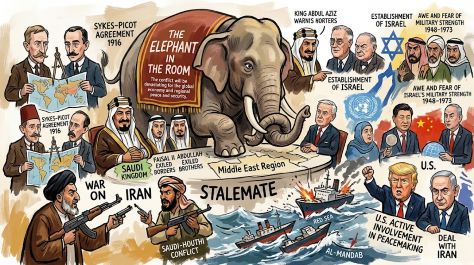
The situation in the Middle East has been entangled since the disintegration of the Ottoman Empire after the First World War. The dominant powers, including the UK and France, with the consent of Russia, decided to divide the Ottoman territories in the Middle East. They engaged two diplomats – Sir Mark Sykes and his French counterpart, François Georges-Picot, to draw the political boundaries of the Middle Eastern countries. These arbitrary boundaries were determined by the Sykes-Picot Agreement of 1916.
These powers divided these territories into their protectorates. France took Syria, Lebanon, and some parts of modern Türkiye, including Anatolia, while the UK took over Iraq, Transjordan, Palestine, South Yemen, Bahrain, and some other Arab tribal territories. North Yemen restored its Mutawakkil (Zaidi) Kingdom in 1918. Abdul Aziz Ibn Saud had already established his kingdom in a vast territory in 1930. This was the political landscape of the Middle East at the time.
The UK authorities had allowed Ibn Saud to occupy Hejaz and Medina, expelling Faisal II and Abdullah, two brothers of Hashemite and Qureshi lineage. In 1921, the UK installed Faisal as the king of Iraq, while Abdullah was crowned as the sovereign of Transjordan. Free from the Hashemite brothers, Ibn Saud began consolidating the borders of the kingdom. A war erupted between the Saudi and Zaidi Kingdoms in 1934, in which North Yemen lost vast territories of Asir, Najran, and Jizan.
Ibn Saud had stood by the UK throughout the World Wars and was backed by the latter in consolidating his kingdom. The UK signed an agreement with King Abdul Aziz in 1936, recognizing Saudi control over the new territories and assuring it of security. Yemen keeps revising its claim over these territories. This provides a backdrop to the historic conflict between the Sauds and Zaidis. The hostile Zaidi Kingdom was overthrown in a military coup in 1962. South Yemen was freed in 1970, along with other small Arab territories.
Peace and stability have always evaded the Middle East. The region, with its rich resources, has been found to be fertile land for Arab nationalism, Marxism, dictatorship, autocracy, plutocracy, oligarchy, absolute monarchies, absolute emirates, intrigues, coups and counter-coups. The establishment of Israel in the Palestinian lands was a coup de grâce against the Arabs. King Abdul Aziz had warned President Roosevelt and Prime Minister Winston Churchill against the establishment of the Israeli state.
The Arab countries have not recovered from the awe and fear of Israel’s military strength demonstrated in the wars from 1948 to 1973, with the determined support of the USA. The reverberations of these wars are still felt in the Arab capitals, rocking the Arabs’ ego, vanity, and pride. We witnessed a growing eagerness among the Arabs to embrace Israel before the war on Iran. The Arab states’ mealy-mouthed condemnation of the mass killings in Gaza, including those of children, demonstrated their reluctance to confront Israel.
We are not going to have a new Middle East as a consequence of the war on Iran. The war is stalemated, with the warring countries holding their guns steadfastly. We have elaborated on the strategic objectives Israel wants to achieve before agreeing to end the war. In another piece published by this paper, I have explained that President Donald Trump joined the war at the behest of Netanyahu without any planning, war objectives, exit strategy and, probably, even without consultation with his generals. Iran was attacked while it was engaged in talks with its adversaries.
The war between Saudi Arabia and the Houthis will also reach a stalemate unless the former successfully puts in place a formidable coalition force to crush the militia. The paradox of this war is that the Houthis are fighting amphibious and guerrilla warfare. It is difficult, if not impossible, to chase and confront them on land. They attack merchant ships passing through the Red Sea and Al-Mandab. There will be no quick end to the warfare. The conflict will be devastating for the global economy and regional peace and security.
The UN or the international community is already tired of the unceasing conflicts and military confrontations in the Middle East. The NATO/EU countries refuse to be dragged into the war on Iran. They are equally least interested in taking any initiative to establish peace and security in the Middle East, notwithstanding the rich regional resources. It would be unrealistic to think of an international conference to address this complex situation because any such initiative would essentially have the Palestinian problem on its agenda, which Israel would not accept.
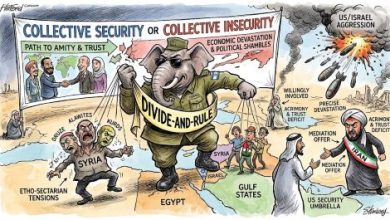
China is also least interested in getting involved in this complex region, taking sides, arguing with certain states, and cajoling others to arrive at an acceptable agreement for peace and security, thereby harming its interests. Russia could have jumped into the arena, but it is bogged down in Ukraine. All this drives our gaze towards Iran and the USA. These are the two countries that can take the region out of the current messy situation created largely by the USA and its vassal state of Israel. Hence, the USA needs to have an active involvement in peacemaking.
The USA can end the war with Iran by disciplining the Israeli leadership. Netanyahu exploited President Donald Trump by dragging him into the devastating war on Iran. He should abandon his quest for a clear victory, revive the Islamabad MoU, and make a deal with Iran, ending the war forever, with an express clause that Iran will have peaceful coexistence with Israel and the Gulf States. Iran will apparently have no qualms about accepting such a clause in the peace deal, premised on non-interference in each other’s affairs and good neighborliness.
After such a deal, the USA will not need to have fortified military bases in the Gulf States that failed to provide security to the host countries. It can, at most, think of fortifying its bases in Israel. For the interim phase, it can maintain the Fifth Fleet’s headquarters in Bahrain, Al-Udeid Air Base in Qatar, 5,000–10,000 troops in Kuwait, and access to bases in Oman and the UAE.
Such an initiative needs the intervention of a powerful state which, in the present scenario, is only the USA.
Read: The Elephant in the Room
__________________
 The writer is a former member of the Foreign Service of Pakistan and has served as Ambassador for two terms. He is the author of five books.