The Sun belongs to no particular religion, caste or nation. It belongs to life itself. And Chhath, in its most profound expression, is a celebration of that universal truth.
By Ramesh Raja
I often wonder why a festival so profoundly connected with nature and the forces that sustain life is not celebrated by all Hindu communities, particularly by us Pakistani Hindus. What fascinates me most about Chhath is its extraordinary expression of gratitude. Unlike most traditions that celebrate the rising Sun, Chhath begins with a salute to the setting Sun, the celestial body slowly disappearing beyond the horizon. How remarkable and profound is this thought! Who ordinarily pauses to salute something that is setting or seemingly disappearing? Yet Chhath does precisely that. It acknowledges the Sun’s energy, warmth and nourishment that have sustained the earth, its fields and every living creature, particularly nurturing the Kharif crops.
The following morning, devotees return to the riverbanks before sunrise to salute the rising Sun, welcoming renewed light, energy and hope. It is an expression of gratitude for the warmth that will sustain another agricultural cycle, including the coming Rabi crops. Thus, the festival embraces both ends of the Sun’s daily journey: its setting and rising, its apparent disappearance and its return.
What makes this tradition even more fascinating is that its central object of reverence is a tangible and universal source of light, heat and energy. The Sun belongs to everyone, irrespective of religion, caste, language or nationality. Its energy sustains agriculture, ecosystems and virtually every form of life on Earth. This extraordinary celebration of nature and gratitude is called Chhath.
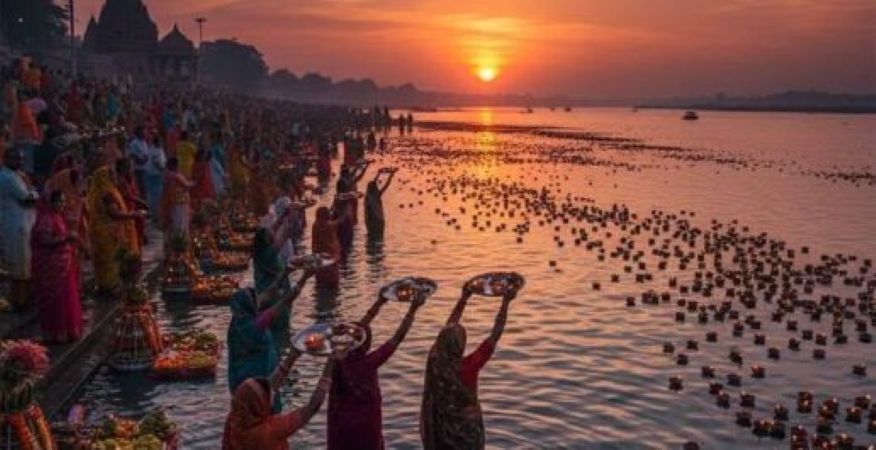 Chhath 2026: Four Days of Celebration
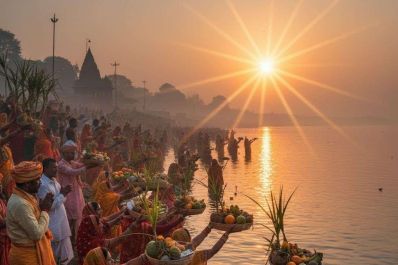
This year, Chhath is being celebrated from 13 to 16 November 2026. The four-day observance follows a distinctive sequence. The first day, Nahay Khay (13 November), involves ritual bathing, cleaning homes and preparing traditional vegetarian food. The second day, Kharna (14 November), involves fasting throughout the day before breaking the fast in the evening with jaggery-based rice pudding (kheer) and roti. On 15 November, Sandhya Arghya, devotees gather beside rivers and ponds to offer prayers to the setting Sun. On 16 November, Usha Arghya, they return before sunrise to offer prayers to the rising Sun and conclude their fast.
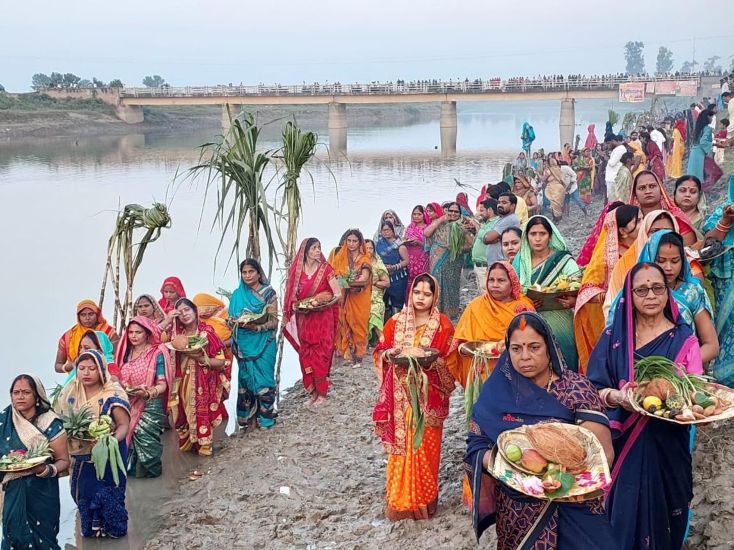 Geographical and Cultural Roots
Chhath is predominantly celebrated in Bihar, Jharkhand, eastern Uttar Pradesh and Nepal’s Terai region. Its cultural heartland includes the historical regions of Magadh, Mithila and Bhojpur. Patna, Gaya, Darbhanga, Muzaffarpur, Varanasi and Gorakhpur are among its important centers. Through migration, the festival has spread to Delhi, Mumbai, Kolkata and overseas communities in Mauritius, Fiji, Britain, the United States and Canada.
The word Chhath derives from the Sanskrit word Ṣaṣṭhī, meaning the sixth day. It takes its name from the sixth lunar day of the bright fortnight of Kartik, generally falling in October or November. The festival is particularly associated with Bhojpuri-speaking, Maithil, Magahi-speaking and Angika-speaking communities. However, it is not confined to any particular caste. People from different Hindu castes and social backgrounds participate, making it a shared regional cultural tradition.
Historically, Chhath is believed to have roots in ancient solar worship. The Rigveda contains hymns dedicated to Surya, the Sun God. Popular religious traditions associate the festival with Karna of the Mahabharata, who worshipped the Sun, and Sita of the Ramayana. However, these are mythological associations rather than conclusive historical evidence of the festival’s exact origin. An important documentary reference appears in George Abraham Grierson’s Bihar Peasant Life, published in 1885, which records Chhath as an established regional tradition in Bihar.
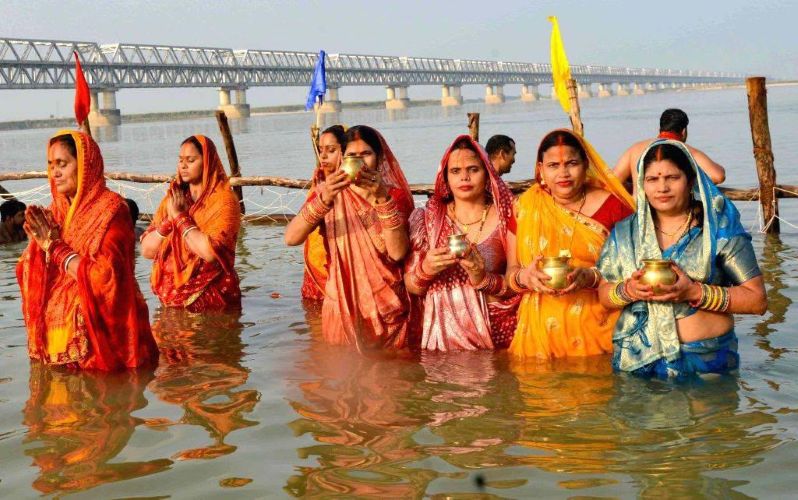 Nature’s Produce and Traditional Offerings
One of the most fascinating features of Chhath is the use of natural and agricultural produce in its rituals. Offerings are traditionally arranged in bamboo baskets called soop and dala. These include sugarcane, coconuts, bananas, apples, oranges, seasonal fruits, radishes, turmeric, ginger and elephant foot yam. A particularly important offering is thekua, a traditional sweet prepared from wheat flour and jaggery or sugar, which is considered the principal prasad of the festival. Rice, jaggery, milk and ghee are also used in traditional food preparations. Earthen lamps, cotton wicks and ghee illuminate the riverbanks during evening worship.
Sugarcane holds particular significance, symbolizing fertility, prosperity and agricultural abundance. These offerings are not merely ceremonial objects; they represent the earth’s harvest and the natural resources upon which human life depends.
The Ganges is particularly important for Chhath celebrations, especially in Patna, Varanasi and Bhagalpur. Other rivers associated with the festival include the Yamuna, Gandak, Kosi, Bagmati, Son and Punpun. Ponds, lakes and reservoirs are equally used. Unlike many religious ceremonies conducted inside temples, Chhath’s principal rituals take place in direct contact with natural water bodies.
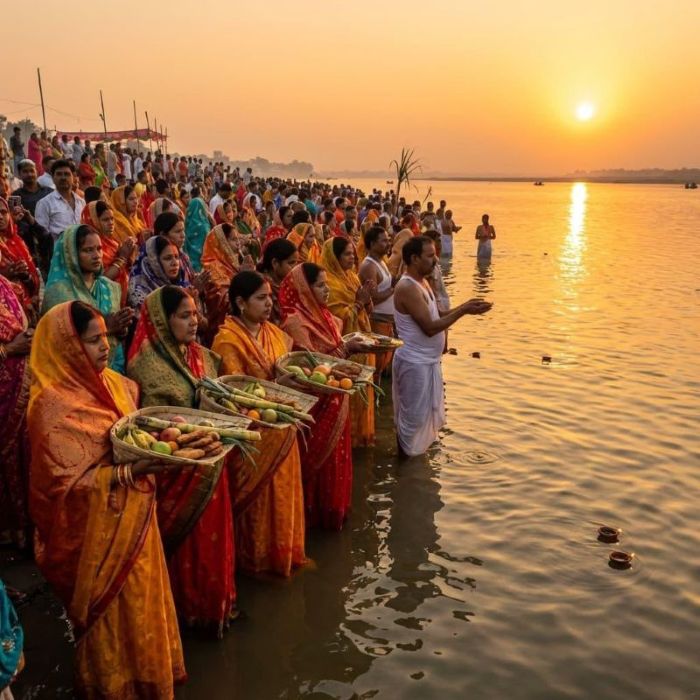 Astronomical and Cultural Significance
Chhath falls during October and November, when the Northern Hemisphere experiences autumn and gradually moves towards winter. Days become shorter, mornings and evenings cooler, and the Sun appears progressively lower in the midday sky. However, there is no established scientific evidence that the sixth lunar day of Kartik coincides with any unusual solar alignment or special astronomical event. Seasonal changes result from Earth’s axial tilt and revolution around the Sun.
Nevertheless, worshipping both the setting and rising Sun is symbolically remarkable. Evening prayers express gratitude for the energy already received, while morning prayers welcome its renewal. This represents the continuity of nature and humanity’s dependence on solar energy, particularly in agricultural societies.
Another interesting connection is the festival’s proximity to Diwali. Both fall in the Hindu month of Kartik. Diwali is celebrated on Kartik Amavasya, the new-moon night, while the principal evening worship of Chhath takes place six lunar days later, on Shukla Shashthi. Diwali is associated with Goddess Lakshmi, Lord Ganesha and the lighting of homes with traditional oil lamps, symbolising prosperity and the victory of light over darkness. Chhath, in contrast, centers on Surya and Chhathi Maiya, emphasizing health, family welfare, longevity of children and gratitude towards nature. There is no established historical evidence that one festival originated from the other.
Perhaps the greatest lesson of Chhath lies in its extraordinary gesture of saluting the setting Sun. Human beings are generally attracted to power, success and rising fortunes. Yet this festival teaches us to express gratitude even when something appears to be disappearing. It reminds us that every sunset carries the promise of another sunrise.
At a time when environmental degradation, climate change and river pollution threaten our natural resources, Chhath’s message deserves appreciation beyond religious boundaries. I believe this beautiful tradition deserves greater recognition among Hindu communities everywhere, including Pakistani Hindus. One does not need to adopt another community’s religious practices to appreciate the universal philosophy behind them.
The Sun belongs to no particular religion, caste or nation. It belongs to life itself. And Chhath, in its most profound expression, is a celebration of that universal truth.
Read: The NVIDIA Storm: AI Spy Game
______________
 Hailing from Gambat town of Sindh, Engr. Ramesh Raja, is a Civil Engineer, visionary planner, PMP certified and literary enthusiast with a passion for art and recreation. He can be reached at engineer.raja@gmail.com