The Timeless Art of Sindhi Hospitality
Lessons in Warmth from Rural Sindh - A Traveller's Observations

If I were asked to identify one cultural treasure that Sindh has preserved through generations, I would not hesitate to mention its hospitality.
It is not simply a matter of offering food or providing a place to sit. It is an emotion, a social responsibility and, above all, a way of life.
By Abdullah Usman Morai
There are many reasons why people travel. Some travel to explore landscapes, some to discover historical places, others to experience different cuisines and cultures. But sometimes, a journey becomes meaningful because of the people we meet and the warmth with which they welcome us. My recent visit to Sindh, Pakistan, in November 2026, reminded me of one of the most beautiful and deeply rooted characteristics of Sindhi society: hospitality, or Mehman Nawazi, and the traditional culture of Kachehri.
If I were asked to identify one cultural treasure that Sindh has preserved through generations, I would not hesitate to mention its hospitality. It is not simply a matter of offering food or providing a place to sit. It is an emotion, a social responsibility and, above all, a way of life.
 Mehman Nawazi: A Tradition from the Heart
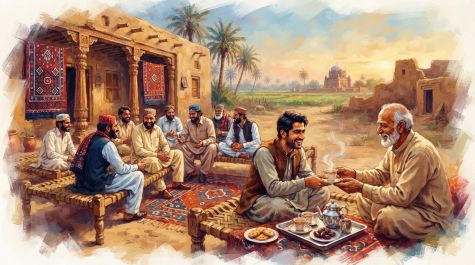
During my visit, I observed that the tradition of welcoming guests remains remarkably alive. Whether visiting relatives, friends, acquaintances, or even people meeting you for the first time, the response is often the same: warmth, respect, and an insistence that you must have something before leaving.
It might begin with a simple cup of tea, but rarely does it end there! Tea may be followed by biscuits, traditional snacks, fruit, lunch or dinner. Sometimes, hospitality develops into several courses of meals, and the guest is treated almost like a member of the household.
What makes this tradition particularly special is that people do not necessarily offer hospitality because they have plenty of resources. Even families with modest means often make sincere efforts to welcome their guests. The intention matters more than the material value of what is offered.
In Sindhi culture, a guest is traditionally considered a blessing. This understanding is also connected with religious teachings, which encourage generosity, kindness, and respect towards guests. At the same time, these values have much older cultural roots in the region, where welcoming travelers and strangers has long been regarded as a social virtue.
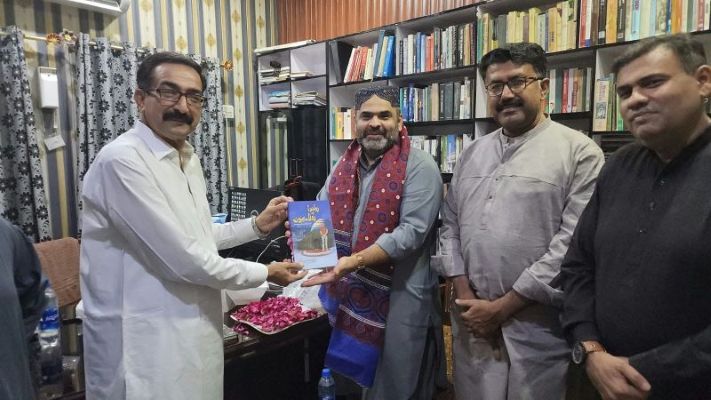
Kachehri: The Art of Sitting Together
Another fascinating aspect of Sindhi social life is Kachehri. The word may simply mean a gathering or sitting together and talking, but its cultural meaning is much broader.
Kachehri can begin in the afternoon and continue until midnight. Friends gather at someone’s home, a guesthouse, a village courtyard, a farmhouse, or even under a tree. Tea keeps arriving, conversations continue, and nobody seems particularly concerned about the passing hours.
The subjects of discussion are endless. Politics, society, history, literature, books, travel, economics, international affairs, personal experiences, and even comparisons between different countries can become topics of conversation.
One person might share a travel experience from different parts of the world, another might discuss a recently read book, while someone else may offer observations about the changing political and social conditions of Sindh. Sometimes discussions become passionate, disagreements emerge, and everyone presents their own arguments. Yet the gathering itself remains an important part of the experience.
What I particularly appreciate about this culture is its informal learning environment. People learn from one another without needing a classroom, a lecture hall, or a formal invitation. Experiences are exchanged, ideas are challenged, stories are shared, and friendships are strengthened.
In an age when much of our communication has shifted to mobile phones and social media, these face-to-face conversations have a special value. They remind us that human connection requires time, attention, and physical presence.
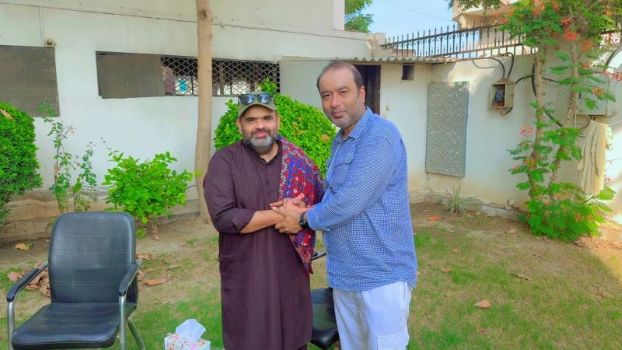 Ajrak and Sindhi Topi: More than Gifts
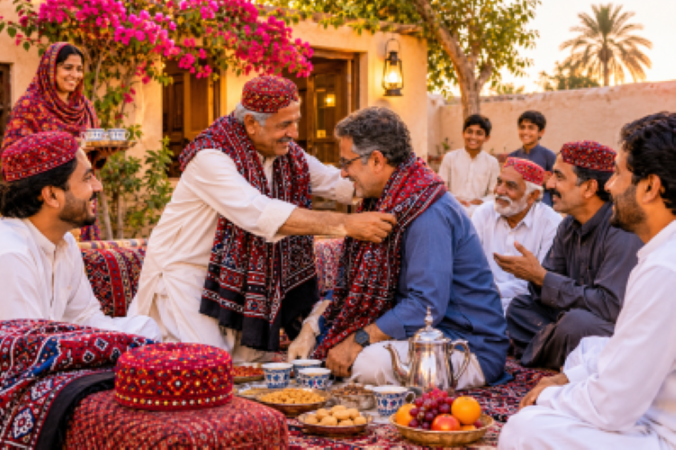
Hospitality in Sindh sometimes goes beyond food and conversation. A guest may also be presented with an Ajrak or a Sindhi Topi, two powerful symbols of Sindhi cultural identity.
Ajrak, with its distinctive geometric patterns and traditional block-printing techniques, represents an artistic heritage passed down through generations. Its roots are associated with the ancient textile and craft traditions of the Indus Valley region. It is not merely a piece of cloth; it carries a sense of belonging, dignity, and cultural pride.
The Sindhi Topi, meanwhile, is another distinctive cultural symbol. Its intricate embroidery and characteristic design make it instantly recognizable. Together, Ajrak and Topi have become expressions of respect, affection and recognition.
Their significance is also connected with the spiritual and Sufi heritage of Sindh. The poetry and teachings of great Sufi figures such as Shah Abdul Latif Bhittai, Sachal Sarmast and Lal Shahbaz Qalandar have contributed to a cultural philosophy centered on humanity, love, tolerance and the acceptance of others.
Sindhi Sufi thought repeatedly reminds us that human beings should be valued beyond differences of status, wealth, language or background. Hospitality is one practical expression of this philosophy.
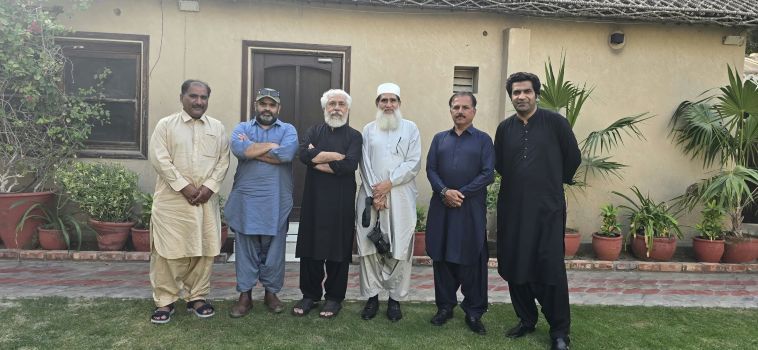 Why Is This Culture Less Visible Elsewhere?
Having lived in Sweden for many years and travelled through different parts of the world, I have experienced many forms of hospitality. Generosity and kindness are certainly not exclusive to Sindh. Every society has its own traditions of welcoming guests.
However, what makes Sindhi hospitality distinctive is the scale, spontaneity, and social importance attached to it. In some societies, including many modern urban environments, social visits are often arranged in advance, limited by busy schedules and organised around personal time and privacy. In Sindh, an unexpected visitor can sometimes become the center of an entire day’s activities!
This does not mean that other societies lack warmth or generosity. Rather, the expression of hospitality differs according to social structures, lifestyles and cultural expectations. In Sindh, the tradition remains particularly visible in everyday social interaction.
Of course, changing lifestyles, economic pressures, migration and urbanization are also influencing these traditions. Preserving them requires more than remembering the past; it requires practicing them in the present.
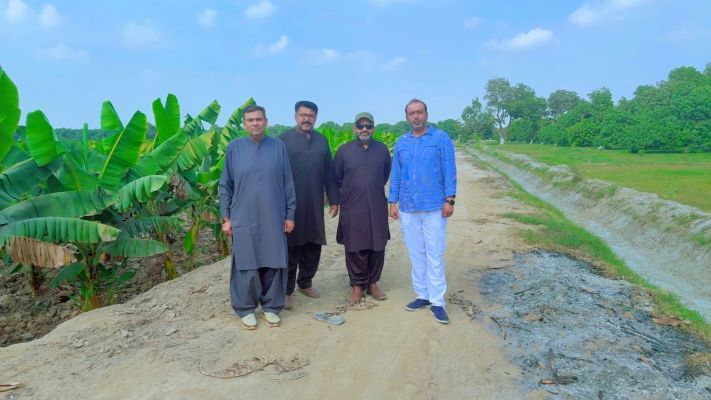 A Culture worth Preserving
My November visit reminded me that the richness of Sindh cannot be measured only through its archaeological sites, historical monuments, rivers, deserts or agricultural landscapes. Its greatest wealth is also found in its people, their open doors, their generous hearts and their willingness to spend hours in conversation.
Perhaps the most beautiful thing about Sindhi hospitality is that it does not follow a timetable. A cup of tea can turn into lunch, lunch into dinner, and dinner into a Kachehri that continues late into the night.
You may arrive as a visitor, but you often leave feeling that you have become part of the family.
In a world increasingly occupied with speed, deadlines, individualism, and digital communication, Sindh offers a gentle reminder of something we should never lose: the value of sitting together, listening to one another, sharing food and making people feel welcome.
After all, hospitality is not measured by how much food is served or how expensive a gift is. It is measured by how warmly a person is made to feel.
And in this art, Sindh still has a remarkable story to tell.
Read: A World Made Kinder by Paws
_______________
Abdullah Soomro, penname Abdullah Usman Morai, hailing from Moro town of Sindh, province of Pakistan, is based in Stockholm Sweden. Currently he is working as Groundwater Engineer in Stockholm Sweden. He did BE (Agriculture) from Sindh Agriculture University Tando Jam and MSc water systems technology from KTH Stockholm Sweden as well as MSc Management from Stockholm University. Beside this he also did masters in journalism and economics from Shah Abdul Latif University Khairpur Mirs, Sindh. He is author of a travelogue book named ‘Musafatoon’. His second book is in process. He writes articles from time to time. A frequent traveler, he also does podcast on YouTube with channel name: VASJE Podcast.