The inability of the government to vigorously apply the rule of law against agrichemical corporations that are conducting perilous practices is a result of a variety of factors.
Mir Mohammad Junejo
The Corporate Strategy of Encouraging Overuse
Agrochemical firms have a deep and generally negative impact on agricultural methods through a multi-faceted approach which actively promotes over-application. They start with intensive, intimidator advertising which presents their products as essential barriers to crop loss, but always downplaying the long-term environmental and human costs. This advertising is dispensed by an enormous network of local retailers who, working on a commission basis from sales, have a direct monetary interest in suggesting excessive and repeated usage, commonly pushing high-price “premium” products and even providing credit in order to maintain farmer dependence. Critically, such companies take advantage of an enormous knowledge gap; by offering themselves as the main source of agricultural guidance, particularly in regions where public extension services are poor, they create an information vacuum that is filled with product-based solutions, working actively against traditional knowledge and encouraging simplistic “calendar spraying” regimes at the expense of integrated pest management. In addition, their power is also felt in the political arena, where there are attempts to influence government subsidy schemes to privilege chemical inputs and dilute regulatory control of injurious products. Eventually, this produces a “pesticide treadmill”—a cycle of viciousness in which pesticides kill useful insects and create resistant pests, which require increasingly powerful chemical solutions that ensure an ongoing market for the industry’s products, keeping farmers captive to a cycle of chemical addiction that is ecologically damaging but extremely profitable to the industry.
The Multifaceted Crisis
The rural wealth famous for its mango groves, chili fields, Banana, wheat, rice, and cotton crops as well as the vegetables, is being essentially eroded by an internally generated crisis: the chronic and excessive use of chemical pesticides and fertilizers, a trend started by the Green Revolution’s guaranty of high yields but now continued by the forceful agro-chemical advertising, the absence of farmer education, and the fear of crop loss, causing prophylactic “calendar spraying” and the misplaced “more is better” mentality about urea and DAP fertilizer. This chemical addiction has unleashed a chain of disastrous effects, ranging from the serious degradation of soil fertility by killing vital microbes and earthworms, resulting in soil compaction and loss of natural fertility; extensive pollution of both surface water from the Nara Canal and groundwater aquifers with nitrates and poisonous pesticide residues, making water undrinkable for humans and associated with an increase in kidney and liver diseases; direct health risks to farmers suffering from severe poisoning and chronic diseases due to unsafe handling procedures; the destruction of beneficial insect populations, which causes disruption in natural pest predation and pollination; and the establishment of a paralyzing economic vicious cycle where farmers take enormous debt due to continuously rising input costs to fight pesticide-resistant superpests and declining returns from degraded lands.
Government Inaction and Regulatory Failure
The inability of the government to vigorously apply the rule of law against agrichemical corporations that are conducting perilous practices is a result of a variety of factors.
Second, political influence and corporate lobbying are key; large transnational corporations have enormous financial means to influence policymakers through lobbying, donating to political campaigns, and shaping the agenda of legislatures, and as a result, end up with softer regulations, postponents of prohibitions of poisonous chemicals, and policies conducive to chemically-intensive agriculture.
Secondly, there is a fear of economic repercussion; the agrochemical industry is a major contributor to the national economy through taxes, employment, and its perceived role in ensuring food security, creating a perception that aggressive regulation could stifle business, reduce crop yields, and harm the economy.
Thirdly, institutional failings hobble enforcement; bodies are usually poorly funded, manned, and devoid of the technological ability and logistical means to competently police thousands of farms and dealerships, and are also hampered by bureaucratic sloth and corruption.
Fourthly, there is a complex regulatory landscape with overlapping jurisdictions and ambiguous laws that companies can exploit through legal challenges. Finally, the government faces a lack of political will drive by the absence of massive, organized public pressure from a fragmented rural populace. Therefore, the state’s inaction is a calculated outcome that prioritizes corporate interests over public and environmental health.
Pathways to Sustainable Agriculture
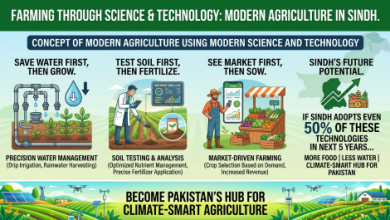
The sustainable solution out of this impasse is a multi-pronged and collaborative effort: first, via large-scale government and NGO-initiated education and extension programs advocating Integrated Pest Management (IPM) techniques favoring biological controls, crop rotations, and pheromone traps with pesticides as a last option; second, via the availability of accessible soil testing labs so as to allow accurate, balanced fertilization plans that substitute for blanket chemical sprays with customized nutrient management; third, via policy changes that transfer subsidies from chemical inputs to supporting organic inputs such as compost, green manure, and biopesticides, and enforcing rigid regulations on prohibited and adulteration pesticides sales; and lastly, via the creation of market incentives and certification programs for organic food, especially for exportable high-value mangoes, so as to give farmers financial evidence that sustainable agriculture is not merely ecologically required but also highly remunerative, and thus guarantee the long-term health of lands, waters, and people.
Read: Addressing Sindh’s Drug Crisis
______________________
Mir Mohammad Junejo is Monitoring & Evaluation Coordinator at Research and Development Foundation RDF