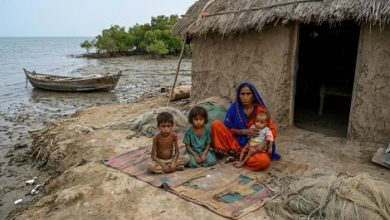
The root causes of child labor in Pakistan are deeply embedded in poverty, unemployment, population growth, illiteracy, and weak enforcement of labor laws
Fawad Ahmed
I wish to draw the attention of policymakers, civil society, and the general public towards one of the gravest and most persistent social evils in Pakistan: child labor. Despite constitutional guarantees, international commitments, and repeated policy promises, millions of children in our country are still trapped in exploitative labor, robbed of their childhood, education, and dignity.
Child labor in Pakistan is not merely an economic issue; it is a humanitarian crisis. According to various national and international reports, millions of children between the ages of 5 and 14 are engaged in hazardous and non-hazardous labor across the country. They can be found working in brick kilns, carpet weaving units, workshops, tea stalls, agricultural fields, domestic households, and even on the streets as vendors and beggars. These children work long hours in unsafe environments for meager wages, often under physical and psychological abuse.
The root causes of child labor are deeply embedded in poverty, unemployment, population growth, illiteracy, and weak enforcement of labor laws. For families struggling to meet basic needs, sending children to work becomes a survival strategy. However, this short-term coping mechanism results in long-term damage not only to the child but also to society as a whole. A nation that sacrifices the education and well-being of its children ultimately undermines its own future.
Pakistan’s Constitution, under Article 25-A, guarantees free and compulsory education for children aged 5 to 16. Furthermore, Article 11 explicitly prohibits child labor in hazardous industries. Pakistan is also a signatory to several International Labor Organization (ILO) conventions, including those aimed at eliminating child labor. Yet, the gap between legislation and implementation remains alarmingly wide. Laws exist on paper, but enforcement is weak due to corruption, lack of political will, and insufficient monitoring mechanisms.
One of the most disturbing aspects of child labor is its impact on education. Children who work full-time or even part-time are either completely deprived of schooling or forced to drop out at an early age. This perpetuates a vicious cycle of poverty and illiteracy, where uneducated children grow into unskilled adults, unable to secure decent employment, and eventually send their own children into labor. Breaking this cycle requires serious investment in accessible, quality education and social protection for vulnerable families.
Moreover, child labor has severe physical and psychological consequences. Children working in hazardous conditions suffer from malnutrition, injuries, respiratory diseases, and developmental issues. Exposure to abuse, exploitation, and harsh working environments leaves deep emotional scars, affecting their mental health and social development. These children are denied not only education but also the joy, creativity, and security that are fundamental to a healthy childhood.
The responsibility to eradicate child labor does not rest solely with the government. Society at large must play its role. Employers who exploit child labor must be held accountable, but consumers also share responsibility. When we choose cheap products without questioning their origin, we indirectly support child exploitation. Civil society organizations, media, religious leaders, and educational institutions must raise awareness and advocate for child rights consistently and forcefully.
The media, in particular, has a crucial role to play. Investigative journalism can expose exploitative practices, highlight human stories behind statistics, and pressure authorities into action. Public discourse must shift from treating child labor as an unfortunate norm to recognizing it as an unacceptable violation of human rights.
Concrete steps are urgently needed. The government must strengthen labor inspections, impose strict penalties on violators, and ensure that child protection laws are enforced without discrimination. Social safety nets should be expanded to support poor families so that children are not forced into labor for survival. Technical and vocational training for adults can also help reduce economic dependence on child labor. Most importantly, education must be made genuinely free, inclusive, and attractive, especially for marginalized communities.
In conclusion, child labor in Pakistan is a moral, social, and economic failure that demands immediate and collective action. Our children are not cheap labor; they are the foundation of our future. A society that tolerates child labor compromises its conscience and condemns itself to stagnation. It is time to move beyond rhetoric and take meaningful steps to ensure that every child in Pakistan is in a classroom, not a workplace.
I hope this letter will spark serious debate and encourage all stakeholders to act decisively for the protection of our children and the betterment of our nation.
Read: Pakistan among South Asian countries having highest Child Labor rates
_________________
Fawad Ahmed, hailing from Attock, Punjab, is a Law student