Lost Childhood: Sindh’s Child Labor Tragedy
Over 1.6 million children in Sindh are trapped in child labor


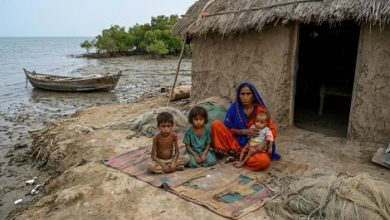
These are children as young as five, toiling in fields, workshops, and homes, far from classrooms and childhood.
- Sindh’s 2017 law bans employing children under 14, and under 18 in hazardous work. Yet enforcement remains weak
Ali Nawaz Rahimoo
According to Pakistan’s first and only National Child Labor Survey, conducted in 1996, the prevalence of child labor in Sindh was recorded at 20.6pc of the total child population at that time.
A new survey has jolted Pakistan’s conscience: over 1.6 million children in Sindh are trapped in child labor. These are children as young as five, toiling in fields, workshops, and homes, far from classrooms and childhood.
After nearly three decades, Sindh has finally taken a hard look at one of its most painful realities and the truth is as grim as it is urgent.
 The Sindh Child Labor Survey 2022–2024, a joint effort by the Sindh Labor Department, UNICEF, and the Bureau of Statistics, has revealed that more than 1.6 million children across the province are still caught in the grip of labor. Many of them are just 10 to 17 years old. Their childhood is spent not in classrooms or playgrounds, but under blistering heat, in dusty fields, dim workshops, or cramped kitchens often working long hours with unsafe tools in dangerous conditions.
For these children, the hazards are not abstract statistics they are daily life. Blistered hands from farm work, aching backs from carrying bricks, and a constant struggle to keep up with studies, if they can attend school at all. In fact, the numbers tell their own sad story: only 40.6% of working children go to school, compared to 70.5% of children who are free from labor. And for girls, the burden is even heavier. Among those aged 14 to 17, many spend nearly 14 hours a week on domestic chores alone, leaving little energy or time to continue their education.
Yet, there is a small glimmer of progress. Compared to 1996, the overall rate of child labor in Sindh has dropped by almost half. Still, the crisis remains deeply rooted in certain districts. Qambar Shahdadkot tops the list with a staggering 30.8% child labor rate, closely followed by Tharparkar at 29%, Shikarpur at 20.2%, and Tando Muhammad Khan at 20.3%. Karachi, by contrast, records the lowest at just 2.38% poverty. In 33.7% of poor households, there is at least one working child. And the toll is not only physical: 20.1% of these children show signs of depression—almost double the rate among their peers who are not forced to work.
The report’s conclusion is clear and urgent. Child labor is stealing futures, crushing potential, and perpetuating the cycle of poverty. The government must act decisively—not just to remove children from dangerous work, but to give them what every child deserves: safety, education, and the chance to dream beyond survival. First, enforce the law.
 Sindh’s 2017 law bans employing children under 14, and under 18 in hazardous work. Yet enforcement remains weak. Labor inspectors need to be properly funded, trained, and empowered to conduct surprise checks and pursue prosecutions. A culture of impunity prevails because employers know they’ll rarely face consequences. That must change. Second, reduce the economic pressure on families. Most children work not out of choice, but necessity. Social protection programs like the Benazir Income Support Program (BISP) must be expanded but conditional cash transfers that incentivize keeping children in school not institutionalizing beggary Poor families need support in the form of food, income aid, and adult employment opportunities so they’re not forced to rely on children’s earnings. Sindh has over 6 million out of school children many of whom eventually enter the workforce. Schools must be accessible, fully staffed, and resourced. Learning materials, uniforms, and midday meals can boost attendance. For working children, flexible education options like evening classes, vocational training. Sindh’s survey must not be a onetime effort. The province and eventually the country needs a permanent child labor monitoring mechanism, with annual updates, public dashboards, and real time reporting tools. Civil society, academia, and the media should be invited to analyses and critique the data. Visibility builds accountability. Too often, child labor is seen as a sad but normal part of life. That must end. We need nationwide awareness campaigns that glorify education and stigmatize exploitation. Religious leaders, media personalities, and youth activists can help reshape public opinion. Consumers also have a role boycott businesses that openly employ children, and demand clean supply chains. To be clear: the release of this survey is not a solution. It tells us where we are. But unless we respond with urgency, we risk treating 1.6 million child Laborers as a data point, rather than a call to action. In the end, whether you believe the number is accurate or understated, the moral truth remains unchanged: every one of those 1.6 million is a child with potential, dreams, and rights not a worker. No level of economic necessity or policy inertia can justify their exploitation. The only acceptable number of child Laborers is zero. And until we get there, we are all accountable.
Read: Ill-Planned, Unmanageable Urban Growth
_______________
 Ali Nawaz Rahimoo, based in Umerkot, Sindh is a social development professional. He can be contacted on anrahimoo@gmail.com