The correct history of the brave general and son of Sindh, martyred Dolah Darya Khan, has been subject to historical confusion.
Aziz Kingrani
During the rule of Jam Nizamuddin-II, also known as Jam Nindo, of the Samma dynasty in Sindh, the correct history of the brave general and son of Sindh, martyred Dolah Darya Khan, has been subject to historical confusion. Contemporary historians considered Dolah Darya Khan and Jam Mubarak Khan Samma to be the same personality and attributed the war events of Khanul Azam Jam Mubarak Khan to Darya Khan. In this way, historians also created confusion regarding his name, caste or tribe.
About a century after the martyrdom of Dolah Darya Khan, in 1621, Tahir Muhammad Nasyani wrote Tarikh-e-Tahiri, in which he described Darya Khan as a Syed (1995, p. 63) and mentioned his names as Darya Khan, Qabooliyo, and Mubarak Khan (pp. 63, 64, 65). Tarikh-e-Masumi mentions Darya Khan (p. 92), and Tuhfat-ul-Kiram describes his caste as Syed, his name as Qabooliyo, and states that Jam Nindo-II gave him the name Darya Khan and the title Mubarak Khan (pp. 50–149).
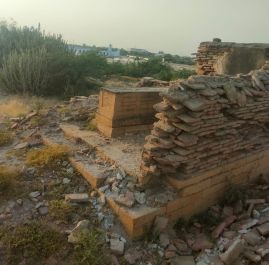
 In these early histories, there is no mention of him being Lashari. His village is recorded as Gaha, which still exists today in Deh Gaha of Johi Taluka in Dadu District Sindh, near the Gaha Mori (Bridge) on the Johi–Bhan Saeedabad road by the Channa branch (shakh), which is now village Bahar Shah also known as Bahar Ali Shah (Dadu at a Glance, 2011, p. 33). Tarikh-e-Masumi and Tuhfat-ul-Kiram refer to Gaha as “the village of the Gahas.” It is likely that Gaha village and the surrounding area belonged to the Gaha tribe, hence it was known by that name. Based on this, it can be said that Dolah Darya Khan originally belonged to the Gaha caste.
Like his original name and caste, the question of whether Dolah Darya Khan was a disciple of Syed Miran Muhammad Mahdi of Jaunpur has also been mentioned in history. Among early historians, Mir Ali Sher Qani’a mentioned this in Tuhfat-ul-Kiram. Qani’a writes: “When Miran Syed Muhammad Jaunpuri arrived in Thatta, despite the insistence of Jam (Nindo) and the influence of scholars (Makhdum Bilawal?), he did not initially show devotion to him (Mahdi). However, he (Darya Khan) served that noble figure with sincere heart and gained the pleasure of the noted saint of the time (Mahdi Jaunpuri)” (2004, p. 150).
Ghulam Muhammad Lakho writes in his book Sindh Jo Tareekhi ain Tehqeeqi Jaizo: “When Mahdi Jaunpuri reached Thatta, his stay there is recorded in the years 906 AH and 907 AH. Jam, assessing the situation, realized that Mahdi’s presence would lead to disorder and unrest in Sindh, so he ordered Darya Khan to go to Makli and take action against him. Instead, Darya Khan returned to Thatta as his disciple. Jam became angry and ordered that Mahdi should be killed if necessary. Even then, Darya Khan handled the matter very diplomatically. Meanwhile, Mahdi, seeing the growing opposition, decided to leave Sindh. Despite this, Mahdi suffered considerable harm at the hands of Shah Haider Sanai in central Sindh” (1997, p. 84). In his English book The Samma Kingdom of Sindh, Lakho presents a similar account, writing: “Along with scholars, two notable figures, Qazi Qazan and Minister Darya Khan, accepted the sect of Miran Muhammad Jaunpuri. Jam Nindo was not inclined toward him. It is said that Jam Nizamuddin ordered the killing of Syed (Mahdi) along with his followers. However, upon the request of Minister Darya Khan, he instead ordered him (Mahdi) to leave the region (Sindh)” (2006, p. 91).
Zulfiqar Ali Kalhoro also described Darya Khan as a Mahdavi in his article “Heroic Saint of Baghban” published in The Friday Times, Lahore (2023). In Jannat-ul-Sindh, Rahimdad Khan Molai Shedai’s account also indicates that Darya Khan was inclined toward Syed Muhammad Mahdi Jaunpuri. Molai Shedai writes: “Syed Miran Muhammad Jaunpuri began calling himself Mahdi and, traveling through Deccan (Dakhan) and Gujarat, reached Thatta during the time of Jam Nindo. Jam ordered his arrest, but on the advice of Darya Khan, he instead ordered him to leave Thatta. Syed Miran Muhammad Jaunpuri then went from Thatta to Qandahar” (2000, p. 302).
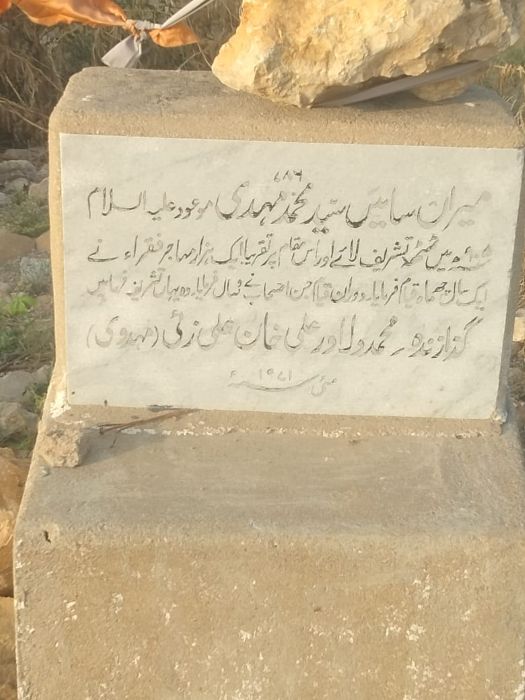 In addition to these clear references in the history of Sindh, there are other noteworthy references that not only raise the question of whether Darya Khan was truly a Mahdavi, but also strongly suggest that he, like Qazi Qazan, was indeed a Mahdavi. Molai Shedai writes in Jannat-ul-Sindh: “Mirza Shah Baig Arghun sent his experienced general Mirza Isa Tarkhan with an army to capture the fort of Bukkur. Qazi Qazan was the governor of Bukkur under Jam Nizamuddin, but Jam could not assist him in time, and he was compelled to hand over the fort to the Arghuns” (2000, p. 306). Qazi Qazan was the governor of Bukkur. Would he not have had an army to manage the fort or to face a potential enemy attack? Even if Jam Nizamudin could not assist him in time, could he not have resisted with his own forces? The fact that he handed over the fort without resistance suggests that both Qazi Qazan and Shah Baig Arghun were followers of Syed Muhammad Jaunpuri, which may explain why Qazi Qazan surrendered the fort without resistance.
Similarly, when Shah Baig Arghun moved from Bukkur toward Thatta, why did he only plunder Baghban? The Sammas and Samejas resisted in Baghban, and there was significant bloodshed. Historians, either due to lack of knowledge, inability to assess, or intentionally, did not mention whether Makhdum Bilawal was present or resisted during the attack. They only mention that some landlords submitted to Shah Baig. It is possible they submitted after the bloodshed, but it can be said with certainty that Makhdum Bilawal, leader of the Bilawali movement and a strong opponent of the Mahdavi movement, was present in Bhaghban, which is why it suffered such devastation. Near Baghban were Darya Khan’s village Gaha and his jagir village Talti, but why were these not attacked? There was no resistance from Gaha. According to Tarikh-e-Tahiri: “After plundering Baghban, Shah Baig moved along the riverbank via the Kandahar route and camped opposite Thatta” (1995, p. 67). Qani’s account in Tuhfat-ul-Kiram (2004, pp. 296–297) confirms that at that time, in “the village of the Gahas (Gaha),” Abdul Aziz Abhari (a Mahdavi) from Herat, along with his sons Asiruddin and Yar m Muhammad Abhari, was running a Madras at Gaha.
Tarikh-e-Masumi also clearly mentions the plunder of Baghban but does not mention any attack on Gaha. It only refers to unrest in Talti. According to it: “When Shah Baig came to Baghban, its landlords submitted to him. In Talti, Mithan, Mahmood, and others raised rebellion. Shah Beg wanted them also to surrender. After plundering Baghban, he moved toward Thatta via the Lakki hills and camped south of Thatta” (2006, p. 122). Despite rebellion, the attacker could have launched an assault—so why did he not? In my view, these were Darya Khan’s areas, and he himself was a follower of Syed Muhammad Jaunpuri.
Mir Masoom Bakhri in Tarikh-e-Masoomi mentions the destruction of Baghban (2006, p. 120) but does not mention any attack on Gaha or Talti while moving toward Thatta. He writes: “When Shah Beg came to Baghban, its landlords submitted. In Talti, Mithan, Mahmood, and others rebelled. Shah Baig wanted them to surrender. After plundering Baghban, he moved through the Lakki hills toward Thatta and camped south of it” (2006, p. 122).
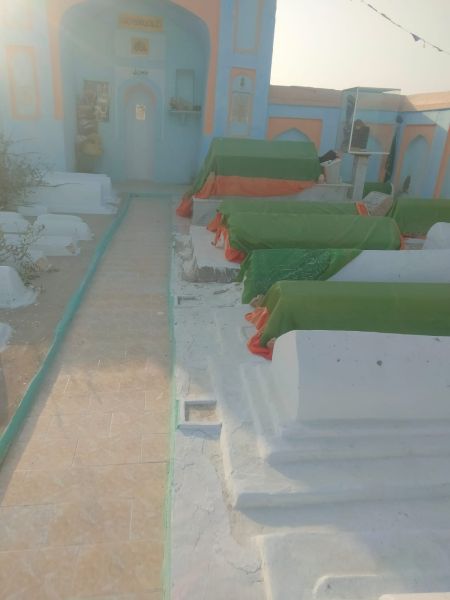
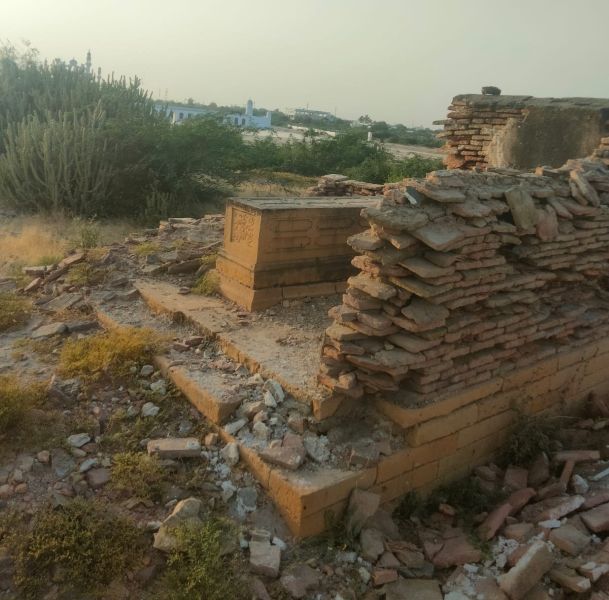 Traditional histories of Sindh clearly describe the confrontation between Darya Khan and Shah Baig Arghun near “Khan Wah” close to Thatta, and Darya Khan’s martyrdom as well. However, Ghulam Muhammad Lakho writes in Samma Ji Saltanat: “Some scholars believe that the Arghuns invited Darya Khan for negotiations and later had him killed” (p. 44). If negotiations did occur, what were they about? What outcome led to his murdered? It appears that at that time, differences arose between Shah Baig Arghun and Darya Khan. The patriotic general Dolah Darya Khan may have refused to betray Sindh, rejected its subjugation, and prioritized patriotism over Mahdavism, which led to his martyrdom. It is possible that the Arghuns had him killed and, due to his association with the Mahdavis, buried him in the Mahdvi cemetery at Makli.
According to Tarikh-e-Masumi: “After Thatta, Shah Baig came to Sehwan. From there, his opponents gathered in Talti. Shah Baig sent Qazi Qazan to negotiate with Mahmood and Mithan, but no settlement was reached. He then advanced toward Talti. After three days, someone informed him that Mian Mahmood, Mithan, Jam Sarang (Sehto), and Ranmal Sodho were ready to submit, but a scholar and saint of the region, Makhdum Bilawal, was preventing them and encouraging resistance. This is why, after victory, Shah Baig punished Makhdum Bilawal and imposed a fine on him” (2006, p. 125). This account suggests that initially, Shah Baig treated Darya Khan and his sons leniently due to their Mahdavi affiliation, but when differences arose over the plunder and subjugation of Sindh, Shah Baig, acting as a foreign usurper, had this patriotic commander martyred and Shah Baig attacked Talti fort, killing Darya Khan’s sons and other leaders, thus dealing a severe blow to the unity of Sindh.
Read: Thull Mir Rukan: Sindh’s Buddhist Heritage
__________________
 Aziz Kingrani, hailing from village Haji Manik Kingrani, Johi, Dadu District, Sindh, Pakistan, is poet, short story writer, playwright and a researcher. He has been contributing in the fields of history and literature. He has served as a professor as well. His 17 books are published in English and Sindhi language.