

Keti Bandar Port – A Strategic Opportunity for Trade, Investment and Coastal Transformation
- The transformation of Keti Bandar is not only about infrastructure but also about reshaping the socio-economic future of coastal Sindh, where long-neglected communities can finally become part of the mainstream development process.
By Nuzair Ahmed Jamro
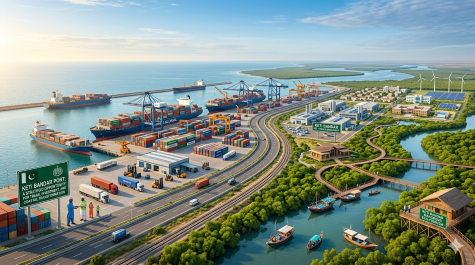
It is open secret that the Keti Bandar in District Thatta represents one of Sindh’s most overlooked yet strategically important coastal regions. Located near the Indus Delta and opening into the Arabian Sea, it offers a natural maritime advantage that has remained largely underdeveloped despite decades of planning discussions. If developed with a clear vision, the area can become a key driver of economic transformation for Sindh and Pakistan.
First and foremost, the geographical position of Keti Bandar provides it with a natural edge in regional trade. Its proximity to major shipping routes in the Arabian Sea makes it suitable for becoming a modern port facility that can complement existing ports in the country. With improved connectivity, it can link agricultural production zones, industrial centers, and urban markets of Sindh with global supply chains.
Moreover, beyond trade, Keti Bandar holds significant potential for foreign direct investment as well as tourism development. Investors today are increasingly interested in coastal economic zones where logistics, energy, fisheries, and tourism can operate together in an integrated system. Therefore, if planned properly, Keti Bandar can emerge as a new investment corridor attracting both domestic and international capital.
In addition, the region also offers strong prospects for eco-tourism and cultural tourism. The Indus Delta is rich in mangrove forests, wildlife, and traditional fishing communities that can attract foreign visitors if properly developed. As a result, tourism can diversify income sources while also promoting Pakistan’s soft image internationally.
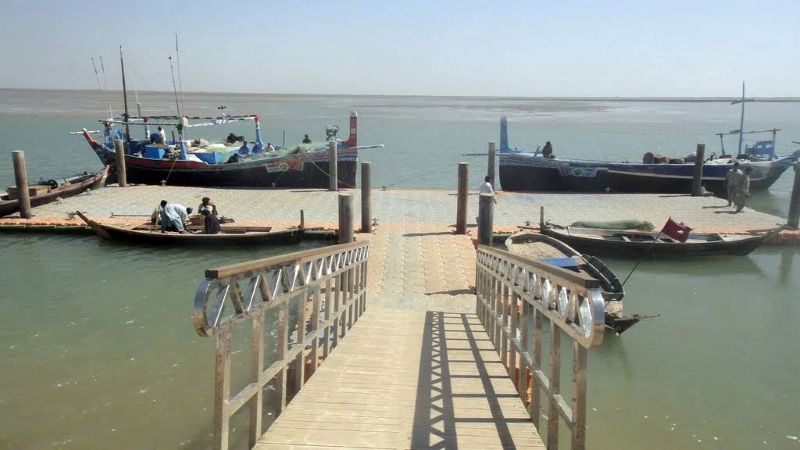 Equally important is the revenue generation potential, which can significantly strengthen both provincial and national economies. Port operations such as cargo handling, shipping services, customs duties, storage facilities, and logistics activities can create a sustainable fiscal base. Furthermore, the development of special economic zones around the port can expand industrial output and increase tax revenues over time.
Moreover, large-scale development of Keti Bandar will inevitably generate significant employment opportunities. During the construction phase, thousands of jobs will be created for engineers, laborers, technicians, and project managers. After completion, port operations, transportation services, fisheries, and tourism-related industries will continue to absorb local manpower, particularly from coastal districts such as Thatta, Sujawal, and Badin.
At the same time, the development of a modern port requires strong administrative reforms. Transparent governance systems, digital customs processing, and efficient land management mechanisms will be essential to ensure smooth operations. Additionally, one-window facilitation for investors and public-private partnerships can improve efficiency and build investor confidence.
Keti Bandar will also require modern transport connectivity including roads, rail links, and inland logistics corridors connecting it with Karachi, Hyderabad, and upper Sindh. Without such integration, the port’s full potential cannot be realized, as efficient supply chains depend on smooth movement of goods from hinterland to port terminals.
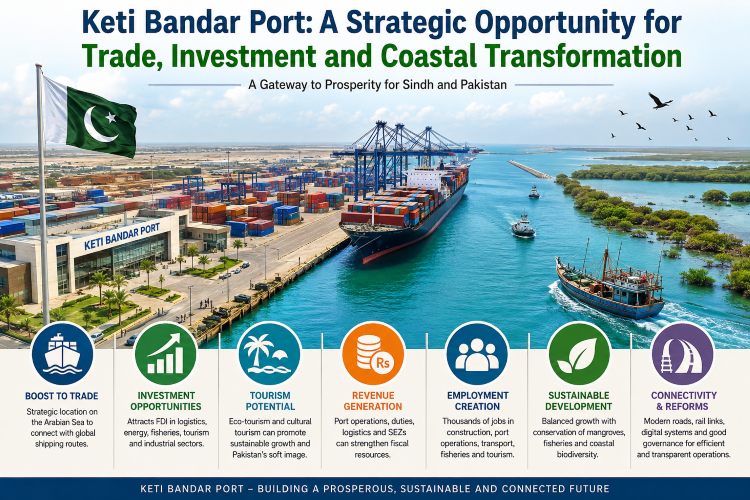
At the same time, environmental sustainability must remain a central consideration. The Indus Delta ecosystem is highly sensitive, and therefore development must be balanced with conservation of mangroves, fisheries, and coastal biodiversity. Climate-resilient infrastructure will also be necessary to address risks such as sea level rise and coastal erosion.
Security frameworks will also play an important role in ensuring investor confidence. A modern port requires maritime security systems, customs enforcement mechanisms, and coordinated coastal surveillance to prevent illegal activities and ensure safe operations.
Keti Bandar can also strengthen Pakistan’s position in regional and global trade networks, especially by offering an additional maritime outlet for international shipping companies seeking efficiency and diversification. In the long term, it may complement existing ports and reduce congestion in major trade hubs.
Finally, governance reforms and investor facilitation will be key to turning Keti Bandar into a viable investment destination. Clear land policies, transparent procurement systems, and stable regulatory frameworks will help build trust among investors and development partners.
Ultimately, the transformation of Keti Bandar is not only about infrastructure but also about reshaping the socio-economic future of coastal Sindh, where long-neglected communities can finally become part of the mainstream development process. In doing so, Pakistan can also project a stronger soft image internationally, particularly through sustainable coastal development and environmentally responsible investment models. Therefore, Keti Bandar should be viewed not as a distant proposal but as a practical opportunity that requires timely attention, coordinated action, and long-term commitment from all stakeholders involved.
With the right policy direction and investment support, Keti Bandar can emerge as a landmark project in Pakistan’s maritime history. Its success will depend on consistency, transparency, and a shared vision for sustainable development. The opportunity must not be delayed any further.
Read: Smart ACR: Digital Governance in Sindh
__________________________
 Hailing from Shikarpur Sindh, Nuzair Ahmed Jamro is MS Research Fellow in Public Administration with interests in governance reforms, public policy, and digital transformation. He writes on issues of administrative efficiency and institutional development. Email: najamro@gmail.com


