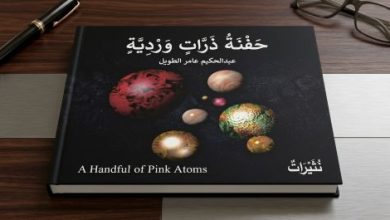
Here I meet a quiet young woman poet.
She is younger than my own son,
And I am captivated by the poplar breath within her verses.
We are two raindrops:
One falling to the southern slope of the Tianshan,
One to the northern slope.
Ma Yongbo
 Ma Yongbo is renowned for his modern avant-garde poetry and translations of European and American verse. In recent years, he has also composed ancient-style poems and traditional regulated verse. His works weave together the vast, rugged experiences of northern China, the tranquil contemplation of his study in Jinling, landscapes encountered on his travels, and intimate reflections on family life. Meticulously crafted in formal meter and rhyme, his verse carries contemporary thematic threads, free from the stale clichés of old literati, blending ecological lyricism with profound meditations on individual existence.
Cultural Contribution: The first Chinese scholar to systematically translate post-WWII American postmodern poetry, building a bridge for Sino-American poetic exchange and advancing the transformation of avant-garde Chinese poetry.
Poetic Contribution: Introduced postmodern techniques such as meta-poetry, polyphonic narration, and complex individual experiential writing, revolutionizing the aesthetic and intellectual depth of contemporary Chinese verse.
Shared Heritage: He carries forward the same mission as ancient scripture translators. Bridging civilizations across two languages, he revitalizes native Chinese literature with foreign artistic nourishment and unlocks brand-new expressive horizons for the Chinese language.
[Journeying westward into Central Asia, I wandered through the ancient city of Samarkand and the Tianshan Mountains near Almaty. I visited royal mausoleums, explored ancient madrasas, and gazed upon snow-capped peaks beneath endless clouds. Witnessing the rise and fall of the Silk Road across a thousand years, I pondered the convergence of Eastern and Western civilizations. All mighty empires shall turn to dust, yet poetic spirits and civilizations endure in communion. Verses were penned casually along the way and gathered into this collection]
Poetic Traces of the Silk Road
Two Raindrops upon the Tianshan
I have never stood at the foot of the Tianshan Mountains,
Until Almaty fulfils this long-held longing.
Had I not journeyed here, I would travel west from the Northeast,
To Xinjiang, gazing up at snow on one flank of the Tianshan.
Almaty rests, bathed in light, upon the other.
Here I meet a quiet young woman poet.
She is younger than my own son,
And I am captivated by the poplar breath within her verses.
We are two raindrops:
One falling to the southern slope of the Tianshan,
One to the northern slope.
To cross the mountain range takes only a small plane,
An hour of life, and one precise word.
We may never meet again in this lifetime,
Yet through language and poetry,
This chance encounter
May become an eternal memory for us both.
Still, a quiet regret lingers:
You were not born when I came into the world;
I have grown old when you bloom.
Between morning glow and sunset lies a whole life.
Yet we remain two raindrops,
Landing on the same umbrella canopy.
Brief, intimate patter,
Echoing all night within the poem — or forever.
(Composed at dawn, 28 July 2026, while walking in Almaty)
Arriving in Almaty, Gazing at the Tianshan Mountains
Clouds line the northern foothills, stretching to distant frontiers;
The apple-hued city leans beneath the boundless firmament.
Heroes through ages are inscribed on these steep ridges;
Layered spruces spread green over rolling hills.
Snow peaks silently witness a thousand years of tales;
Cultural threads still draw through frost ten thousand li afar.
Speak not of worthy souls rewarded for noble fellowship;
Heaven’s wind already bears this verse’s lingering charm.
(Noon, July 26, 2026)
Reflections on Inscribing Verses in the Guest Book
at the Auezov Institute, Almaty
On one sheet inscribed, my message to far borderlands I send;
The endless wind unfurls the chapters of the Silk Road.
Desert clouds surmount a thousand layered mountain ridges;
Poetic words link all lands, sharing the wine of communion.
Through long days, contemplation sees the world’s myriad forms;
With original aspiration bearing truth, I journey to distant shores.
Where Eastern and Western cultural veins converge and meet,
We shall live worthy of mountains, rivers and endless years.
(Almaty, July 26, 2026)
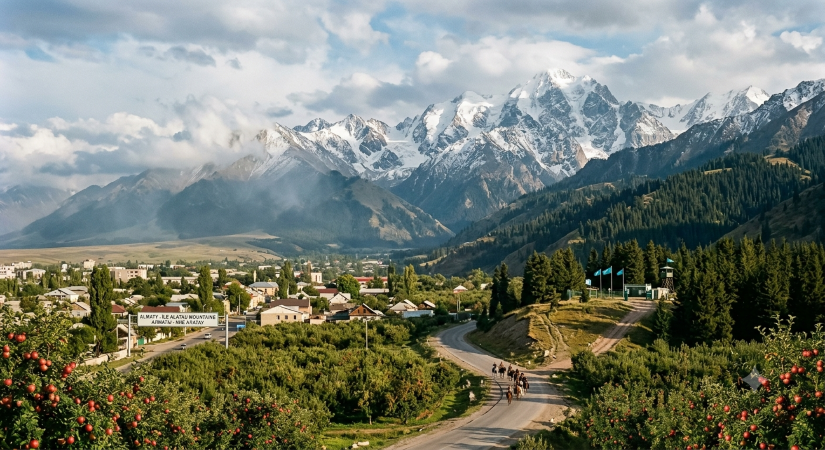
The Ile Alatau Snow Mountains
Ranges of snow loom high, leaning o’er the northern town;
Peaks surge toward the sky, majestic and renowned.
This mountain chain divides the roads to Central Plains;
Clouds link two homelands famed for apple orchards’ gains.
Mists on southern slopes once belonged to Tang domain;
Pine shadows on north hills stand watch by border camp terrain.
Gladly, verse serves as ferry when our paths intertwine;
No need to grieve the journey o’er mountains and seas far-line.
(Almaty, evening, July 27, 2026)
Setting off for the airport to return home
Chance Encounter in Almaty
I had never met Tianshan’s snow until this hour,
The deep spring of Apple city soothes my longing heart.
Our ages differ like sunrise and sunset’s glow,
Our kindred spirits merge as two tears gently flow.
Steel wings span the sky, linking the northern mountain slope,
I tap poetic sparks to send my mood toward the eastern cope.
This fleeting encounter lives through endless ages,
I mourn no wild geese lost amid time’s changing stages.
(2026.07.27, Almaty, Kazakhstan)
(Revised at Pudong Airport, July 28, 2026 before departing for Ice City)
Reflections on Visiting Timur’s Mausoleum
The glazed dome traps the glow of evening light;
Six generations’ grand ambitions rest on barren height.
Once his iron cavalry swept o’er Europe and Asia wide;
He built this famed metropolis, where diverse tribes abide.
His wise grandson scanned the heavens, probing starry spheres;
Royal glory and campaign dust linger on stele galleries.
All empires through a thousand years turn into earthly mould;
Only the charm of the Silk Road flows endlessly of old.
(Samarkand, July 23, 2026)
At Gur-e-Amir Mausoleum
Meditation at Registan Square
Three grand madrasas stand against the spacious wall;
Tiered turquoise glaze locks in the heaven’s sprawling pall.
Lord Ulugh scanned the skies, exploring starry spheres afar;
Carved lions grace the walls, defying creed’s strict law.
Gilded domes glow faintly, ghosts of ancient dreams remain;
Weathered ruins breathe cold mist through ages of rain.
The olden chants of learning drift away with wind’s soft tide;
Across desert wastes, the Silk Road stretches far and wide.
(Samarkand, July 23, 2026)
Registan Square
Visiting the Shah-i-Zinda Necropolis
Long galleries clad in blue glaze hold the mist of dusk;
Tombs of the Living King recline beside wild pathways husked.
Shards of enamel glow with hues that mirror heaven’s sphere;
Arched vaults bear carved inscriptions of the ages past and near.
Timur’s enduring spirit dwells within turquoise tiles;
The sacred tale of Qutham turns to clear spring water’s smiles.
Through thousands years of pilgrimage souls find resting ground;
Silk Road’s eternal radiance floods the vale where moonlight crowned.
(Samarkand, July 24, 2024)
Shah-i-Zinda Memorial Complex
NOTE:
The Shah-i-Zinda Memorial Complex ranks among Central Asia’s most remarkable architectural ensembles. This Samarkand monument (11th–20th centuries) consists of mausoleums, mosques, minarets and madrasas, situated in the necropolis south of the Afrosiab Hill.
The oldest structure here is the mausoleum of Qusam ibn Abbas, cousin of the Prophet Muhammad, popularly known as “Shah-i-Zinda”, meaning “The Living King”.
Qusam ibn Abbas (c.624–677) was one of the earliest missionaries who brought Islam to Central Asia in the 7th century.
During the reign of Caliph Ali ibn Abi Talib, he served as governor of Mecca. Together with Said ibn Usman (Governor of Khorasan under the Umayyad dynasty, d.680), he took part in the conquest of Central Asia.
Shah-i-Zinda has always been regarded as sacred. Every ruler erected buildings here or buried their relatives on this site.
Scholars call Shah-i-Zinda “an encyclopedia of Eastern Islamic architecture”. Its magnificent buildings embody all architectural traditions spanning the 11th to the 20th centuries.
The complex was built atop the ruins of an older city destroyed during Genghis Khan’s invasion. It is divided into four main sections: the Lower Group, Middle Group, Northern Courtyard and the Qusam ibn Abbas Ensemble.
Shah-i-Zinda Memorial Complex is inscribed on the UNESCO World Cultural Heritage List.
Reflections at the Ruins of Afrasiab, Ancient Sogdiana
Cracked barren mounds lie sealed by camel thorn,
Wild pigeons skim low through thick morning mist.
Scarred gullies mark the old realm’s ruin scars,
Lonely vines brave bitter winds across flat sand.
All grand ambitions fade, leaving only regret,
The ancient city buried, turned to empty land.
I re-read the Western sage’s ode to broken statues,
All rise and fall of a thousand ages rest within sand.
(9 a.m., July 24, 2026)
O King, may you live a life of boundless greatness
Ode to Samarkand, In Memory of Antiquity
Camel bells of the Silk Road drift across remote wastelands,
The ancient city of Kangju lies slumbering beneath the sunset glow.
Blue domes stretch like an ocean, frozen through a thousand years,
Glazed brick hues glow like rosy clouds, radiating grace to all nations far and wide.
Ulugh Beg’s observatory once probed the boundless cosmos,
Timur’s mausoleum stands firm amid the vast wilderness.
Clouds and smoke drift past the crossroads of civilizations,
The lingering charm of the prosperous Tang shall forever endure, fragrant and bright.
(Written July 24, 2026, Hilton Hotel Samarkand)
Ode to the 6th Silk Road International Poetry Festival
Vast is the primal cosmos, yet time flows without pause;
Endless stretches the Silk Road, its cultural legacy ever fragrant.
In days of yore, our forebears forged paths to reach distant lands;
Today, poets bear the Way, soaring beyond the azure firmament.
This ancient trail, spanning millennia, holds the breath of mountains and rivers;
The winds across ten thousand miles unfurl the verses of nations far and wide.
In this enlightened age that reveres culture, a global gathering of elegance is reborn;
Sages and scholars converge, renewing the enduring bond across the vast seas.
Once, Han envoys journeyed westward, braving frost and snow to bridge foreign realms;
Sanskrit scriptures crossed eastward, blending with Confucian and Daoist wisdom to nourish our homeland.
The echoes of camel bells still linger at the foot of the Kunlun Mountains;
The fragrance of brocade letters has long spread across the vast Western Seas.
Through centuries of change, the torch of culture remains unquenched;
The grace of the Nine Provinces shines eternally with the sun and moon.
The old path bears the weight of history’s annals;
New horizons unfold the grandeur of our times.
Now, cherished friends tread the ancient trail to reach distant frontiers,
Carrying pure verses over rugged peaks.
Departing the majestic gates of Chang’an, embracing the misty radiance of the Qinling Mountains;
Crossing the shifting sands and boundless deserts, stepping into the splendid halls of Central Asia.
With translation as our bridge, we span the divides of language;
With sincerity as our covenant, we forge bonds with kindred spirits across the four seas.
Our hearts roam the vast cosmos, breathing in the noble spirit of past and present;
Our pens traverse earth and sky, weaving coolness across the eight wildernesses.
Behold this grand gathering, unbounded by borders, unhindered by mountains or seas.
A single word, touching the soul, can convey the resonance of a thousand years;
A brief letter, sent afar, can melt the frost of myriad hardships.
Gazing upon the majestic landscapes, we contemplate the impermanence of human passage;
Guarding the clarity of our poetic hearts, we transmit the warmth and kindness of China.
Every stroke of ink reveals the embrace of mountains and rivers;
Every rising song echoes the steadfast rhythm of time.
Thus we know:
Civilizations know no barriers, merging through elegance and grace;
Heaven and earth share one heart, thriving eternally through the Way of Poetry.
The ancient path, reborn, blooms again with a thousand years of splendor;
New verses, carried forward, forever illuminate the auspicious harmony of all nations.
The galaxy serves as our preface, unfolding the romance of ages past;
The soul of poetry is our torch, perpetually sustaining the radiant glow of the Silk Road.
In Praise:
The Silk Road flows vast and boundless,
Its cultural current surges on.
Translation bridges East and West,
Poetry crosses oceans wide.
Our hearts embrace the cosmos,
Our spirit pierces the firmament.
Past and present join hands in succession,
Their fragrance endures for eternity.
(July 22, 2026)
(First draft at Xianyang International Airport; revised aboard flight MU855 to Tashkent; finalized in Room 705, Tower Hotel, Tashkent)
_______________
Read: Poetic Traces Along Shan Creek