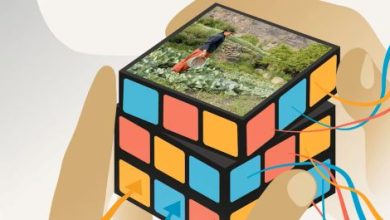
We should absolutely pursue professionalism, merit, and modern skills, but we must never allow our experts, our administrators, or our policymakers to become detached from the lived realities of our people.
- A society survives not by technology alone, but by the moral and emotional relationship between its institutions and its citizens
By Noor Muhammad Marri, Advocate | Islamabad
Even though the American system today is largely based on merit, at least when compared with its own historical practices, yet democracy in its deeper moral and social sense has not taken roots. This is the central paradox. America proudly presents itself as the oldest continuous democracy, but if one observes the working of its institutions closely, the feeling grows stronger that the democratic claim rests more on procedures than on any organic relationship between state and society. I often feel that while the system is efficient, the soul of democracy—its human intimacy, its connection with the ordinary citizen, its moral accountability—stands weakened.
One reason behind this paradox, perhaps the most important one, is that the American system is entrenched in professionalism to an extreme degree. In every field the expert reigns supreme. A doctor, a scientist, a technocrat, an economist or a policy analyst—these are the people who ultimately decide the shape of the system. On paper, this looks like an ideal arrangement because the assumption is that professionals make informed decisions and are free from emotional or communal bias. But a system dominated by professionals has its own dangers, and one danger, which I believe is now turning into a structural crisis, is that these professionals have almost no attachment to the society they administer.
A professional’s primary loyalty is to his training, his discipline, and the institutional norms that created him. His world is built on manuals, research papers, standardized procedures, data sets and abstract models. Society, however, does not exist in this clean and organized form. Society lives through its confusions, contradictions, cultural peculiarities, and moral complexities. A scientist who spends ten hours a day in a laboratory designing a social or environmental policy may possess great technical knowledge, but he does not, and cannot, carry the emotional weight or historical memory of those who live through that policy. A doctor can be the best in his specialization but still fail to understand what it means to be poor, uninsured, or socially invisible. An economist can speak fluently about inflation but remain entirely unaware of the despair in a working-class household that cannot pay rent.
This distance is widening. In America, the ruling class does not consist of feudal lords or tribal chiefs; it consists of professionals. Yet the distance created by professionalism is no less harmful than the distance created by aristocracy. The feudal lord at least lived among the people; the professional lives among data. The feudal at least shared the emotional landscape of society, even if he dominated it. The modern professional is emotionally absent. He decides, but he does not belong. He governs, but he does not share.
Read: Paradox of Meritocracy in Organizations
By and by, the system moves farther away from the society. This movement is silent but continuous. With every new law, every new technological change, every new regulation drafted by experts, the gap widens. Policies appear rational when viewed from Washington DC or from the office of a well-funded think-tank, but they feel unnatural when they reach the modest home of an ordinary citizen. Democracy begins to lose its meaning because decisions are no longer born out of the collective experience of the people; they are born out of specialized knowledge which sees people only as categories, samples, consumers, and numbers.
America’s merit-based system therefore produces efficiency, but not belonging. It produces intelligence, but not understanding. It produces experts, but not leaders. The democratic ideal was supposed to be the rule of ordinary people, guided by their own lived experience, their sense of justice, and their collective wisdom developed through generations. Instead, what we now see is the rule of professionals who may be morally upright but remain socially disconnected. And without connection, democracy becomes a ritual—elections, debates, campaigns, media spectacles—but the real governance remains in the hands of those who never feel the pulse of the common population.
I often think that this professionalization is the modern form of elitism. It is not hereditary, it is not based on land or lineage, but it is based on education, networks, institutions and a certain technical confidence which the common citizen can never access. The professional class thinks that it understands society because it studies society. But society is not something to be studied alone; it is something that must be lived. When a system is built entirely by people who do not live the ordinary life of its citizens, it slowly becomes detached from reality. And when the system becomes detached from reality, democracy—no matter how loud and proud—becomes fragile from within.
This detachment also creates a hidden arrogance. The professional mindset assumes that complexity can only be understood by trained minds and that the ordinary citizen is incapable of knowing what is best for him. This paternalism is subtle but powerful. Behind every complicated tax code, every national health policy, every foreign intervention, and every judicial reform, there stands a belief that expertise alone can solve human problems. But human problems are not mathematical equations. They require empathy, memory, historical wisdom, cultural understanding and, above all, connection. A system that is built purely on technical reason forgets this simple truth.
The result is a slow drift: society goes one way, and the system goes another. The tensions we see today in American politics—the rise of populism, the mistrust of institutions, and the anger against the establishment—are symptoms of this growing distance. People feel unheard, unseen, and misrepresented. They feel that the system is no longer theirs. They participate in elections, but they do not feel that the elected representatives understand their lives. Democracy remains alive in form, but weak in essence.
In this way, the American system stands on a paradox. Merit and professionalism have strengthened institutions but weakened the democratic connection. Expertise has improved administrative efficiency but diluted the people’s sense of ownership. The system looks strong from outside, yet internally it carries a silent disconnect that grows with time.
In the end, if future nations ignore this deeper truth—that technology, expertise and professionalism must never replace human connection—they will meet the same fate. A system that becomes too technical forgets the society it is meant to serve, and once that happens, even the most advanced democracies begin to crack from within. We in Pakistan must learn from this. We should absolutely pursue professionalism, merit, and modern skills, but we must never allow our experts, our administrators, or our policymakers to become detached from the lived realities of our people. A society survives not by technology alone, but by the moral and emotional relationship between its institutions and its citizens. If we forget this bond, then no amount of efficiency or expertise will protect us from the same democratic hollowness that now haunts stronger and richer nations.
Read: Pakistan Movement: A Critical Reassessment
________________
 Noor Muhammad Marri is Advocate & Mediator, based in Islamabad