Issues affecting agriculture and rural livelihoods in Indian Punjab discussed at a seminar organized by Guru Nanak Dev University, Amritsar
- Book ‘Punjab River Waters Dispute in South Asia: Historical Legacies, Political Competition, and Peasant Interests’, launched
- The book examines the Punjab river waters dispute as a defining feature of regional politics in South Asia and analyses its intersections with peasant interests, rural Sikh society, the neighboring state of Haryana, and the Indian central government
Amritsar
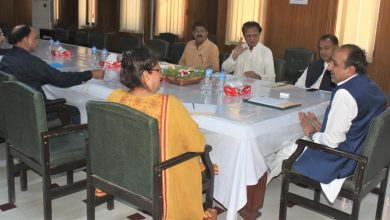
Issues affecting agriculture and rural livelihoods in Indian Punjab were discussed at a seminar organized recently by the Department of Sociology Guru Nanak Dev University, Amritsar.
Book ‘Punjab River Waters Dispute in South Asia: Historical Legacies, Political Competition, and Peasant Interests’, launched on this occasion.
 Seminar marked the 50 years of academic excellence and contributions to the discipline of sociology and society. The national seminar on “Agriculture in Punjab: Challenges and Innovations,” was organized in collaboration with the Department of Political Science, GNDU, with the support of the Centre for Agricultural Research and Innovations (CARI), GNDU. The seminar aimed to bring an interdisciplinary perspective to understand the key issues affecting agriculture and rural livelihoods in Punjab, while also highlighting innovations and alternative approaches emerging in the sector.
The Convener of the seminar, Dr. Rachana Sharma, briefly introduced the theme of the seminar, highlighting its focus on the challenges and innovations in Punjab’s agriculture. Professor Satnam Singh Deol, Head of the Department, welcomed the guests.
The keynote address was delivered by Dr. Devinder Sharma, a noted author, food and agricultural expert, and a member of the High-Powered Committee on Agrarian Reforms in Punjab constituted by the Supreme Court of India. He discussed the major challenges faced by Indian agriculture, presenting cross-country and regional comparisons to highlight both common and Punjab-specific problems. Dr. Sharma pointed out that food prices are deliberately kept low to keep consumers satisfied, while farmers ultimately bear the economic burden. He argued that Punjab needs a new model of agriculture based on natural resource regeneration rather than an industry-driven second Green Revolution, and suggested drawing lessons from sustainable farming models being implemented in Andhra Pradesh.
On this occasion, a book by Professor Kuldip Singh, former faculty of the Department of Political Science, GNDU, titled Punjab River Waters Dispute in South Asia: Historical Legacies, Political Competition, and Peasant Interests, published by Routledge, UK, was released. The book examines the Punjab river waters dispute as a defining feature of regional politics in South Asia and analyses its intersections with peasant interests, rural Sikh society, the neighboring state of Haryana, and the Indian central government. The book was released by Professor Surinder Singh Jodhka, Dr. Jagmohan Singh, and Professor Satnam Singh Deol, Dean, Faculty of Arts and Social Sciences and Dean Students’ Welfare, GNDU.
The seminar also honored Professor Surinder Singh Jodhka, former Professor of Sociology at the Centre for the Study of Social Systems, Jawaharlal Nehru University, New Delhi, for his significant contributions to the field of sociology. The citation was read by Dr. Rachana Sharma. The honor was conferred by the Chief Guest of the valedictory session, Professor Harvinder Singh Saini, Dean Academic Affairs, GNDU, in the presence of Professor Paramjit Singh Judge, Chair of the valedictory session and former faculty of the Department of Sociology, GNDU.
 In his valedictory address, Professor Jodhka reflected on the construct of the village and challenged the dominant perception of villages as inherently backward. He traced how post-Independence development thinking, land reforms, the Green Revolution, democratization, and Panchayati Raj transformed rural power relations. He argued that rigid rural–urban distinctions are increasingly untenable in a globalized world. Referring to the farmers’ movement against the farm laws during 2020–21, he highlighted the political awareness and cosmopolitan outlook of rural communities. He emphasized that despite the declining share of agriculture in GDP, rural society and agriculture continue to play a vital role in livelihood security and social resilience.
The seminar featured presentations by Professor Kuldip Singh on river water systems and disputes, Dr. Renuka Aggarwal, Senior Scientist at Punjab Agricultural University, Ludhiana, on women in Punjab agriculture, Professor Jagmohan Singh, Director of the Shaheed Bhagat Singh Creativity Centre, Ludhiana, on environmental crisis, and Dr. Vinod Kumar, Head, Department of Sociology, Panjab University, on innovations and organic farming in Punjab.
Research papers by scholars from diverse interdisciplinary backgrounds were presented on themes including nano-bubble technology, stubble burning, psychological determinants of monocropping and farmer well-being, the innovative role of dairy cooperatives, ICT for sustainable rural development, access to and use of digital tools among farmers, legal dimensions of agricultural development in Punjab, millet-based nutrition, and environmental sustainability. The technical sessions were chaired by Professor Gurpreet Bal, former faculty of the Department of Sociology, GNDU, and Dr. Malkiyat Singh, Department of Political Science, GNDU.
The head of the department & Convenor of the Program- Prof. Satnam Singh Deol thanked everyone for their participation in the seminar.
_______________
Read: Breakfast in Lahore, Lunch in Amritsar, & Dinner in Bangalore