Allegations of a toll-plaza mafia must be investigated swiftly.
- Sindh’s roads will only be sustainable if the public feels confident that tolls are collected lawfully, spent wisely, and linked visibly to safer, better services
Zaheer Udin Babar Junejo
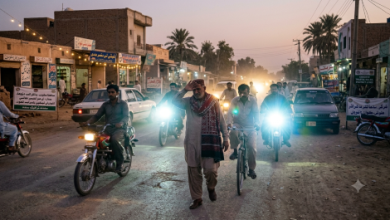
I had the opportunity twice to travel from Punjab and enter the Sindh road; the differences I felt made me pen down. Everyone who drives on Sindh’s highways knows the ritual: if you are an ordinary citizen, slow down, stop at the toll plaza, hand over cash, and move on; if you resist or even ask why to pay, you will be beaten on the road. What many do not see is what happens next claims of hefty toll collections, crumbling side roads, crowded highways, and repeated court battles over the legality of some toll plazas. If we are to take a hard look at who benefits from and who suffers under the toll-tax system in Sindh, the evidence points to a painful mismatch between revenue raised and public service delivered.
National figures show toll collections running into the tens of billions of rupees in recent years, a reminder that our roads are not funded by charity. The National Highway Authority’s (NHA) toll income, for example, registered a high of around PKR35.06 billion in 2021–22 according to published figures and related audits. At the same time, motorization is rising fast. Vehicle registrations and the total vehicle fleet have grown steadily across Pakistan over the last five years, increasing pressure on road networks and toll infrastructure. The upward trend in registered vehicles underlines why traffic and, therefore, toll revenue potential keep rising year after year.
 If you are an ordinary citizen, slow down, stop at the toll plaza, hand over cash, and move on; if you resist or even ask why to pay, you will be beaten on the road.
Those two facts, rising toll revenue and rising vehicle numbers, should, in principle, mean better roads and safer journeys. Yet road users consistently report the opposite: pothole-ridden feeder roads, chaotic intersection design, intermittent street lighting, and inadequate roadside services. Independent safety assessments underline the problem: Pakistan’s road network scores poorly on international safety ratings, with only a small percentage of roads meeting minimum star-rating standards for vulnerable users. That suggests investment has not translated into safer or more equitable road infrastructure on the ground.
A part of the explanation lies in governance and legality. Sindh’s courts have repeatedly challenged the legality of some toll plazas, most notably on stretches such as the Jamshoro bypass, ordering suspension or removal where the collection was judged unlawful or where the ‘quid pro quo’ (the services owed in return for tax) was not being met. Those rulings highlight a basic principle: tolls are a public contract, not a license to extract money without delivering commensurate services.
And then there is the darker allegation the so-called “toll-plaza mafia.” Letters to newspapers, civic complaints, and local reporting have long accused vested interests of operating toll booths in ways that are opaque, over-charging motorists, or collecting without ensuring the promised services (road maintenance, policing, ambulances, and rest areas) are provided. Whether the problem is poor contract management, weak oversight or outright corruption, the result is the same: ordinary citizens pay, but many do not feel they get value for money.
This situation produces an ethical and practical inequality. A salaried commuter who legitimately pays taxes and uses the highway daily receives no visible priority compared with a traveler who never registered as an active taxpayer, yet still enjoys the same stretches of road. That is not just unfair, it undermines the social contract between citizen and state.
 What might be done?
Link toll transactions to CNIC (national identity) and databases. Requiring CNIC verification when paying tolls combined with a secure digital record of transactions would make collections auditable, discourage extortion or ghost collections, and allow preferential treatment for enrolled, active taxpayers (for example, loyalty discounts, faster electronic lanes or prioritized grievance handling). Any such system must be privacy-protecting and transparent about what data is stored and who may access it.
Introduce authenticated electronic passes and discounts for verified taxpayers. Pakistan already has the technological building blocks for electronic tolling. A verified electronic pass for citizens who are up to date with tax or utility obligations would recognize their contribution and speed traffic flow. Simple incentives e.g., reduced rates or an express lane, would be both practical and politically popular.
Tie toll collection explicitly to measurable public goods. Courts have been clear that toll collection is lawful only when matched by commensurate services: proper maintenance, policing, ambulances, lighting, and safe crossings. Contracts and concession agreements must set measurable service standards, linked to payments, and include independent monitoring with public scorecards.
Strengthen oversight and transparency. Toll revenue and its allocations should be published regularly, in a machine-readable format, so civil society, journalists, and researchers can audit and hold authorities to account. Where plazas are declared illegal by courts, collections must be halted immediately and restitution made where appropriate.
Crack down on illicit operators. Allegations of a toll-plaza mafia must be investigated swiftly. Police vetting for toll staff, background checks for concessionaires and strict penalties for misuse of public funds would deter abuse.
Sindh’s roads will only be sustainable if the public feels confident that tolls are collected lawfully, spent wisely, and linked visibly to safer, better services. Policymakers should remember that taxation, including tolls, depends on legitimacy. When people believe their money buys cleaner, safer journeys, compliance and civic trust rise. When the opposite happens, resentment grows, and the poorest, who cannot afford alternatives, suffer the most.
The solution is not merely technical. It requires political will to make toll collection a public service rather than a revenue-only exercise, backed by technologies such as CNIC-linked digital tolling, as well as by courts, watchdogs, and citizens prepared to demand accountability. Sindh’s highways carry the province’s commerce and livelihoods; the way we fund and manage them should be a model of fairness, not a cause of grievance.
Read: Natural Disasters: Pakistan’s Fifth Season
__________________
 Zaheer Udin Babar Junejo is a Community Driven Development Specialist based in Hyderabad.