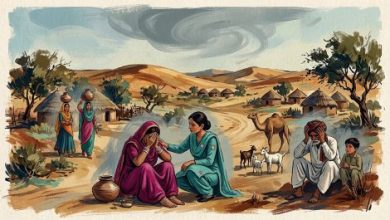
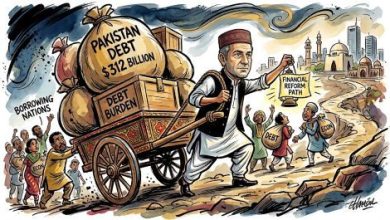
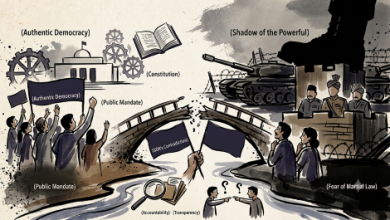
In Pakistan, thousands of students graduate from universities each year, but suitable jobs are not available for them. As a result, many educated individuals remain unemployed.
- An unemployed young person is a question mark for the future. If we ignore this question, its answer will appear as a loss for the entire nation
Abdullah Usman Morai | Sweden
The greatest support for the progress, stability, and prosperity of human society is labor, work, and employment. When people channel their skills and strengths into work, they not only improve their personal lives but also contribute to the economy of society and the nation. Every nation in the world considers its youth to be its greatest asset, because the foundation of nation-building lies in their hands and minds. Employment is critically important for the younger generation because they are the future architects of nations, who move the world forward with their energy, new ideas, and enthusiasm.
However, this potential of youth can only be utilized when it is connected with proper direction and meaningful work. Employment for young people is not merely a source of income; it is an essential part of their personal, social, and national development. If young people are not given opportunities in line with their capabilities, it becomes not just a loss for the individual but a serious danger for the entire nation. In today’s fast-changing world, understanding and solving this issue has become even more urgent.
Why is employment necessary for youth?
Youth are at a stage of life where they are eager to explore new paths, dream big, and strive to turn those dreams into reality. But dreams only become reality when the key to employment is in their hands.
Employment matters for young people for many reasons. A job is not just a way to earn money; it gives them self-confidence, dignity, and a sense of purpose in life. When a young person gains education or acquires a skill and then secures employment, it reinforces that their hard work was not in vain. A successful job makes them an active, productive, and respected member of society.
Employment makes youth financially independent, enabling them to meet their own and their families’ needs and aspirations. This financial independence allows them to make their own decisions and stand on their own feet rather than relying on others.
When youth are employed, they play a positive and constructive role in society. They pay taxes to the government, contribute to the market through consumption, and help strengthen the economy. Employment also deepens their bond with society and makes them direct contributors to national progress.
A job gives young people routine and a sense of purpose. This purpose helps reduce despair and hopelessness. Employed youth suffer less from stress and depression because they are using their abilities to achieve something every day.
Why do youth become unemployed?
In our region, the education system does not align with market needs. Another reason is the distribution of jobs based on politics and favoritism rather than merit. Additionally, slow industrial growth contributes to unemployment. Rapid population growth and irrelevant government policies have also worsened this problem.
Dangerous consequences of unemployment
When young people are deprived of employment and left without work or engagement, the consequences are not just personal but highly dangerous for society as a whole.
In many developing countries, unemployment leads to frustration among youth. It creates deep hopelessness and self-doubt, as they feel deprived of opportunities despite their talents. They begin to believe that their education and hard work were wasted, which pushes them towards depression, anxiety, and social isolation. They often withdraw from family and friends because they fail to find their place in society.
 A large number of unemployed youth become a burden on society. Many idle young people drift into criminal activities, substance abuse, or violence. This threatens peace and stability in society. In several developing countries, youth unemployment has been a major cause of social and political unrest.
Unemployed youth often become an economic burden on their families, which increases domestic tensions and psychological stress. If a significant portion of a country’s population remains unemployed, production slows, and overall development is hindered.
When educated youth are unable to find employment that matches their skills, they are often forced to migrate abroad. This trend, known as brain drain, means that the most talented and capable individuals leave to seek opportunities in other countries. As a result, the nation loses its most vital human resources, and its pace of development slows down.
Comparing developing and developed countries
The issue of youth employment exists in all countries, but its nature differs between developing and developed nations.
Developing countries like Pakistan, India, Bangladesh, and many African nations face severe unemployment problems. A significant segment of the youth population is jobless, which is a huge and complex issue. Moreover, education systems often fail to connect with market demands.
In Pakistan, thousands of students graduate from universities each year, but suitable jobs are not available for them. As a result, many educated individuals remain unemployed. Jobs for youth in Pakistan are limited and mostly confined to traditional sectors, whereas globally, new sectors like technology and science are rapidly expanding. In addition, lack of investment in the economy, political instability, and poor educational standards also fuel unemployment. Consequently, many youth end up working in fields unrelated to their education and skills.
Developed countries also face unemployment, but they have mechanisms to address it, such as skills training programs, internship schemes, and supportive policies for entrepreneurship. The average youth unemployment rate in such countries is much lower.
In the United States, for example, youth are provided with loans and funding opportunities to start their own businesses. In this way, they not only secure employment for themselves but also create jobs for others.
In developed countries, the link between education and employment is very strong. In Germany, for instance, the apprenticeship system is highly effective. Students, alongside their studies, receive practical training in companies, enabling them to transition directly into jobs after graduation. Developed countries continuously adapt their education systems to market needs and invest heavily in new technology and research, which generates fresh employment opportunities.
South Korea, once behind Pakistan, equipped its youth with technical training and a strong work ethic. As a result, it has become one of the world’s major economies. Meanwhile, in Pakistan, a majority of youth remain unemployed after completing their education. This difference alone creates a gap of thousands of miles between development and stagnation.
Although developed countries also face challenges, these are relatively smaller, regulated, and more manageable compared to those in developing nations.
Solutions and recommendations for Pakistan, especially Sindh
To address youth unemployment in Pakistan, especially in Sindh, the education system must be reformed. Schools and universities should design curricula that focus on digital skills, technology, and practical knowledge. Instead of merely awarding degrees, students must be equipped with skills in demand in the job market. Vocational and technical colleges should be promoted. Youth should be encouraged to learn skills like plumbing, automobile repair, electrical work, IT, and handicrafts, as these can provide immediate employment opportunities.
The government must also implement policies that create a favorable environment for business growth. Tax incentives, ease in starting businesses, and access to loans can help generate new job opportunities. Recruitment for jobs should be based on merit rather than favoritism. Developing countries must also create new opportunities in agriculture and industry.
For economic growth and a stable economy, investment must be increased, particularly in small and medium enterprises (SMEs), as they provide significant employment opportunities. Moreover, by leveraging social media and digital platforms, youth should be encouraged not only to seek jobs but also to offer their skills through freelancing and online work. There are vast opportunities in freelancing and digital work, but proper skills are essential.
In short, if youth are not given opportunities for work and employment, the most vibrant years of their lives go to waste. Youth is the age of energy, ambition, and hope. Unemployment breaks that harmony and shatters dreams. For any nation, it is a grave loss if its young generation wastes time instead of working productively.
Youth unemployment is not just an economic issue but also a social, psychological, and moral problem. Employment is not only a means of livelihood but also gives young people meaning, purpose, and dignity in life. When a young person fails to find work despite their efforts and talents, they grow distant from themselves and from society. Unemployment breeds social, economic, and psychological problems that are dangerous for the whole community.
True national development is only possible when our youth are employed, prosperous, and hopeful. For this, we must all work together. The government, educational institutions, parents, and society share the responsibility to create opportunities for youth, provide technical training, and guide their talents in the right direction. The government must design better policies, educational institutions must meet modern requirements, and the youth themselves must adapt their skills to the needs of the new era.
Remember: an unemployed young person is a question mark for the future. If we ignore this question, its answer will appear as a loss for the entire nation. When youth work, the nation prospers. When youth are unemployed, the nation falls behind.
Read: The Future of Sindhi Language
___________________
 Abdullah Soomro, penname Abdullah Usman Morai, hailing from Moro town of Sindh, province of Pakistan, is based in Stockholm Sweden. Currently he is working as Groundwater Engineer in Stockholm Sweden. He did BE (Agriculture) from Sindh Agriculture University Tando Jam and MSc water systems technology from KTH Stockholm Sweden as well as MSc Management from Stockholm University. Beside this he also did masters in journalism and economics from Shah Abdul Latif University Khairpur Mirs, Sindh. He is author of a travelogue book named ‘Musafatoon’. His second book is in process. He writes articles from time to time. A frequent traveler, he also does podcast on YouTube with channel name: VASJE Podcast.