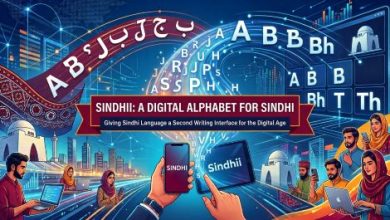
We all must contribute to producing Sindhi content on digital platforms.
- If we begin speaking, writing, and sharing in Sindhi with one another, the language will gain new strength.
- The future of the Sindhi language lies not in the hands of others but in our collective efforts and determination
By Abdullah Usman Morai | Sweden
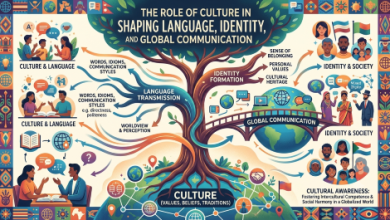
Language is the soul of a nation’s identity, culture, and history. It is not merely a collection of words and sentences, but a medium through which one generation passes on its knowledge, wisdom, and traditions to the next. Sindhi, a language with thousands of years of ancient history, today faces many challenges. Some of these are external, while others arise from our own attitudes. Yet where there are difficulties, the advancement of technology has also opened a new door of hope.
 Declining Challenges in the Education System
The greatest challenge Sindhis face lies in their diminishing importance within our education system. In most schools and colleges, English or Urdu is given preference, which reduces the opportunities for students to read and speak in their mother tongue. The harsh reality is that many of our youth are unable to write, read, or converse fluently in Sindhi. When a child grows distant from their mother tongue outside the home, the language gradually begins to lose its place.
Moreover, parental attitudes also worsen this issue. Many parents believe that if their children speak English or Urdu, their future will be brighter. Consciously, they avoid speaking Sindhi with their children at home. This behavior causes the language to vanish from households, a threat far greater than any external influence, as it weakens the roots of the language from within.
Emerging Challenges and Opportunities in the Digital Age
While Sindhi has grown weaker in traditional spaces, modern technology has appeared as a new ray of hope. The internet, especially social media platforms, has opened a new world for Sindhi. Today, a person can share their writings, poetry, music, or thoughts with the world from any corner of the globe.
Social media platforms such as Facebook, Twitter, and YouTube are breathing new life into Sindhi. Our youth and writers are sharing their work in Sindhi, creating new blogs, YouTube channels, and online magazines. Alongside this, digital tools such as Sindhi keyboards, translation apps, and dictionaries are now easily available, helping people to learn and use the language. Artificial Intelligence (AI) is also creating new opportunities for Sindhi. With AI, Sindhi writing, translation, and even speech recognition can become easier and more accessible.
 The Road Ahead: Our Responsibility
To preserve and promote the Sindhi language, waiting for governments or institutions alone is not enough. This is a collective responsibility. First and foremost, parents must prioritize speaking Sindhi at home. From an early age, children should be told Sindhi stories, poetry, and folk songs so they can develop a love for their language.
Teachers, too, must play their role. Sindhi subjects should not remain confined to textbooks alone but should be taught in engaging and inspiring ways. Sindhi literature, history, and culture should be made part of the learning experience so students can recognize the true value of their language.
Finally, we all must contribute to producing Sindhi content on digital platforms. If we begin speaking, writing, and sharing in Sindhi with one another, the language will gain new strength. Its use will grow, and it will have the opportunity to rise alongside the world’s other languages. Technology is a powerful tool, and with its proper use, we can keep our language alive and elevate it to new heights.
The future of the Sindhi language lies not in the hands of others but in our collective efforts and determination. Let us turn this beautiful language into a source of strength, one we can proudly celebrate.
Read: The Forgotten Guardians of Sindh
_____________________
 Abdullah Soomro, penname Abdullah Usman Morai, hailing from Moro town of Sindh, province of Pakistan, is based in Stockholm Sweden. Currently he is working as Groundwater Engineer in Stockholm Sweden. He did BE (Agriculture) from Sindh Agriculture University Tando Jam and MSc water systems technology from KTH Stockholm Sweden as well as MSc Management from Stockholm University. Beside this he also did masters in journalism and economics from Shah Abdul Latif University Khairpur Mirs, Sindh. He is author of a travelogue book named ‘Musafatoon’. His second book is in process. He writes articles from time to time. A frequent traveler, he also does podcast on YouTube with channel name: VASJE Podcast.