Weekend getaways, even just two days long, can do what weeks of routine never will—they can awaken you. They can reset your mind, recharge your spirit
By Abdullah Usman Morai
Sometimes, life doesn’t ask for a grand escape—just a short detour, a brief pause, and a little road that curves towards stillness and soul. It was the 23rd of September, 2023, when I took such a detour. The decision wasn’t about ticking destinations off a list. It was about slowing down, about reconnecting with nature, with a dear friend, and with myself.
 From the heart of Stockholm, I boarded a train headed for Göteborg (Gothenburg), watching Sweden stretch itself across my window in brushstrokes of green, ochre, and the faint rust of approaching autumn. The scenery was calming—pastures dotted with horses, little lakes reflecting patches of sky, and sleepy towns that flickered by like dreams half-remembered.
Upon arrival in Gothenburg, I made my way to Linneplatsens Hotell och Vandrarhem. Though reception-free, the place was seamless in its check-in process—clean, cozy, and conveniently located. As I was settling in, Zeeshan Khan arrived, his presence as comforting and energizing as always. Our reunion was effortless, like opening a book we both knew by heart.
 We decided to start the evening with a stroll around the city before heading to Lilla Istanbul, a Turkish restaurant known for its homely warmth and flavorful dishes. Over plates of succulent kebabs and warm bread, our conversation wandered like old friends through the realms of psychology, philosophy, mindfulness, and travel. Zeeshan has this grounded way of speaking that invites introspection. We laughed, reflected, and mused about life’s ever-unfolding mystery.
Since we planned to leave early the next morning for Smögen, we didn’t stretch the night too long. Zeeshan dropped me back at the hotel, and I tucked into a good night’s sleep with a quiet smile.
The Road to Smögen: Sheep, Songs, and Serendipity
The next morning dawned bright and a bit breezy. After a breakfast that blended Swedish classics with continental offerings, I met Zeeshan downstairs, and our journey began. The car was filled with music—Attaullah Khan Esakhelvi’s soulful voice narrating tales of longing and love. There was something deeply soothing about his songs echoing through the Swedish countryside.
 Our first stop was Nordens Ark, a remarkable nature conservation park located near the coast. Though we didn’t enter the full sanctuary, we stopped near a field where we encountered a few curious sheep with grand, spiraling horns. They wandered over to greet us, and we patted them like old friends. Behind them, the serene presence of mountains and shimmering water created a canvas that felt both cinematic and sacred. A few cows grazed lazily nearby, unfazed by our presence.
Not long after, we crossed the Uddevallabron, an architectural marvel that spans a fjord like a delicate ribbon of steel and grace. The view from the bridge was nothing short of breathtaking—water merging with sky, and the vast openness of nature reminding us how small and beautiful our presence in the world can be.
Smögen: Where the Sea Whispers Stories to the Rocks
As we entered Smögen, the landscape changed in the most poetic way. The flatlands slowly gave rise to weather-worn cliffs, and small wooden homes started to dot the terrain. Hills rolled into view like sleeping giants, and a subtle bridge welcomed us into the heart of this coastal paradise.
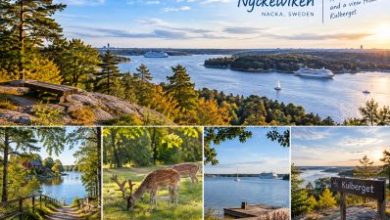
Smögen is a town that doesn’t shout—it hums. It speaks through its still waters, through the wooden pathways that wind gently over rocks and sea, and through the salty breeze that greets every visitor with a sense of calm. Zeeshan and I parked the car and began our walk along the famous Smögenbryggan—the wooden boardwalk that hugs the harbor and reveals, bit by bit, the town’s most iconic view.
There they were—the fishermen’s huts, each painted in its own bold color, forming a perfect row along the water. These huts are the soul of Smögen—red, yellow, green, blue—each with a boat bobbing gently in the water below. It was like stepping into a painting that hadn’t faded with time. Some huts had stairs descending into the water, others had cozy balconies where you could imagine a quiet morning with coffee and seagulls for company.
 We stood on rocks overlooking the bay, watching our reflections shimmer on the surface below. A narrow wooden bridge connected two cliffs, inviting us to cross and see Smögen from a slightly higher perspective. We took our time, took countless pictures, laughed at how the wind played with our jackets, and talked about how such simple places often leave the deepest imprints.
We visited a few quaint souvenir shops and bought small tokens—a magnet, a postcard, and a keychain. Nothing extravagant, but precious in meaning. We didn’t want to leave, but Marstrand was waiting.
Marstrand: Island of Fortresses and Old-World Charm
Our drive to Marstrand was short but scenic. We grabbed a quick lunch at Max, the beloved Swedish burger chain, before heading to the ferry terminal. Marstrand is special in that it lies across the water—an island steeped in history, where modern life quietly bows to the past.
A short ferry ride later, we were stepping onto cobbled streets and toward the grand Carlstens Fästning, the fortress that crowns the island like a guardian of centuries. Built in the 17th century to defend the coastline, the fortress is now a gateway into Sweden’s layered past. As we climbed its stone steps, wandered through echoing halls, and stood on its ramparts, Zeeshan and I imagined the soldiers who once watched these same waters, the ships that once sailed by, and the stories that had long since become part of the wind.
The view from the top was incredible—rooftops, boats, and the endless sea stitched together under a golden sunset. We stayed for a while in quiet awe, taking it all in.
Down in the town, we wandered past cafés and boutiques, small sailboats floating by, and a few locals enjoying their evening walks. The vibe in Marstrand was peaceful, romantic, and nostalgic.
Returning to Gothenburg: A Night to Remember
As the last light faded behind the hills, we ferried back to the mainland and drove to Gothenburg. That night, we had dinner at a Moroccan restaurant, letting the flavors of North Africa meet the reflections of the Nordic coastline. Zeeshan and I talked for hours about the trip, about life, and about how such moments give meaning to the blur of busy weeks.
 He dropped me off at the hotel, and I slept that night with the gentle exhaustion that only meaningful travel brings.
The next morning, after breakfast, I took a long walk to the central station, meandering through Gothenburg’s charming streets. I admired the city’s iconic tramways, gliding gracefully by the waterways. The city felt alive yet unhurried—a place that holds space for both solitude and connection.
Conclusion: The Power of the Pause
This journey to Smögen and Marstrand reminded me of something profound: you don’t have to go far to go deep. You don’t need exotic beaches or international flights to find yourself or feel inspired. Sometimes, all it takes is a short trip, a trusted friend, and the willingness to follow where the road leads.
Weekend getaways, even just two days long, can do what weeks of routine never will—they can awaken you. They can reset your mind, recharge your spirit, and remind you of the vast beauty just outside the borders of your schedule.
Travel, in any form, is an act of honoring life. With Zeeshan Khan by my side, this trip became more than a weekend—it became a story, a memory, a pause that felt like poetry.
Read: Travelogue: Sarajevo Sojourn
_________________
Abdullah Soomro, penname Abdullah Usman Morai, hailing from Moro town of Sindh, province of Pakistan, is based in Stockholm Sweden. Currently he is working as Groundwater Engineer in Stockholm Sweden. He did BE (Agriculture) from Sindh Agriculture University Tando Jam and MSc water systems technology from KTH Stockholm Sweden as well as MSc Management from Stockholm University. Beside this he also did masters in journalism and economics from Shah Abdul Latif University Khairpur Mirs, Sindh. He is author of a travelogue book named ‘Musafatoon’. His second book is in process. He writes articles from time to time. A frequent traveler, he also does podcast on YouTube with channel name: VASJE Podcast.