Historical Footprints of the Ancient Silk Road
Our common values—unrivaled hospitality, deep-rooted respect for the elderly, and an innate love for classical poetry—ensure that despite modern borders, the people of Bukhara and Sindh remain spiritual kin, guided by the enduring echoes of our ancestors toward a future of mutual peace and prosperity.
Rashidova Shakhrizoda | Bukhara, Uzbekistan
The historical ties between the verdant lands of Uzbekistan and the Sindh region of Pakistan are not merely measured in miles, but in centuries of shared wisdom, trade, and spiritual heritage. For millennia, the Silk Road functioned as the world’s primary artery, carrying not only silk and spices but also the great scholars, architects, and Sufi saints who fundamentally shaped the cultural soul of South and Central Asia.
The Intellectual Bridge: From Transoxiana to the Indus
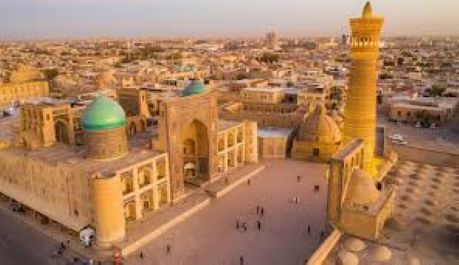
Historically, the intellectual exchange between Bukhara—often called the “Dome of Islam”—and Sindh, known as “Bab-ul-Islam” (The Gateway of Islam), created a unified scholarly corridor. In the 9th and 10th centuries, the rigorous methodology of Imam Al-Bukhari became the cornerstone of theological studies in the madrasas of Sindh. This wasn’t a one-way street; the Indus Valley served as a vital hub where Indian mathematics and astronomy were translated and refined by Central Asian polymaths, later reaching the global stage through the libraries of Bukhara and Khiva.
Dynastic Links and Political Synergy
The political landscape of Sindh was deeply influenced by the migratory waves and dynastic shifts originating from Central Asia. From the Ghaznavid era to the profound impact of the Timurid Renaissance, the administrative and military structures of the region mirrored the sophisticated systems of Samarkand and Bukhara. The arrival of artisans, calligraphers, and statesmen from the heart of the Silk Road transformed the urban centers of Sindh into cosmopolitan hubs of Persianate culture, leaving an indelible mark on the region’s governance and legal frameworks.
The Naqshbandi Trail and Sufi Mysticism
The most enduring legacy is perhaps the spiritual one. The Naqshbandi Sufi order, which blossomed in the sacred soil of Bukhara under Khwaja Bahauddin Naqshband, found a secondary home in Sindh. These wandering dervishes and pirs brought with them a philosophy of “solitude in the crowd,” which resonated deeply with the local population. Even today, the rhythmic chants and spiritual practices in the shrines of Sehwan Sharif and Bhit Shah echo the mystical traditions nurtured in the khanqahs of Uzbekistan, bridging the geographical gap through a shared language of the heart.
Architectural Mirrors: Blue Tiles and Terracotta
The visual landscape of Sindh is a testament to Central Asian aesthetic mastery. The iconic blue faience tiles of Multan and Hala are direct descendants of the turquoise mosaics found on the Registan Square. The architectural silhouette of Sindhi tombs—characterized by high drums, majestic domes, and intricate brickwork—draws directly from the “Bukhara school” of construction. This shared architectural DNA proves that for centuries, master builders moved freely between the Zarafshan and Indus rivers, blending local materials with Timurid grandeur.
A Shared Vision for the Future
Revisiting this rich tapestry of history is more than an academic exercise; it is the foundation for a modern partnership. As Uzbekistan and Pakistan rebuild the “Iron Silk Road” through new transport corridors and diplomatic initiatives, we are simply reviving an ancient pulse. Our common values—unrivaled hospitality, deep-rooted respect for the elderly, and an innate love for classical poetry—ensure that despite modern borders, the people of Bukhara and Sindh remain spiritual kin, guided by the enduring echoes of our ancestors toward a future of mutual peace and prosperity.
Read: BUKHARA: A TIMELESS TAPESTRY OF HISTORY AND CULTURE
___________________
 Rashidova Shakhrizoda, a student from Bukhara, Uzbekistan