The Synthesis of Classical and Creative Approaches in Children’s Speech Engineering
- Empower a child’s natural curiosity with systematic, high-tech tools. Ultimately, language is more than just a means of communication; it is the intellectual fuel for the leaders of the future.
Artikova Shohida Anvarovna | Uzbekistan
Modern neurolinguistics and cognitive psychology confirm that childhood is not merely a period of growth, but a phase of “neuroplastic explosion.” When we discuss teaching English to children today, we are not just referring to the memorization of foreign vocabulary; we are talking about shaping a child’s fundamental model of perceiving the world (worldview).
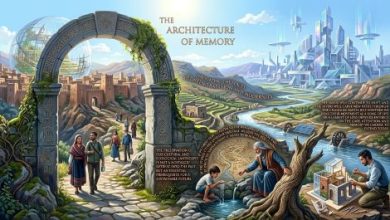
While traditional pedagogy has provided us with a solid foundation—focusing on Basic Vocabulary, Songs, and Visual Aids—today’s generation of “Digital Natives” possesses entirely different cognitive filters. Their attention spans are brief yet hyper-intensive, and their imaginations are limitless but demand a rich environment of visual stimuli. Consequently, we must not simply preserve the classic 12 principles; we must pass them through the prism of “Creative Speech Engineering” and transform them into a modern educational architecture.
This article analyzes strategies for seamlessly integrating classic methodological elements with modern EdTech (educational technology) and creative pedagogy, turning language acquisition from a chore into an “intellectual game.”
The Stages of Modern Transformation
Scientific Fact: The child’s brain relies on emotional connection for 80% of its information processing. Without an emotional (creative) anchor during a lesson, neural connections (synapses) weaken.
- From Static Visualization to Dynamic Experience
The traditional use of “flashcards” is being replaced by “Contextual Immersion.” In this approach, a child does not merely see a word; they “live” within its context. Using immersive environments allows the learner to experience the language spatially rather than just abstractly.
- From Repetitive Recitation to Rhythmic Coding
Moving beyond simple songs, the modern evolution of the Total Physical Response (TPR) method involves the synchronous integration of movement and sound. This technique transposes language from short-term memory into “muscle memory,” making retrieval instinctive.
- From Grammatical Rules to Cognitive Scenarios
Dry structures are being replaced by “Narrative Intelligence.” In this paradigm, grammar is no longer a set of rigid rules to be memorized but is instead presented as the “hidden code” of an engaging game. By navigating story-driven scenarios, children internalize syntax as a tool for solving puzzles and progressing through a narrative.
Our mission is to empower a child’s natural curiosity with systematic, high-tech tools. Ultimately, language is more than just a means of communication; it is the intellectual fuel for the leaders of the future.
Read: When Education Loses Purpose in Pakistan
___________________
 Artikova Shohida Anvarovna is Master’s student at Fergana State University, specializing in “Theory and Methodology of Preschool Education and Upbringing.” Born in 1989 in Margilan, she holds a Bachelor’s degree in Preschool Education. Her research interests focus on innovative pedagogical technologies, modern teaching methodologies, and the development of educational frameworks for preschool children.