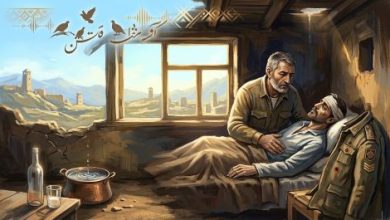
You can kill the doctor, but you cannot kill the truth that has taken root in the bodies of those who were healed.
- The time has come for man to realize that his true pharmacy is in his kitchen, and his true doctor is his own body when understood.
By Abdel latif Moubarak | Egypt
Dr. Refaat Al-Manshawi was a man of restless intellect. Despite his prestigious position as a Professor of Anesthesia and Intensive Care—a field dedicated to the science of unconsciousness and the silencing of pain—he was obsessed with how the body awakens and thrives.
In his office overlooking the Nile in Cairo, he sat surrounded by massive medical tomes. Yet, his heart belonged to biochemistry and the history of human nutrition. He often said:
“We do not treat the disease; we merely anesthetize its symptoms until the patient dies quietly.”
Refaat began to notice a startling pattern: patients with diabetes, hypertension, and autoimmune disorders improved dramatically not because of drugs, but when they changed what they put in their mouths. From this realization, his life’s work was born: The “Tayyibat” (The Good Provisions) System.
“Tayyibat” was not just a diet; it was a philosophy crafted with mathematical precision. It relied on the total elimination of “white toxins” and processed materials, returning to primordial foods mentioned in divine books and ancient human heritage.
Refaat formulated a simple equation he repeated in his lectures:
Where:
- G (Growth & Health): Overall wellbeing.
- F (Food): The “Tayyibat” (wholesome provisions).
- T (Toxins): Chemical pollutants.
- P (Processing): Industrialized food methods.
He insisted that the body is capable of repairing itself if we simply stop poisoning it. Thousands began following his system, and the results were “catastrophic” for the traditional medical establishment: diabetic patients stopped their insulin, and others abandoned lifelong blood pressure medications.
The success of “Tayyibat” did not pass unnoticed. In the corridors of Big Pharma, internal reports indicated a sharp decline in the sales of chronic disease medications in regions where Dr. Refaat’s teachings spread.
The man became an “enemy of public interest,” as described in confidential memos. If people did not get sick, they wouldn’t need doctors, they wouldn’t buy medicine, and private hospitals wouldn’t be built. Refaat had driven the first nail into the coffin of the modern medical-industrial complex.
On a stormy morning, Dr. Refaat was summoned to appear before the Medical Syndicate’s Ethics Committee. The charge: “Promoting unscientific ideas that endanger patient safety and inciting them to abandon pharmacological treatment.”
Refaat stood with his usual dignity and said:
“I am not inciting them to die; I am calling them to life. Science is not a set of sacred texts written by pharmaceutical companies. Science is the result I see in the eyes of my patients who have reclaimed their vitality.”
The session ended with a historic and unjust verdict: Striking Dr. Refaat Al-Manshawi from the medical registry and banning him from practicing the profession.
Refaat did not break. Instead, he felt liberated. He moved to Dubai, where he began writing his comprehensive book on the “Tayyibat” system to make it available to the public for free online. He knew time was running out, and that the “Big Sharks” would not let him finish his cry for help.
He stayed in a quiet suite at one of Dubai’s most luxurious hotels, spending his nights among papers and charts. He knew his body, nourished by “Tayyibat,” was strong—but he didn’t realize that betrayal does not require a weak body; it only requires an absent conscience.
On the night of his murder, Refaat ordered a plate of fresh fruit and pure water. He had just finished the conclusion of his book, in which he wrote:
“The time has come for man to realize that his true pharmacy is in his kitchen, and his true doctor is his own body when understood.”
He heard a soft knock at the door. He wasn’t afraid. A man who spent his life in operating rooms had faced death thousands of times. He opened the door to see familiar faces—men wearing expensive suits, but behind them lurked the brutality of vested interests.
The following morning, a housekeeper found Dr. Refaat’s body lying in the center of the room. There were no signs of obvious violence, no struggle. He looked as if he were asleep in the very stillness of the anesthesia he had once mastered.
On the table lay his completed manuscript, and beside it, a small note written in his handwriting:
“You can kill the doctor, but you cannot kill the truth that has taken root in the bodies of those who were healed.”
Refaat was gone, but “Tayyibat” turned from a diet into a silent revolution sweeping through homes. Every time someone refused a toxin wrapped in the glamour of an advertisement, Refaat’s spirit smiled from afar, knowing the battle did not end with his death—it had only just begun.
Read: Layla, the Nightingale – A Short Story
___________________
 Abdel Latif Mubarak is an Egyptian poet and lyricist born in 1964 in Suez. He is widely recognized as one of the most important poets of the 1980s. His poems have been published in numerous literary journals in Egypt and the Arab world, including Arab Magazine, Kuwait Magazine, News Literature, Republic Newspaper, AI-Ahram, and The New Publishing Culture. Abdel Latif Mubarak’s fame rests on his distinctive poetic style, which skillfully combines the beauty of words with profound reflection on aspects of life and humanity. His verses are imbued with sensitivity, emotion, and a profound understanding of the human condition. Over the years, Mubarak has received numerous awards and accolades for his works.