

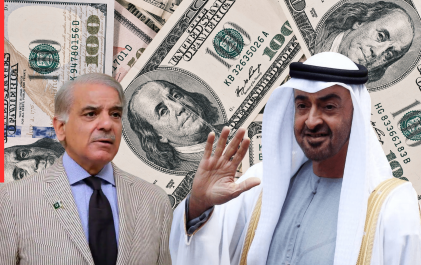
The UAE’s deposit with the State Bank of Pakistan was part of a broader framework of financial support extended by Gulf allies to stabilize Pakistan’s reserves during periods of acute economic stress.
Prof. Dr. Abdullah G. Arijo
Pakistan’s economic landscape has once again been thrust into the spotlight with the government’s decision to repay a $2 billion loan to the United Arab Emirates (UAE) by the end of April 2026. This repayment, which includes a 6% annual interest rate, marks a significant moment in the country’s financial trajectory, raising questions about external financing, reserve management, and the delicate balance between diplomacy and economic survival.
Background of the Loan
The UAE’s deposit with the State Bank of Pakistan (SBP) was part of a broader framework of financial support extended by Gulf allies to stabilize Pakistan’s reserves during periods of acute economic stress. These deposits, often termed “safe deposits,” are not conventional loans but rather short term placements that can be rolled over upon maturity. For years, Pakistan relied on such rollovers from the UAE, Saudi Arabia, and China to maintain reserve adequacy and meet IMF program conditions.
Initially, the UAE rolled over the deposit annually, providing Islamabad with breathing space. However, since late 2025, the rollover period was shortened to monthly extensions, signaling growing reluctance from Abu Dhabi to indefinitely sustain Pakistan’s liquidity. The final extension, negotiated by Deputy Prime Minister Ishaq Dar, expires on April 17, 2026, after which repayment must be completed.
Why Repayment Now?
The UAE’s insistence on repayment reflects both financial and geopolitical considerations. Regionally, Gulf States are recalibrating their external commitments amid shifting oil revenues, diversification strategies, and heightened geopolitical tensions. For the UAE, withdrawing the deposit reduces exposure to Pakistan’s fragile economy while reinforcing fiscal discipline at home.
For Pakistan, the decision was less about choice and more about necessity. With the UAE unwilling to extend further rollovers, Islamabad had little option but to commit to repayment. This underscores the vulnerability of Pakistan’s external financing model, heavily dependent on the goodwill of allies rather than sustainable inflows.
Economic Implications
The repayment carries profound implications for Pakistan’s economy:
- Foreign Reserves Pressure: The SBP’s reserves, already under strain, will face a sharp decline once the $2 billion is repaid. This could reduce import cover and heighten volatility in the rupee.
- External Financing Gap: Pakistan’s financing gap for FY2026 will widen, compelling the government to seek alternative inflows from China, Saudi Arabia, and multilateral lenders.
- IMF Program Challenges: The repayment complicates Pakistan’s ongoing negotiations with the IMF. Islamabad may need to request adjustments to the reserve targets set for June 2026, arguing that the repayment was unavoidable.
- Domestic Impact: Reduced reserves could tighten liquidity, affecting imports of essential commodities, fuelling inflation, and eroding public confidence in economic management.
Diplomatic Dimensions
Despite the financial strain, Pakistan’s repayment decision carries diplomatic weight. By honoring its obligations, Islamabad signals reliability to international partners, a crucial factor in securing future support. Relations with the UAE remain strategically important, encompassing trade, investment, and expatriate labor. Repayment, though painful, reinforces trust and may pave the way for alternative forms of cooperation.
At the same time, the episode highlights the limits of Pakistan’s reliance on Gulf deposits. While Saudi Arabia and the UAE have historically provided lifelines, their willingness to continue doing so is not guaranteed. This necessitates a broader rethinking of Pakistan’s external financing strategy.
Risks and Challenges
The repayment exposes several structural weaknesses:
- Debt Sustainability: Pakistan’s dependence on short term deposits underscores the fragility of its debt profile. Without long term reforms, the cycle of borrowing and repayment will persist.
- Investor Confidence: While repayment demonstrates commitment, it also reveals Pakistan’s precarious reserves position, potentially deterring foreign investors.
- Political Fallout: Domestically, the repayment may be criticized as evidence of poor economic management, especially if inflation and currency depreciation worsen.
Opportunities amid Crisis
Yet, the repayment also presents an opportunity for Pakistan to reset its economic priorities. By acknowledging the unsustainability of reliance on external deposits, Islamabad can push for structural reforms:
- Export Diversification: Expanding beyond textiles to sectors like IT, agriculture, and services could generate stable foreign exchange.
- Remittance Facilitation: Strengthening channels for overseas Pakistanis to remit funds can bolster reserves.
- Fiscal Discipline: Reducing reliance on external borrowing requires curbing deficits and enhancing domestic revenue mobilization.
- Strategic Partnerships: Beyond Gulf allies, Pakistan must deepen ties with China, regional blocs, and multilateral institutions to secure diversified financing.
Key point
Pakistan’s decision to repay the $2 billion UAE loan is both a financial burden and a diplomatic necessity. It underscores the fragility of the country’s external financing model, heavily reliant on short term deposits from allies. While repayment demonstrates Pakistan’s commitment to honoring its obligations, it also intensifies challenges for reserve management, debt sustainability, and IMF negotiations.
The coming months will be critical. Islamabad must navigate the immediate strain of repayment while pursuing long term reforms to reduce dependence on external lifelines. Success will hinge on balancing diplomacy with economic resilience, ensuring that the goodwill of others does not perpetually dictate Pakistan’s financial future.
Read: Pakistan’s Fuel Crisis: Causes and Consequences
________________
 Dr. Abdullah G. Arijo is an academic and science writer committed to inspiring Pakistani youth to pursue emerging scientific fields and research-driven careers.



Article is good
Knowledgeable
InSha ALLAH Pakistan safely face these critical and geopolitical changes and challenges.
Pakistan is scheduled to repay a $2 billion deposit to the United Arab Emirates by the end of April 2026. This deposit, held by the State Bank of Pakistan (SBP), carries a 6% annual interest rate. While such deposits were historically “rolled over” (extended) annually, the UAE shifted to monthly extensions in late 2025, signaling a desire to wind down the arrangement.