Some distances are measured in miles, and other distances are measured in longing.
By Raphic Burdo
Some distances are measured in miles, and other distances are measured in longing.
Between Islamabad and Karachi lies not merely the span of a country, but the stretched fabric of a man’s life, pulled between duty and desire, between provision and presence, between being there and not being there. For over a year, I have lived in this in-between.
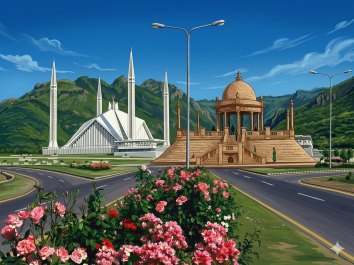
In Islamabad, I occupy a small house that is functional but not lived in. It has walls, furniture, and the bare necessities of existence, but it lacks the noise that makes a home: the echo of laughter, the unfinished conversations, the small arguments that dissolve into familiarity. Here, silence is not peace, it is absence.
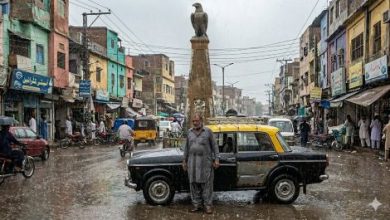
Karachi, on the other hand, is everything Islamabad is not. It is chaotic, hotter, less forgiving. The air is heavier, the streets more crowded, the systems less reliable. And yet, it holds what Islamabad cannot offer me, my wife, my daughters, and my sense of being anchored in something real.
My life, therefore, is divided, not metaphorically, but materially. There is a certain arithmetic to this life. A return air ticket costs nearly a quarter of my monthly income. A journey by road or train demands over fifteen hours one way, a time I do not have, energy I cannot afford to expend. What remains is a compromise: late-night flights, early morning returns, and compressed weekends.
Read: Understanding Pakistan Through the Story of Karachi
I leave on Fridays, often after office hours, sometimes boarding flights close to midnight. The body protests, but the mind overrides. There is urgency in departure is not because of distance, but because of deprivation. On Mondays, I start before dawn. To catch a 7 a.m. flight, I have to rise by 5 am, even if I have not been able to sleep due to dread of departure in few hours. I take a hurried drive to and from the airport, and around 9 a.m., I am back at my desk, present in body, if not entirely in spirit. Between these departures and arrivals lies a life lived in transit.
Each airport is at least forty-five minutes away from where I begin or end. Each journey is layered: from home to airport, from airport to city, from city to airport, from airport to residence. Time dissolves in these transitions, and yet I endure them—not out of obligation alone, but out of a need that is harder to articulate. I travel not because it is easy, but because not traveling is unbearable.

There is a tendency to measure sacrifice in financial terms. The cost of tickets, the burden of maintaining two households, the visible strain on resources. But the deeper cost is less quantifiable. It is the slow erosion of mental ease. The constant undercurrent of worry. The awareness that one is missing something irretrievable, not events, but moments. The kind that do not announce themselves as significant, but later reveal themselves as irreplaceable.
My daughters are growing, quietly, steadily, irreversibly. The teenage years are not merely a phase; they are a transformation. A delicate, turbulent crossing where presence matters more than provision. I have often felt that I am absent at the very moment I am needed most. Not absent in intention but in proximity. There are questions I do not hear, silences I do not notice, and shifts I do not witness. My wife carries the weight of these transitions, often alone. I have wanted to stand beside her, not as a provider, but as a partner navigating the uncertainties of raising daughters in a world that is changing faster than we can fully grasp. Yet, I remain here.
What complicates this further is the nature of effort itself. Provision is visible. It can be counted, acknowledged, even expected. But there is another form of contribution quieter, less tangible, and often unnoticed. It lies in the act of choosing discomfort over ease. In boarding a flight when the body demands rest. In spending a significant portion of one’s income not for luxury, but for proximity. In refusing to let distance become detachment.
Each journey I make is not merely physical. It is an assertion. A refusal to let absence define the relationship. And yet, I have often wondered: is this effort seen? Is it understood? Not in a transactional sense, but in a human one. Does my wife recognize that beyond the financial provision lies a continuous, deliberate effort to remain connected? That each trip is not routine, but a small act of insistence that I belong there, even if circumstances place me here? There are moments, usually in the stillness of early mornings or the fatigue of late-night returns, when the weight of this life becomes fully visible to me. Not as complaint, but as awareness. I realize that I am living in fragments. That my presence is always partial, never fully here, never fully there. And yet, I continue. Not because it is sustainable, but because it is necessary.
Love, I have come to understand, is not always expressed in grand gestures. Sometimes, it is embedded in repetition, in showing up again and again, despite inconvenience, despite cost, despite the quiet possibility of being misunderstood. There is, in this, a kind of silent resilience.
I do not know if my daughters will fully understand this phase of my life. Perhaps, in time, they will. Perhaps they will remember not the absences, but the returns.
The Fridays that began with fatigue but ended in warmth.
The brief weekends compressed with affection.
The effort to remain present, even when presence was structurally difficult.
As for my wife, I do not know if she sees this journey as I experience it. But perhaps that is not the point.
There is a quiet dignity in enduring what one must, without certainty of acknowledgment. Between Islamabad and Karachi, I have learned that life is not always lived in ideal arrangements. Sometimes, it unfolds in compromises that test not just our patience, but our understanding of love itself.
If there is meaning in this, it lies not in being seen, but in continuing to see—to remain attentive to what matters, even when circumstances make it difficult. I have not exhausted the limits of what is possible. But I have come to understand that possibility is not always about expansion. Sometimes, it is about holding together what distance tries to pull apart. And in that effort, quiet, repetitive, and often unseen, there is a life being lived, even if only in parts.
Read: The Door Stands Open
_______________________
Raphic Burdo is student of Literature and Psychology. His Podcasts can be seen on ‘Burdo Digital’ YouTube Channel