Pakistan’s fight against terrorism remains one of the most painful and intricate chapters in our modern history. If we hope to secure a lasting peace, we cannot simply rely on old playbooks.
Any future strategy must be built on transparency, genuine accountability, and a real commitment to the well-being of the communities that have been left behind.
By Younas Khan
Beyond the Bombs: Following the Money
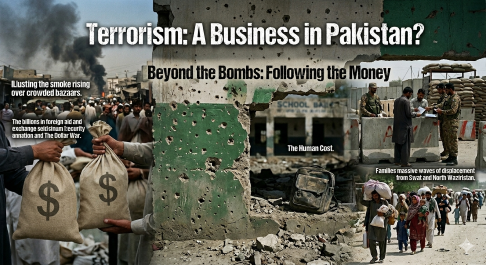
For the average person in Pakistan, the memory of terrorism isn’t found in reports or data—it’s etched into the sights and sounds of our daily lives. We remember the smoke rising over crowded bazaars, the constant presence of security checkpoints, and the crushing grief of families who sent their children to school, only for them never to return home. But beneath the raw tragedy, a question has lingered in the public consciousness for years: Why did this conflict drag on for so long, and who actually stood to gain from the chaos?
Reducing Pakistan’s struggle to a simple standoff between the government and militants ignores the messy reality. It was a complex web of shifting geopolitics, billions in foreign aid, military campaigns, and massive waves of displacement. While the threat to our national security was undeniable, many critics argue that the “War on Terror” eventually created its own ecosystem of political and financial incentives, fundamentally changing how the conflict was fought and how it was sold to the rest of the world.
After 9/11, Pakistan became a cornerstone of U.S. strategy in the region. According to figures from the Center for Research and Security Studies (CRSS) and various U.S. government reports, Pakistan received roughly $33 billion in aid between 2002 and 2020. A massive chunk of this was funneled through the Coalition Support Fund (CSF), which reimbursed Pakistan for counterterrorism operations along the Afghan border.
This dynamic birthed what many locals bitterly dubbed the “Dollar War.” Regardless of your stance on the label, it captures a widespread sentiment: while ordinary citizens paid the price in blood and instability, political elites and external powers often maneuvered for resources and strategic leverage.
The Human Cost
Statistics rarely tell the full story. The real burden fell on families who lost their homes, their livelihoods, and their loved ones. Look at the Swat Valley, which became a brutal frontline between militants and security forces from 2007 to 2009. Operation Rah-e-Rast eventually restored order, but not before displacing hundreds of thousands of people.
We saw a similar pattern during the 2014 Operation Zarb-e-Azb in North Waziristan. While military officials frequently cite it as one of their most effective campaigns against militant networks, the human cost of that success was a massive civilian exodus, forcing thousands of families to abandon everything they knew.
When Innocence Is the Target
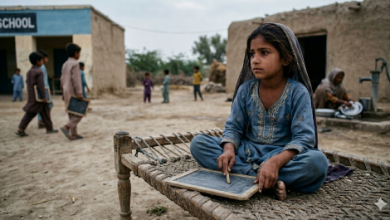
If anyone ever questioned the brutality of these groups, the 2014 Army Public School (APS) massacre in Peshawar erased all doubt. When militants murdered over 140 people—mostly children—the nation was shattered. It was a moment of collective grief that changed the country forever.
Research from the National Center for Biotechnology Information (NCBI) has since documented the profound psychological trauma that survivors still carry today. Furthermore, Human Rights Watch has highlighted a systematic campaign during those years of violence, where hundreds of schools across the country were damaged or threatened, turning places of learning into targets.
A Crisis of Trust
Perhaps the most lasting scar of this entire era is the broken bond between the public and the state. Many Pakistanis are still left asking difficult, unanswered questions about the effectiveness of those years of counterterrorism policy.
Looking Ahead
Pakistan’s fight against terrorism remains one of the most painful and intricate chapters in our modern history. If we hope to secure a lasting peace, we cannot simply rely on old playbooks. Any future strategy must be built on transparency, genuine accountability, and a real commitment to the well-being of the communities that have been left behind.
Sources: CRSS; U.S. Government Accountability Office; Encyclopedia Britannica (APS attack); NCBI/PMC trauma studies; Human Rights Watch.
Read: Pakistan’s Systemic Weaknesses Unaddressed
_____________________
 Originally from Dir Lower, Khyber Pakhtunkhaw, Muhammad Younas Khan is a student of International Relations at Quaid-e-Azam University, Islamabad.