Hundreds of City and Regional Planning (CRP) graduates, produced annually, remain unemployed across the province.
By Zain Daudpoto
In Sindh, Mehran University of Engineering and Technology (MUET) and NED University of Engineering and Technology produce hundreds of City and Regional Planning (CRP) graduates annually—an education for which families collectively spend millions of rupees over four years. Yet, local government bodies across Sindh—including municipal corporations, development authorities, WASA, and building control authorities—make no effort to recruit these trained professionals to enhance institutional operations. Instead, key positions that strictly require urban and regional planning expertise are routinely occupied by civil engineers or graduates from unrelated arts and humanities backgrounds. Consequently, hundreds of qualified CRP graduates remain unemployed across the province, while some local government bodies exploit them for unpaid labor before letting them go.
To fix this administrative failure, the Chief Minister of Sindh should mandate the formal recruitment of CRP graduates across municipal institutions—particularly in Karachi and Hyderabad—to bolster operational efficiency and climate resilience.
Simultaneously, the leadership of MUET and NED University must actively push the provincial government to establish dedicated job cadres for their planning graduates.
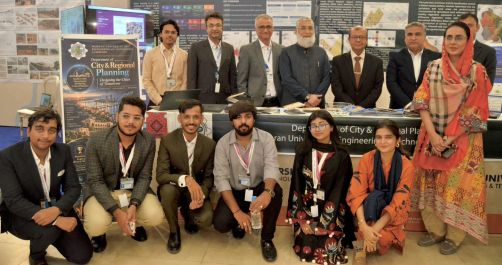
This systemic neglect stands in stark contrast to official rhetoric, as demonstrated at the recent “Sindh Cities Forum 2026” organized by the Government of Sindh in Karachi. Attended by Chief Minister Murad Ali Shah as chief guest, alongside Local Government Minister Nasir Hussain Shah, university vice-chancellors, and leading technocrats, the forum featured a competitive showcase of final-year CRP student projects from local and international institutions.
Abdul Ahad, a talented student from Mehran University, secured first place. However, it remains a bitter irony that while the provincial leadership celebrates academic innovation on stage, it fails to provide these top-tier graduates with legitimate employment pathways within the very cities they are trained to design.
The discipline of City and Regional Planning was established specifically to tackle modern urban crises. Its comprehensive curriculum equips professionals not only with urban design and infrastructure skills, but also with strategies to adapt to environmental shifts and mitigate climate change risks. From managing municipal water supply, wastewater, and solid waste to optimizing traffic management, green belts, recreational spaces, and residential zoning, CRP graduates possess the exact expertise Sindh’s municipal bodies desperately lack. Leaving this specialized talent pool unutilized continues to undermine urban governance across the province.
___________