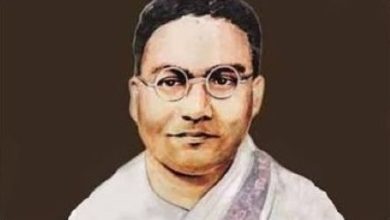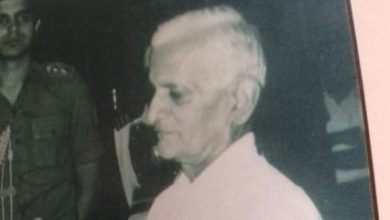
His voice may have fallen silent, but its echo still resonates across the plains, villages, towns, and hearts of Sindh.
A tribute to great leader Rasool Bux Palijo on his death anniversary
Advocate Kauser Phulpoto
Eight years have passed since the departure of Rasool Bux Palijo, yet his presence continues to be felt in the political, intellectual, and cultural landscape of Sindh. Few individuals leave behind a legacy that transcends their lifetime. Palijo was one of those rare figures whose ideas continue to inspire debate, shape political thought, and influence generations long after their physical absence.
History remembers leaders for different reasons. Some are remembered for the offices they held, others for the movements they led. Rasool Bux Palijo will be remembered because he dared to imagine a different society and devoted his entire life to turning that vision into reality.
Born in a deeply feudal and unequal social order, Palijo challenged structures that many considered permanent and unchangeable. He believed that poverty, exploitation, gender discrimination, and political subjugation were not the natural fate of society but products of unjust systems that could and should be transformed. At a time when progressive politics in Sindh often remained confined to slogans, Palijo invested in the long and difficult task of political education and social awakening.
His struggle was not limited to electoral politics. He was a thinker, lawyer, writer, educator, and movement builder. He viewed politics as a means of empowering ordinary people rather than securing power for elites. Peasants, workers, students, women, and marginalized communities occupied the center of his political vision.
 One of Palijo’s most remarkable contributions was his unwavering commitment to women’s empowerment. Long before gender equality became a widely accepted public discourse, he recognized that no society could progress while half of its population remained excluded from leadership and decision-making. Through the Sindhyani movement and other platforms, thousands of women from rural Sindh found a voice, a purpose, and a place in public life. Many of the socially conscious and politically aware women of Sindh today stand on foundations laid by Palijo’s vision and efforts.
His intellectual framework, often described as “Palijoism,” was neither rigid nor dogmatic. It drew inspiration from diverse sources: the humanism of Karl Marx, the revolutionary spirit of global liberation movements, the democratic aspirations of modern political thought, and the spiritual wisdom of Shah Abdul Latif Bhittai. He combined these influences into a uniquely Sindhi political philosophy rooted in justice, equality, dignity, and cultural self-respect.
Language, culture, and history occupied a central place in his worldview. Palijo believed that a nation disconnected from its language and historical memory risks losing its identity and autonomy. Yet his commitment to Sindhi identity was never exclusionary. He rejected chauvinism and ethnic hatred. For him, love for Sindh was inseparable from love for humanity. His nationalism was inclusive, democratic, and deeply humanistic.
Perhaps what distinguished Palijo most was his refusal to conform. He rarely chose the easy path. He challenged political orthodoxy, questioned accepted truths, and remained steadfast even when his positions were unpopular. He measured success not by immediate gains but by the long-term transformation of society. In an era increasingly dominated by political expediency, such consistency remains rare.
His critics and admirers often disagreed on many issues. Yet even those who differed with him acknowledged the depth of his intellect, the sincerity of his convictions, and the courage with which he defended them. Controversy often accompanies influential figures, but history ultimately judges them by the ideas they leave behind and the impact they have on society. By that measure, Rasool Bux Palijo occupies a distinguished place in Sindh’s modern history.
Today, as Sindh continues to grapple with challenges of inequality, environmental degradation, political centralization, educational decline, and social fragmentation, many of the questions Palijo raised remain as relevant as ever. His writings, speeches, and political interventions continue to offer valuable insights for those seeking democratic and progressive solutions.
On his eighth death anniversary, the most meaningful tribute to Rasool Bux Palijo is not merely to remember him but to engage seriously with the values he championed: social justice, gender equality, democratic rights, cultural dignity, intellectual freedom, and human emancipation.
Leaders come and go. Movements rise and fade. Yet some ideas outlive their creators and continue to illuminate the path forward. Eight years after his passing, Rasool Bux Palijo remains one of those enduring lights.
His voice may have fallen silent, but its echo still resonates across the plains, villages, towns, and hearts of Sindh.
For many Sindhis, the sentiment remains unchanged: Rasool Bux Palijo was among us, and in the power of his ideas, he remains among us still.
Read: Struggle through Marxist–Maoist lens
___________________
 Based in Sukkur city of Sindh, Advocate Kousar Phulpoto, member Sindhyani Tehreek, is a writer and activist.