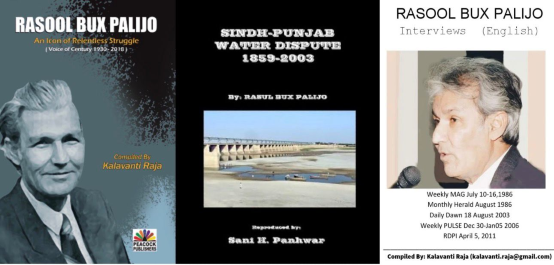
Palijo’s Ideas: Marx–Lenin–Mao with a Sindh-Specific Layer
- Rasool Bux Palijo’s political thought represents a practical synthesis of major revolutionary traditions adapted to local realities
Analysis by: Kalavanti Raja
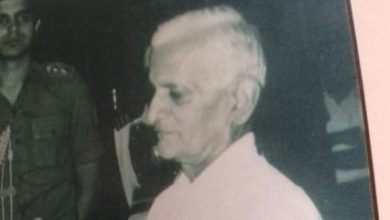
Today, on the occasion of the 8th death anniversary of Rasool Bux Palijo, this reflection is presented in his memory at Jungshahi, Thatta. It aims to revisit his political thought; not as a matter of history alone, but as a living intellectual and political legacy that continues to influence struggles for justice, identity, and equality in Sindh.
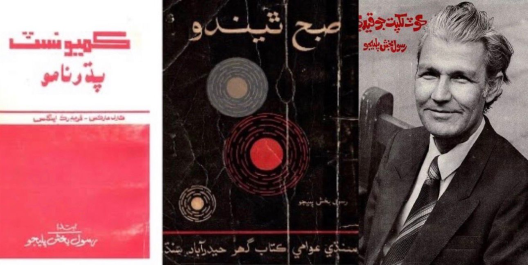 This analysis is based on a close reading of Subuh Theendo (Dawn will Come), other writings, recorded speeches, interviews, and long-term observation of his political life spanning more than five decades. Throughout this period, his consistent pro-people stance and firm opposition to feudal structures, authoritarianism, imperial influence, and military-backed regimes remain central to understanding his ideological journey.
Rasool Bux Palijo’s political thought can be understood as a structured synthesis of Marxist class analysis, Leninist organizational discipline, and Maoist mass politics, enriched by a strong Sindhi cultural and historical context. These ideas were never confined to theory; they were expressed through sustained political practice via Awami Tahreek and its allied movements.
Marxist Foundation: Focus on Class and Rural Reality
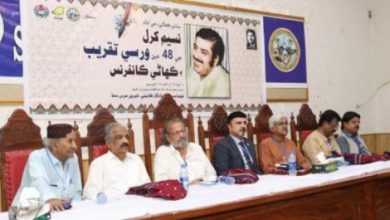
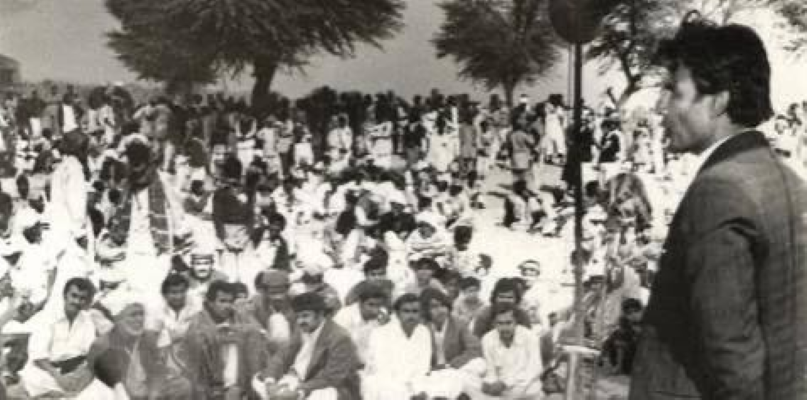
The Marxist dimension of Palijo’s thought is evident in his consistent focus on rural inequality, land relations and the conditions of working people. Awami Tahreek’s Hari Conferences are a clear example of this approach, where peasants, tenants and rural workers gather to discuss land rights, economic injustice and structural inequality.
These are not symbolic events but serious political platforms rooted in real social conditions. Large mobilizations and protest campaigns repeatedly focus on issues such as land distribution, water access, and rural economic justice, reflecting a deeply grounded class-based understanding of society.
Leninist Organization: Discipline in Political Struggle
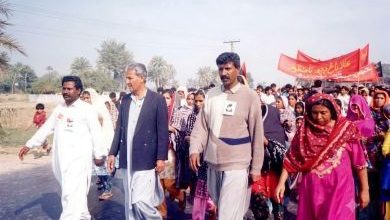
The Leninist aspect of his politics is reflected in the structured and sustained organizational model of Awami Tahreek. The movement is known for its long marches across Sindh, where thousands of people move together in coordinated political action to raise collective demands. Awami Tahreek takes forward the Lenin’s clear stance on question of nation through class struggle lens.
Such mobilizations are carefully planned and disciplined, involving continuous organization, leadership engagement and collective participation. Regular protests, sit-ins and campaigns further demonstrate a consistent method of organized political struggle. The involvement of students and workers within this structure highlights long-term political continuity based on collective discipline.
 Maoist Influence: Mass Participation and Rural Engagement
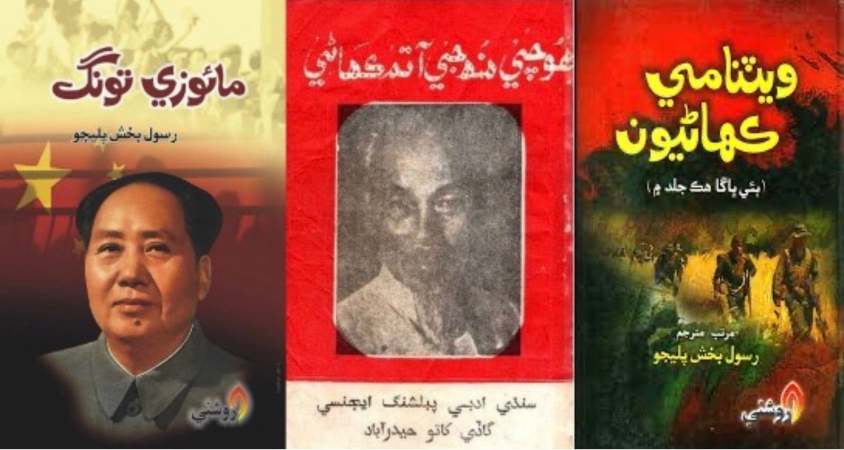
A strong Maoist influence is visible in the emphasis on mass participation and rural rootedness. Awami Tahreek’s political work is deeply embedded in villages and small towns rather than urban elite centers. Like Mao, AT has the culture as essential tool for revolutionary consciousness building.
Sindhiyani Tahreek, the women’s wing of the movement, is a powerful example of this approach. It has enabled rural and semi-rural women to actively participate in political life through demonstrations, study circles and public gatherings. This reflects a broader commitment to inclusion and political empowerment of historically marginalized groups.
The movement’s reliance on large public gatherings and open political engagement reflects a belief that political awareness is built through participation, not isolation.
 Sindh-Specific Cultural Layer: Politics Rooted in Identity
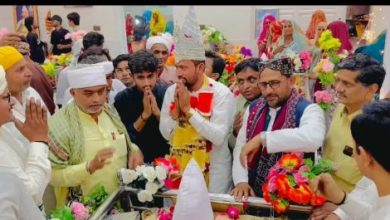
A defining feature of Palijo’s thought is the integration of Sindhi cultural identity into political life. In Awami Tahreek’s gatherings, poetry, music and traditional dance are not separate from politics but part of it.
These cultural expressions transform political events into spaces of collective identity, awareness, and resistance. Literary discussions, cultural programs, and historical references consistently reinforce the importance of language, memory, and heritage in shaping political consciousness.
Conclusion: A Living Intellectual Synthesis
Rasool Bux Palijo’s political thought represents a practical synthesis of major revolutionary traditions adapted to local realities. His work reflects a consistent focus on rural class conditions, disciplined political organization, and mass-based participation, all deeply rooted in Sindhi culture and identity.
In theoretical terms, movements are often described as Marxist–Leninist–Maoist when they combine class analysis, organizational discipline, and mass political strategy aimed at systemic transformation. Within this framework, Palijo’s ideas and practice reflect a comparable structure, shaped by the historical and social realities of Sindh in conformity with Marxist–Leninist–Maoist ideas of class, nation and culture analysis to liberate the working class.
Read: Rasool Bux Palijo: Sindh’s Soulful Voice
______________________
Kalavanti Raja is a social and political activist from Gambat, Khairpur Mirs. She has worked for more than 30 years on women’s rights, minority rights and social justice, and has participated in national and international forums across Asia, Europe and America. Email: kalavanti.raja@gmail.com