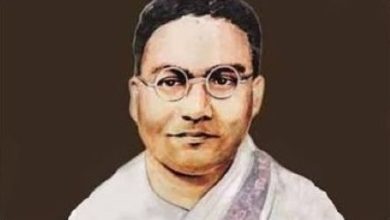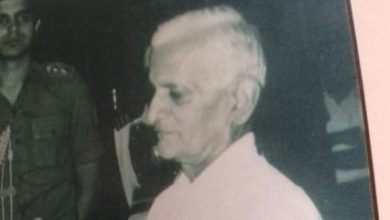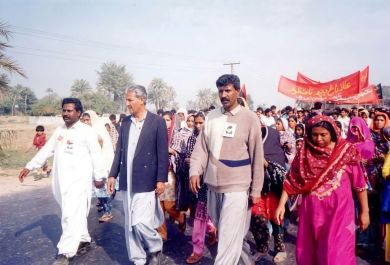
Tribute to Mumtaz Nizamani, the everlasting voice of Sindh’s women and the conscience of a nation, on her 31st Death Anniversary
By Kalavanti Raja
The fertile and historic land of Sindh has produced countless courageous men and women who stood against oppression and injustice in every age. From the heroic women celebrated in the poetry of Shah Abdul Latif Bhittai, such as Sassui and Marvi, to modern-day daughters of Sindh like Bakhtawar, Baghul, Zahid Shaikh, Hoor-ul-Nisa, Fatima Palijo, Salihan Gopang, and many others, Sindh has never been short of women who challenged social norms and defended the dignity of their people. Adi Mumtaz Nizamani stood proudly among this distinguished lineage. She was not merely a political activist or organizational leader; she was a living embodiment of the courage, endurance, and resistance that Shah Latif immortalized in his poetry.
Today, on 19 June 2026, Sindh commemorates the 31st death anniversary of Adi Mumtaz Nizamani, who passed away on 19 June 1995. More than three decades after her departure, her name continues to inspire political workers, peasant women, students, and activists throughout Sindh. She remains one of the most respected figures in the history of the Sindhi national, democratic, and women’s movements. She was neither a doctor, engineer, philosopher, professor, nor a product of elite institutions. She emerged from the villages of Sindh and rose to become one of the most influential leaders of the Sindhyani Tehreek and one of the most recognizable voices of resistance in modern Sindh.
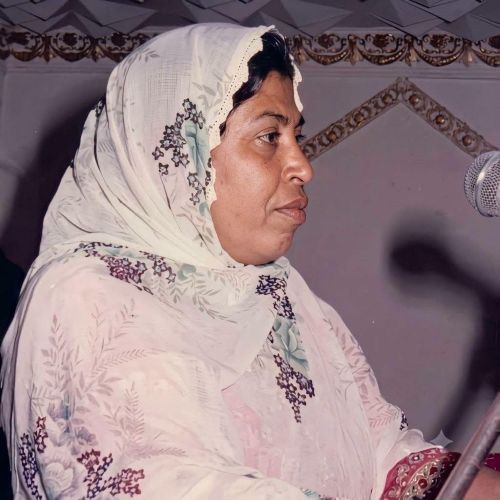 The story of Adi Mumtaz Nizamani began in hardship. She lost her mother during infancy and was raised primarily by her grandmother. The absence of maternal affection, the experience of neglect, and the burdens of poverty shaped her childhood. While many would have been broken by such circumstances, she transformed adversity into strength. Her early years taught her resilience, patience, and empathy for those who suffered injustice and deprivation.
At the age of eighteen, she entered a new phase of life when she married a widower who had six children from his first marriage. The marriage itself was surrounded by social controversy and opposition, but she entered her new household with courage and determination. Rather than accepting the traditional prejudices associated with step-motherhood, she embraced all six children with love and compassion. Later, when she had children of her own, she never distinguished between biological and stepchildren. Her home became an example of unity, affection, and human dignity.
One of those sons, who was not her biological child, played a decisive role in her intellectual and political development. By the time Adi Mumtaz entered public life, her children had already grown up and some were actively involved in politics. Through their influence, especially that of her politically conscious son, she was introduced to ideas of democracy, social justice, national rights, and people’s movements. This exposure transformed her from a dedicated homemaker into a socially aware and politically active woman.
The defining chapter of her public life began with the Sindhyani Tehreek, the revolutionary women’s movement founded under the vision of the great Sindhi thinker, democrat, and nationalist leader Rasool Bux Palijo. Among Palijo Sahib’s many contributions to Sindh, Sindhyani Tehreek remains one of the most transformative. It provided a platform through which rural women entered political life and became participants in national, democratic, and class struggles.
Adi Mumtaz Nizamani quickly emerged as one of the movement’s most dedicated organizers. In 1990, at the Sindhyani Tehreek conference held in Qambar, she was elected President of Badin District Sindhyani Tehreek. Her commitment, organizational abilities, and close connection with ordinary women soon earned her wider recognition. In 1991, she was elected Central President of Sindhyani Tehreek, becoming one of the foremost women leaders of Sindh.
As Central President, she travelled extensively across the province, organizing women in villages, towns, and remote settlements. She encouraged women to move beyond the limitations imposed by tradition and to participate actively in public affairs. Her work brought political awareness to countless women who had never before imagined themselves as participants in social change.
Her leadership was recognized internationally as well. Alongside Adi Hoor-ul-Nisa, she represented Sindhi women at important international gatherings. Most notably, in 1993, she attended the International Women’s Conference in Beijing, where she highlighted issues affecting women in Sindh, including Karo Kari, Sang Chatti, gender discrimination, violence against women, and feudal oppression. She also presented a strong and reasoned position regarding Sindh’s political, social, and economic challenges.
Despite her growing stature, she remained deeply rooted in rural life. She cooked her own meals, washed her own utensils, cared for livestock, and managed household responsibilities. The same woman who churned buttermilk at dawn could later be seen addressing thousands at a political gathering. Her simplicity became one of her greatest strengths. People trusted her because she lived the same life they lived.
Although she had not received advanced formal education, she was an exceptionally powerful speaker. Her speeches blended the wisdom of Shah Abdul Latif Bhittai with examples from world history, particularly the French Revolution, while always returning to the realities of Sindhi peasants, workers, and women. She quoted Shah Latif’s verses with remarkable ease and used them to inspire courage, dignity, and perseverance. At the famous Hari Conference of 1992, she delivered a memorable speech declaring that the Sindhi nation was alive, united, and incapable of being enslaved by any power. Her words strengthened political conviction and inspired countless activists.
Throughout her political life, she stood at the forefront of movements defending the rights of Sindh. She participated in long marches, rallies, protests, and campaigns for democracy, social justice, women’s rights, and the protection of the Indus River. She opposed the exploitation of Sindh’s land and resources and raised her voice against bonded labor, child labor, feudal oppression, and violence against women. She understood that the struggle for Sindh’s rights was inseparable from the struggle for the rights of its poorest citizens.
Her activism often brought her into conflict with powerful feudal interests. She faced threats, intimidation, and social pressure, yet she never retreated. She challenged landlords, contested elections against entrenched power structures, and remained steadfast in the face of adversity. She believed that political struggle was not a means of personal advancement but a moral duty owed to the people.
Her husband stood beside her throughout these struggles. During the resistance against General Zia-ul-Haq’s dictatorship, he was arrested, imprisoned for nine months, and subjected to flogging. Despite immense pressure, he refused to compromise. His courage reinforced her own determination, and together they became partners in both family life and political struggle.
Within the political history of Sindh, Adi Mumtaz Nizamani is often remembered as the first martyr of Sindh’s Long March movement. Yet her greatest distinction lies not merely in martyrdom but in the example she set through her life. She demonstrated that a woman from a rural background, with no wealth, privilege, or formal power, could become a force capable of transforming society.
When she passed away on 19 June 1995, Sindh lost one of its most sincere and dedicated daughters. Yet her death did not diminish her presence. More than thirty years later, she continues to live in the struggles of Sindhi women, in the movements she helped build, and in the dreams she inspired. Every woman who raises her voice for justice, every activist who defends democratic values, and every citizen who stands for the rights of Sindh carries forward a part of her legacy.
Adi Mumtaz Nizamani belongs to that rare category of leaders whose memory is not confined to anniversaries. She remains alive in the political consciousness of Sindh. Like the heroines of Shah Latif’s poetry, she transformed suffering into strength and sacrifice into inspiration. Her life was a testament to courage, integrity, and unwavering commitment to the people.
As Sindh marks her 31st death anniversary, one can still imagine her standing before a sea of people, wrapped in her traditional shawl, raising her voice and declaring: “Comrades, Long Live Sindh and Long Live Our Struggle for Rights and Justice.”
Her struggle continues. Her dream remains alive. And the people of Sindh will continue to remember Adi Mumtaz Nizamani with pride, gratitude, and a revolutionary salute.
Read: Struggle through Marxist–Maoist lens
___________________
Kalavanti Raja is a social and political activist from Gambat, Khairpur Mirs. She has worked for more than 30 years on women’s rights, minority rights and social justice, and has participated in national and international forums across Asia, Europe and America. Email: kalavanti.raja@gmail.com