

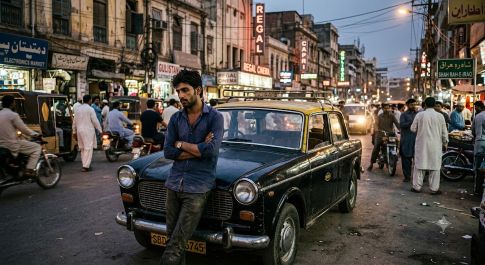
Stories of Karachi’s Taxi Drivers from 1993 to 2000
Zaffar Junejo
[Author’s Note: I joined a non-government organization in mid-1993. In those days, we were frequent travelers to other Asian countries, and during that period I maintained a diary. I once showed the notes to Muhammad Ibrahim Joyo — the legendary scholar, translator, and intellectual giant of the Sindhi world — who suggested categorizing the entries by theme and getting them published. He recalled that long ago, perhaps in 1955, the Sindhi journal Mehran had launched a similar idea titled ‘Hik Deenh Ji Ghaleh’ (The Story of a Day), even offering a prize for it. He himself had submitted the first story, he told me with a smile, just to set a standard for other writers. Later, Maulana Ghulam Muhammad Girami, a scholar of high standing and journalist; Shamsher ul Haidri, a distinguished Sindhi poet, journalist, and playwright; and Siraj ul Haq Memon, an iconic novelist, linguist, and journalist, all contributed their observations of a single day. These writings were published until 1968.
I agreed with Joyo Sahib that I would group the write-ups by subject and get them published, but I failed to do so. Recently, I sat down to organize my notes. I found various entries about the taxi drivers of Karachi city. Some were very brief and incomplete; others were short but held a finished truth. I have chosen five stories from each year, all of them gathered from the drivers of those cars. In total, there will be thirty-five stories covering the period from 1993 to 2000.]
The Short Years
The hot air smelled of rain and diesel. Bunting hung across Saddar. Green and white lights framed the high brick walls of the Sindh Secretariat. The clock on the wall read five.
I took the book by Suhail Lari from the clerk at Thomas and Thomas. Outside, a man leaned against the fender of a car—a taxi. He scraped his boot against the curb.
“Gulshan?” I asked.
He opened the rear door. “Get in.”
He shifted gears. The transmission whined as we skirted the Electronic Market. He turned the wheel hard left, looking at me through the cracked rearview mirror. He cleared his throat.
“Sindhi?” he asked.
“Yes,” I said.
He moved his shoulders against the plastic seat cover. “Hyderabad?”
“Yes.”
He stared at the traffic ahead. “Latifabad Number Seven.”
“When did you come down to Karachi?” I asked.
He blew air through his teeth. “Eighty-three. Maybe eighty-four. I sat in the seventh class.”
The car shook over a pothole. He gripped the steering wheel tighter.
“The whole family moved,” he said. “Hyderabad felt unsafe.”
“Unsafe for whom?”
“For us. Muhajirs.”
He passed a slow rickshaw.
“I studied well in the eighth class,” he said. “Better than the Karachi boys. The teachers liked me. I had discipline.”
He slowed for a donkey cart, his fingers tapping the dashboard.
“Then matric came. The boys in the street changed me.”
“How changed?”
He rubbed his eyes with the back of his hand. “We took Altaf Hussain as our Pir. Our guide. The sector office replaced the school. The party became everything.”
He touched his left earlobe. His hand trembled slightly.
“My father asked about my report card one night. I had nothing to show. I screamed at him. He slapped my face.”
The taxi idled at a red light. The heat inside the cabin grew thick.
“I went straight to the sector office,” he said. “I told the chief that my father hated the party. I told them he insulted the chief.”
He stared at his own reflection in the glass.
“They called my father to the office. A small man. He looked tiny in that room. The sector chief spat insults at him. My father stood there. They gave him no chance to speak.”
“And you?” I asked.
He swallowed hard. “I felt powerful. Then the violence started. The sector became my life.”
“You regret it?”
“The pain stays in my chest,” he said.
“How did you live together after that?”
He touched his earlobe again. “I came home at dawn. I avoided his eyes all the time. I woke at noon; he had already left for the mechanics’ workshop. My brothers had left for school.”
He shifted into second gear.
“One morning my mother sat by my bed. She said my father trembled when I entered the room. She asked me to go back to Hyderabad for a few weeks.”
He gripped the gearstick.
“I told her he should go back to Hyderabad instead.”
“What did she say?”
“She said nothing. She walked out.”
“Did you ever speak to him again?”
“No,” he said.
“What happened?”
“The military operations began,” he said. “The party ordered us to scatter. I fled to Nawabshah. Then Shahpurchakar.”
“When did you return?”
“Eighteen months later.”
“And your father?”
He turned the wipers on to clear the dust from the glass. “He lay sick in bed. My mother had grown frail. My younger brother had quit school to work the lathes.”
“What did you do?”
“I had an eighth-class certificate,” he said. “I needed rupees every day. I rented this car from a neighbor.”
The city noise faded as we reached the bypass. The celebration lights lay behind us.
“I thought driving a taxi meant freedom,” he said. “I had naive ideas. Movie ideas. I thought I would carry rich men who would leave briefcases full of cash in the back seat.”
He wiped the sweat from his neck.
“I thought a wealthy woman would sit back there. She would look at me. She would love me and take me away from this.”
“And instead?”
“Instead, the hours grew longer,” he said. “Passengers argue over paisas. The streets flooded with new cars. My back aches.”
“What now?” I asked.
He stopped the taxi by the curb in Gulshan. He did not look back.
“I am a loser,” he said. “I just pull the days along.”
________________________
 Dr. Zaffar Junejo has a Ph.D in History from the University of Malaya. His areas of interest are post-colonial history, social history and peasants’ history. He may be reached at junejozi@gmail.com



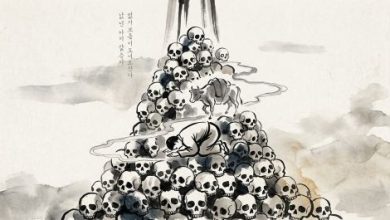
When groups driven by terror and violence take on an organized form, they seek to attract and recruit everyone into their ranks. Those who refuse to join often become their targets, regardless of whether they are their own parents or close relatives. Like the taxi driver in this story, they ultimately end up destroying their own lives.
Dr. Zafar’s journey in the taxi is an eye-opening account of a turbulent period. It reveals the painful realities of that era, where some of the victims openly recount their experiences with deep regret and remorse.