How Rasool Bux Palijo Turned Rural Sindh’s Women and Its Wounded River into a New Paradigm of Struggle
A tribute to Rasool Bux Palijo on his 8th death anniversary
Mohammad Ehsan Leghari
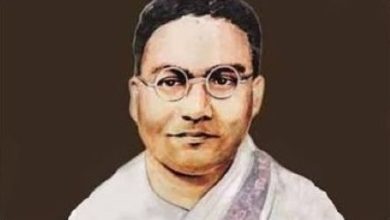
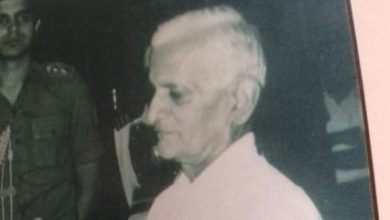
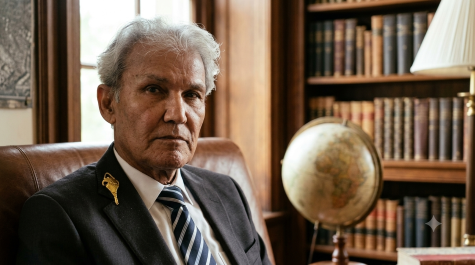
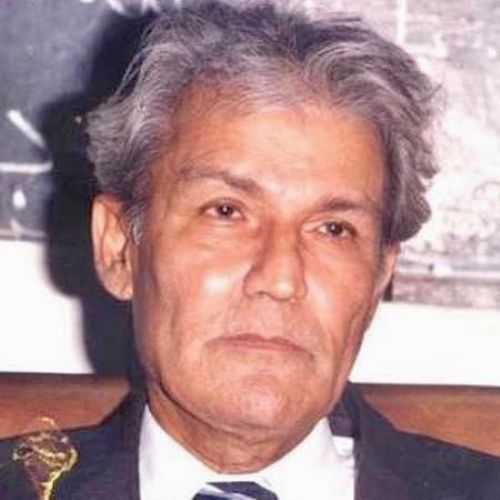
I am writing these lines on the seventh of June, the death anniversary of Rasool Bux Palijo, and I have chosen to remember him through two areas of his life’s work; the mobilization of women through the Sindhiani Tahreek, and the long struggle for the water rights of Sindh. And, I want to begin by explaining why. Rasool Bux Palijo did a great many things across his eighty-eight years. He founded parties and fronts, wrote more than two dozen books, argued constitutional cases, spent eleven years in prison, and reinterpreted the Sufi poetry of Shah Latif as a charter of revolution. A writer could approach him from any of these doors. But I am drawn to these two in particular because, taken together, they amount to something larger than a biography of one man. They offer a model, a paradigm; of how the most powerless people in a society can organize themselves into a force that changes history.
Consider who the actors were. Rural Sindh in the 1970s and 1980s was an agrarian, feudal society in which female literacy in the countryside barely touched one tenth of the population, where honor killings and forced marriages were treated as custom rather than crime, and where a woman’s subordination was regarded as her natural fate. The peasants of this land sat at the tail end of the Indus river system, the lower riparian, watching their only source of water diverted upstream while the fertile land created by their own barrages was handed to ‘others’. These were people with no capital, no media of their own, no patronage from the state, and little formal education. They were, in every sense, the downtrodden.
 And yet, with these meagre resources, they did two extraordinary things. Poor rural women; many of them peasants, some of them schoolgirls, built one of the earliest and largest women’s movements in South Asia and faced down a military dictatorship. And a movement led from villages, not boardrooms, forced the repeated shelving of one of the most powerful projects the federal state had ever pushed: the Kalabagh Dam. This is why these two areas matter to me. They are not merely episodes in Sindh’s history; they are evidence that a new political paradigm is possible; one in which the rural masses are not the objects of someone else’s charity or vote-bank, but the disciplined authors of their own emancipation. The remainder of this essay is an attempt to show how Rasool Bux Palijo made that paradigm real, and what it teaches.
The Man and His Wager
Rasool Bux Palijo was born on 21 February 1930 in the village of Mungar Khan Palijo, in Jungshahi, Thatta district. He was educated at the Sindh Madressatul Islam in Karachi and took his law degree from the Sindh Muslim Law College, but his education never carried him away from the people; if anything, it sharpened his weapon of thought. After an apprenticeship in the peasant politics of Haider Bux Jatoi’s Sindh Hari Committee, and disillusioning passages through other parties, he founded the Awami Tahreek on 5 March 1970.
Here lay his central wager, and it is the key to everything that follows. Pakistan’s orthodox Left of the time tended to treat questions of language, provincial autonomy and water as backward forms of nationalism. The conventional Sindhi nationalists, for their part, leaned on students and the urban educated. Rasool Bux Palijo rejected both. A Marxist who took the ‘national question’ seriously, he argued that a movement which relied on students and elites without a peasant mass base would either be hijacked by feudal interests or crushed in its infancy. What Sindh needed, he insisted, was a National People’s Democratic Revolution; nationalist in defending Sindh’s rights, socialist in rooting itself among peasants and workers, and revolutionary in refusing the comforts of parliamentary reformism. And this movement, he said from the start, must include women. That single insistence is where the first of our two stories begins.
First Paradigm: Mobilizing Women through the Sindhiani Tahreek
Rasool Bux Palijo began where he stood; in his own home and clan in Jungshahi. He drew the women around him into the demonstrations and study circles of the Awami Tahreek, and in doing so established a habit that would become his signature: whole families entering political life together, men, women and children as a single unit. The household, which feudal society treated as the outer limit of a woman’s world, became instead the first cell of her political education. An early cause was the demand that voter rolls, printed only in Urdu, appear in Sindhi; Palijo Sahib’s step-daughter Akhtar Baloch led these agitations and was jailed, and her prison notebooks survive as a record of how a generation of women was ideologically trained through the movement.
On 27 November 1982, this organizing work crystallized into the Sindhiani Tahreek, the Sindhi Women’s Movement — widely regarded as the first progressive, exclusively women’s organization in the history of Sindh and among the earliest in the subcontinent. Its timing was deliberate. General Zia-ul-Haq’s ‘Islamisation’ had produced the Hudood and Zina ordinances, which stripped women of legal protection against sexual assault, and would soon halve the value of a woman’s testimony in court. While the urban, middle-class Women’s Action Forum resisted from the cities, the Sindhiani Tahreek’s base was overwhelmingly rural and poor. Its public face was the folk singer and activist Zarina Baloch — called Jeeje, mother of the Sindhi people — Palijo Sahib’s wife and co-founder, herself jailed in 1979 for leading protests against martial law, whose anthems turned folk song into the sound of mobilization. Beside her stood Palijo Sahib’s Sisters Ghulam Fatima and Hoor-un-Nisa, and women such as Shahnaz Rahu and Zahida Shaikh.
What makes this a paradigm rather than merely an organization is the method. Rasool Bux Palijo did not treat women as beneficiaries to be helped; he treated them as cadres to be trained. They were schooled in the movement’s program and drilled in discipline, even carrying ‘jail-bags’ to protests in expectation of arrest. He used the institutions women were already allowed to enter: Hoor Palijo, a college lecturer in Thatta, would finish her classes and take her female students by train to join protests in Hyderabad, recruiting the next generation through the classroom. Women organized family to family, visiting the homes of jailed male comrades and drawing those households into the struggle. And the women’s movement was given real institutional weight — its own constitution, its own areas of work, and an autonomy so genuine that the parent party could not suspend a single Sindhiani member.
The courage this produced is best left to the women themselves. Hoor Palijo once described returning by train from a Hyderabad protest with some seventeen or eighteen women when soldiers boarded their carriage. Party discipline forbade a quiet arrest in a dark corridor with no witnesses; so the whole group leapt from the moving train, scattered and injured, then regrouped, reached a village, and — with one bicycle among them — carried the hurt to the road one by one. During the Movement for the Restoration of Democracy in 1983, of which the Sindhiani Tahreek was a part, Sindh became the epicenter of resistance, and it was there that ordinary people confronted army vehicles with bare chests. Schoolgirls marched beside their grandmothers.
Scholars still debate whether the movement was ‘feminist’ in the strict sense, since for long periods it foregrounded national and economic questions over explicitly gendered ones. But that debate, I think, misses the deeper achievement, and points us directly toward the second of our two areas. For these rural women, the demand for a fair share of water was a demand for their own survival and dignity, since it was they who bore the sharpest edge of agrarian collapse. The clearest measure of how far the movement had moved the boundaries of the possible came at the funeral of Rasool Bux Palijo in 2018, when women led the procession and carried his body to the grave; a public reversal of convention that no proclamation could have achieved.
Second Paradigm: The Struggle for the Water Rights of Sindh
If the women’s movement supplied the human force, the water question supplied the cause that carried it onto the open road. For Rasool Bux Palijo the matter of the Indus was never a narrow irrigation dispute; it was a question of survival for a lower-riparian province whose fields feel every diversion made upstream. The 1960 Indus Waters Treaty intensified the pressure on Sindh’s rivers; subsequent reservoirs and link canals reduced the flow reaching the province, producing what the movement called a man-made water famine.
Characteristically, Rasool Bux Palijo fought first with the pen. He studied the colonial-era accords and the long arc of the dispute and set it down in his book Sindh–Punjab Water Dispute (1859–2003), assembling the documentary case to rebut the federal water authorities. He served as President of the Sindh Water Committee and sat on the action committees against the Greater Thal Canal and the Kalabagh Dam. The Kalabagh Dam, proposed on the Indus, became the defining struggle of his later years; and the stage on which the rural masses showed what meagre resources, well organized, could do.
He led long marches of thousands: twice from Sukkur to Karachi, in 1991 and 1995, and again from Bhit Shah to Karachi in 2001, where marchers met baton charges, tear gas and mass arrest yet reached the city peacefully. Sindhiani Tahreek activists walked through the blistering Sindhi summer with children at their waists, reciting the verses of the poet Shaikh Ayaz.
March fast, march slow; the walk is long, who would undertake it? The road is weary, the miseries may swallow; even then, the walk for the beloved is worth it. Shaikh Ayaz (recited on the anti-dam marches)
These marches grew so large that they drew in former Prime Minister Shaheed Muhtarma Benazir Bhutto. Zahida Shaikh recalled that, seeing the streets of Karachi lined with women, Muhtarma asked Palijo Sahib whether it was a women-only march; he answered that it was led-by women, with hundreds of thousands of Sindhis lined up behind their sisters. The sustained, women-fronted pressure generated by this resistance is widely credited as a decisive reason the Kalabagh Dam was repeatedly shelved. A movement of the poor, without donor funding or state backing, had stopped a project the most powerful institutions of the country wanted built. That, in itself, is the paradigm in action.
Why the Two Belong Together
I chose these two areas together, and not separately, because in Rasool Bux Palijo’s hands they were never two campaigns but one. A peasant economy denied its share of the river impoverishes its women first; and a movement that organizes women supplies the discipline, the numbers and the moral authority that the water struggle required. Rasool Bux Palijo built the institutions to keep this fusion alive; not only the Sindhiani Tahreek but the Sindhi Girls Students Organization, the Sujaag Baar Tahreek for children, and the Sindhi Shagird Tahreek for students, each feeding cadres into the others. He trusted organization over charisma, and tried to turn his party into an institution that could outlast him.
That ambition has been tested since his death on 7 June 2018; the Awami Tahreek splintered, and the women’s movement has searched for direction. But the precedent stands. As Pakistan’s urban Aurat March has grown, observers have looked back to the Sindhiani Tahreek as the country’s great example of a women’s movement rooted in the peasantry rather than the urban middle class; a way of binding the cause of gender justice to the struggle over land and water.
Conclusion
I return, at the end, to where I began. I chose women’s mobilization and the defence of Sindh’s water because together they answer a question that haunts the politics of every poor society: can the downtrodden, with almost nothing, become the makers of their own history? The life of Rasool Bux Palijo is a sustained argument that they can. He took rural women whom their society had taught to accept subordination as fate and made them protagonists who filled the jails, leapt from moving trains, and led a leader’s funeral. He took a grievance over water and turned it into a documented, principled, mass defence of a province’s lifeline. The whistle his successors carry as an election symbol and the river he spent a lifetime defending belong to the same story; a wager that the poorest people, women above all, can be organized into a force capable of bending history. That wager, won with the most meagre of resources, is the new paradigm he leaves behind, and the reason his name remains unparalleled in the political history of Sindh.
A Note on Sources
This essay draws on Gohar Ali Memon’s study of the Sindhiani Tahreek in Jamhoor (2020); obituary and feature coverage in The Express Tribune, Dawn, The Friday Times, Daily Times and The News; the archived History of the People’s Movement in Sindh; and Rasool Bux Palijo’s own Sindh–Punjab Water Dispute (1859–2003). Sources differ slightly on the Sindhiani Tahreek’s founding (1980–1982) and on the birth date of Rasool Bux Palijo (21 February vs. 20 January 1930); the 27 November 1982 launch follows the Awami Tahreek’s own chronology. Quoted verse and statements appear as rendered in the cited reporting.
Read: The Crime of Blossoming
_____________________
 The author is a water expert, former Sindh member of Indus River System Authority (IRSA), and a prolific writer