Years later, I return, yet landscapes and souls have all changed,
No trace remains of the old address where mails once arrived…
 Fu Shishan, a native of Wugong, Shaanxi Province, is a senior media practitioner, member of the China Native Poets Association and member of Shaanxi Writers Association. He began writing modern poetry in his early years, with representative works including *The Long Road* and the “Hometown Trilogy”. His first poetry collection *Vast Hometown* was published in 2023. Centered mostly on the theme of hometown, his verses are filled with heartfelt odes and reflections on the land, family affection and traditional culture.
付士山:我的巨大的故乡
付士山,陕西武功人,资深媒体人,中国乡土诗人协会会员、陕西省作家协会会员,早年开始新体诗歌创作,代表作有《路遥遥》、“故乡三部曲”等,2023年出版首部诗集《巨大的故乡》。他的诗歌多以故乡为主题,充满对土地、亲情和传统文化的深情吟唱与回望。
Translated by Ma Yongbo
The Wanderer Has No Date of Return
Having left my hometown for years, I often wonder
Those separated souls who still hold me dear,
Would they journey a thousand miles from afar,
Seeking me back home? Or letters in piles
Might have been posted all the way
To the tiny post office in Youfeng Town.
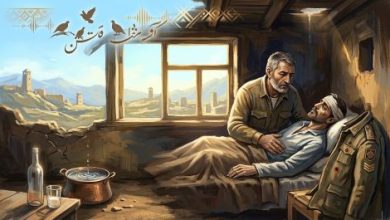
Years later, I return, yet landscapes and souls have all changed,
No trace remains of the old address where mails once arrived,
The elderly keeper who received my letters has long passed away,
Those who loved me in youth are lost to unknown whereabouts,
Everything feels separated from me by centuries apart.
The Qishui River of my hometown flows on day and night without cease;
My hometown looms immense, boundless, stripped of all old memories.
After the memorial rites, kinfolk stay quiet by day, resting in peace by night,
Right now, lamplights and hometown scenery recede frame by frame outside the car window,
Right now, there is nothing but silence, flight, and sighs,
From this moment on, the wanderer has no date of return— nor should there ever be one.
Once gone, hometown slowly turns into a foreign land beneath the weight of years:
A streak of tears, a poem, a stone stele, waiting far into the future,
For some distant day, to carve my name alongside those of my loved ones.
游子没有归期
离开故乡多年 我总怀疑
那些失散的至今惦念我的人
会不会从远方跋涉千里
去故乡找我 或者他们
应该有很多信邮寄到
游凤镇那个小小的邮电所
多年后回到故乡 物非人非
已找不到当年收信的地址
替我收信的老人也已离开人世
年少时爱我的人也不知去了哪里
一切仿佛已远离了好几个世纪
故乡的漆水河日日夜夜川流不息
故乡巨大无比没有边际没有记忆
祭拜完毕 亲人依旧白天沉默夜晚安息
此刻 灯火和故乡从车窗一幕幕远去
此刻 只有沉默只有逃离只有叹息
从此 游子没有归期 不应有归期
离开以后 故乡就被岁月慢慢变成了异乡
变成一行泪 一首诗 一块碑 只等在将来
在某一天 把我的名字和亲人刻在一起
***
Grandpa and the Giant Wild Goose Pagoda
The Giant Wild Goose Pagoda has stood by Qujiang
For more than thirteen hundred years.
It had nothing to do with me,
Still less with my grandfather.
Until that year, I supported my eighty-year-old grandpa
To climb the pagoda once—and a bond tied us all together.
I had just started working in Xi’an not long before.
Grandpa, who had never set foot in the provincial capital his whole life,
Finally got his chance to come.
That day he was in fine spirits, steady on his feet,
Hardly needing my arm, climbing step by step to the seventh floor.
I cannot recall a single word I might have told him back then—
Stories of the pagoda, Xuanzang, Bai Juyi, Li Shimin,
All blurred from my mind, only one scene stays clear—
When someone asked his age, he proudly held up eight fingers,
Drawing thumbs-up from crowds of young onlookers.
Grandpa went back to our hometown, and passed away three years later,
Beyond a low mound over his plot of farmland back home,
He left scarcely a trace in Xi’an, in this whole world.
Yet every time I drive past the road circling the pagoda,
My mind drifts back to that day I climbed the Giant Wild Goose Pagoda with him.
Now grandpa and the pagoda step side by side into this poem of mine,
And I realize nearly thirty years have slipped away.
爷爷与大雁塔
大雁塔在曲江站了一千三百多年
它跟我没有一点关系
跟我的爷爷更没有任何关系
自从那年 我搀扶着八十岁的爷爷
登了一回大雁塔 我们之间就有了联系
那年 我刚到西安工作不久
一辈子没来过省城的爷爷终于有机会来了西安
那天 爷爷精神不错腿脚灵便
甚至不需要我的搀扶 一步一个台阶上到了七层
当时是否给爷爷讲到关于大雁塔 唐僧 甚至白居易 李世民
在我脑子里都没有任何印象 我只记得
有人问爷爷多大岁数 他得意地用手比个八字
很多年轻人都给爷爷竖起了大拇指
爷爷回了老家 三年后就去世了
除了在老家的自留地隆起一座坟包
爷爷在西安在这个世界几乎没有了任何痕迹
只有我每次开车经过环塔路
总是想起那年陪爷爷登上了大雁塔
此刻 爷爷和大雁塔一起走进我的这首诗
我才想起 时间已经过去近三十年了
***
The Woman Whose Name Drifts Like Snow
The sudden snow on Start of Winter
Brings to mind a woman from my mountain hometown,
Whose name bears the character for snow.
No one even knew her surname.
She arrived alongside a heavy snowfall one winter,
Wed into our tiny hamlet of barely ten households.
Her husband, bachelor Uncle Maodan, overnight became
The happiest man in the village back then.
Though the bride seldom spoke a word,
She was, without a doubt, the village’s most beautiful woman.
Word had it she was not born simple-minded,
A sudden winter illness struck her in childhood,
Leaving her half-addled ever after—alternately mute and lucid.
Often she would sit blankly beneath the winter sun,
Likely having long forgotten the red dress of her girlhood,
And that snowstorm which altered the course of her whole life.
Year after year, winds stir green grass, sun melts the snow,
She saw her daughter wed, sent her two sons off to work in distant cities,
Silently she toiled the fields in busy farming seasons,
And always picked discarded plastic bottles to bring home,
Sometimes she wandered far away, lost for days on end.
The village aged, the trees at the village entrance aged, and she aged too,
The “snow” woven into her name bleached her black hair white.
On those days, she invited every villager one by one,
Tugging each person’s sleeve to lead them into her newly tidied home,
Page by page, she showed off an elegant photo album:
Pictures of her and Uncle Maodan dressed in brand-new clothes,
Surrounded by sons, daughters-in-law, daughters and sons-in-law,
She grinned foolishly, showing everyone again and again
The daughter-in-law’s red dress, that crimson glow blazed like brilliant light,
Lighting up her eyes, filling the whole house,
Illuminating her half-confused, half-clear latter years.
名字飘雪的女人
立冬这场突如其来的雪
让我想起老家山村那个
名字里带雪的女人
那个甚至没人知道姓什么的女人
那年冬天随着一场大雪一起
嫁到我们那十来户人家的小山村
她的丈夫光棍毛旦叔从此成为
村里那时候最幸福的男人
尽管新娘几乎一直沉默寡言
那也是村里那时候最美丽的女人
听说她也不是天生就傻 她小时候
被冬天一场意外的疾病耽搁
从此 她时而沉默不语时而清醒
经常见她在冬日的阳光下呆坐着
她可能已经忘了她少女时的红裙子
那个冬天那场改变了她一生的雪
一年一年风吹草绿 日出雪融
送女儿出嫁 送两个儿子出门打工
农忙时沉默着下田劳作 还经常
往家里捡回来一个个废塑料瓶
她偶尔走得很远 几天找不到回家的路
村子老了 村头的树老了 她也老了
她名字里的雪也染白了她黑色的头发
那些天 村里每个人都被她单独邀请
一个一个被扯着袖子走进她焕然一新的家
一页一页地展示那本精美的相册 照片上
她和毛旦叔一身新衣 被儿子儿媳女儿女婿簇拥
她咧嘴痴笑着 一遍一遍给人看儿媳红色的裙子
那红色仿佛一道灿烂的光 照亮她的眼睛
照亮整个屋子 照亮她半痴半醒的后半生
_____________________
Read: The Ancient Town – Chinese Poetry