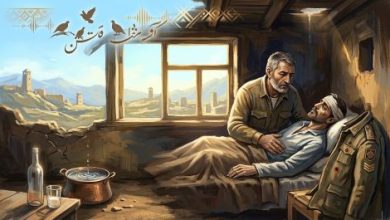
Through this award-winning novel, the author has attempted to illuminate a lesser-known chapter of Meerabai’s life
Meera
By Debasree Chakraborti
Place: Mewar Fort, Chittor; Bayana Fort
In the ever-flowing current of the river of time, we are all like bits of straw drifting along. In its course, how many empires have risen and fallen. How many golden crowns drift away, lost in the whirlpools of the river’s depths. After Kunwar Bhoj’s death, the royal power of Mewar too began moving toward such a whirlpool.
After Kunwar Bhojraj’s death, the entire fort seemed shrouded in a dark shadow of mourning. Forgetting all forms of joy, everyone spent their days in tears. After her son’s death, Maharani Kunwarbai took to her bed. Life seemed to have lost all meaning for her. For Rana Sanga, it was as if the entire canvas of life was covered in a black veil. Meanwhile, in the political map of northern India, a highly complex situation had developed — the northern kings were uniting against Ibrahim Lodi. At this time, a messenger from Babur arrived in Mewar from Kandahar. But after the prince’s death, Rana Sanga was no longer interested in expanding the empire.
Rani Dhanbai tried to persuade the Rana, saying, “After Bhojraj, Ratan Singh is there — he will be able to take up the responsibilities of your empire properly. Now is the time; don’t just wait like this, prepare for war.”
With tears in his eyes, the Rana replied, “For whom should I expand the empire? My worthy heir is gone. After this, I do not consider anyone else worthy.” Deeply hurt, Rani Dhanbai turned away; there was nothing more to say. When she told everything to her brother, Maldev said, “Meera is responsible for all this.”
Although Rani Dhanbai disliked Meera with all her heart, she said, “I don’t understand what you mean. No one even keeps track of Meera. How can she exert any influence?” Maldev said, “Meera has always had Karmetbai and her children come and go, and this has built a strong bond between them. Meera’s influence over Rajmata Ratan Jhali and the Rana is intense. Meera has convinced them that Karmetbai’s son, Vikramjit, is the rightful heir to the Rana’s throne. And keeping Meera close means securing the support of the Rathor chiefs of Merta. That is why these days the Rana spends more time in Karmetbai’s palace, and after Meera’s arrival in Chittor, another son was born to them — Udai Singh.
Fuming with anger, Dhanbai said, “As long as I live, I will never go to Meera to beg for help.”
Maldev burst out in loud laughter. “Why would you? My sister go and seek help from a woman of Merta? That would be an insult to us Rathors of Jodhpur. As long as I’m alive, that day will never come. I already have a pawn in my hand who will carry forward my work.”
Dhanbai asked, “Who is this pawn?”
Maldev smiled and replied, “Banbir Singh — the Rana’s nephew. Ha ha ha!”
Dhanbai said, “But he’s an illegitimate child! Who takes him seriously?”
“It is among such unwanted, neglected people that much resentment builds up. These are the ones who, for generations, have been used as weapons — and will continue to be used so.”
Meanwhile, since Bhojraj’s death, no one has kept track of Meera. Many have even forgotten that someone named Meerabai exists in this fort. She now lives near the fort’s walls, in the old palace of Rana Kumbha. After her husband’s death, the construction of her Giridharji temple has also stopped. Now she spends her days entirely in the worship of Giridharji. Meera has kept Bhojraj’s words — she now writes songs all day. Bhojraj had told her that people would remember Meera for generations through her songs. At dawn, after finishing her worship of Giridharji, she begins to sing:
“Beloved, grant me your sacred vision, without you, I cannot live.
Like a lotus without water, like a night without the moon, so am I without the sight of you, my beloved. The Rathor women of Jodhpur mocked and ridiculed Meera for these songs. They said, “After consuming her husband’s life, now for whom is she singing these songs? All just pretense.”
After the death of her grandson, Rajmata Ratankunwar Jhali was completely broken mentally. Now, physically too, she could not go anywhere and spent her days in her own palace. Earlier, whenever she had time, she would rush to visit her granddaughter-in-law. But now, unable to get up from bed, it was Meera who would run to her grandmother’s palace whenever she had a chance. She would pour out her heart to her “Dadi Sa.”
One afternoon, while speaking of her sorrows, Dadi Sa said, “Inside the fort, two factions have formed — one wants to make Ratan Singh the Rana, and the other wants to make Vikramjit the Rana. They all want power. But my grandson and I had dreamt of establishing peace within the empire that Babu Sa had built, where there would be no communal divisions, and everyone would live together in harmony.”
Ratan Jhali continued, “With Bhojraj’s death, everything is heading toward an end. But Meera, I have many dreams for you. You must not break down. Only you can protect Mewar. Many obstacles will come your way, but you must overcome them all and move forward. Meera, I may not have many days left. After I am gone, you will be even more alone. You must be very strong — imagine that every pillar of this fort has crumbled, and only you are still standing, holding up the entire fort on your shoulders.”
Tears streamed down Meera’s face. Bhojraj, too, had told her such things before his death — and now Dadi Sa was saying the same. These words made her stronger and more mature at heart.
At night, when she was alone in her palace, Meera would look toward Giridharji and think — her grandfather had sent her as Mewar’s royal bride with a very special political purpose. Those who loved her saw her from a different perspective — the very perspective for which she was born and came here as Mewar’s queen. Breaking down like this would not do. She would have to take the helm firmly and move forward.
Over time, Meera made herself much stronger. Bhojfive s After Bhojraj’s death, she knew she would have to hold Mewar’s reins even more firmly, so she once again began visiting the Kumbhshyam temple. Gadadhar Pandit also explained to her that she was not born to spend her life numb with grief and pain — she was born for a great purpose. Ever since her arrival at Dadu Sa’s home, she had been told that Meera’s birth had taken place for a higher cause. Therefore, remaining stagnant was not natural for her.
It now seemed that her primary purpose had become to make the women of Chittor mentally independent. After Bhojraj’s death, she no longer had any worldly attachments, so she spent most of her days in the orchard of the Kumbhshyam temple. There she would regularly converse with the village women of Chittor. Sometimes, even the tribal women of Kumbhalgarh would travel long distances to come. Among them, Meera began to open herself up.
One day, they were discussing the place of women in religion. When the question of polyandry among women arose, Meera said: “In ancient India, Vedic society, in both religion and moral law, prescribed the rule of a single husband for women in all circumstances. However, we do find mention of women with multiple husbands in the scriptures. The Sun’s daughter, Surya, accepted the twin Ashwini Kumaras as her husbands. In the 85th hymn of the tenth mandala of the Rigveda, I have found a detailed account of this marriage. But the Ashwini Kumaras should not be considered separately, for their bodies were inseparable. Therefore, in the strict sense, we cannot label this marriage as polyandry.”
An elderly woman said, “But Draupadi had five husbands.”
Meera replied, “Draupadi was dark-skinned. We do not know the identity of her father and mother. It is said that King Drupada performed a yajna, and from the fire of that sacrifice Draupadi emerged — hence her other name, Yajnaseni. But no one can actually be born from fire. I believe that Draupadi was a tribal girl, because from the description of her physical features that we find, that is at least what it suggests. Therefore, I think there was a tribal cultural influence behind Draupadi’s polyandry. Even today we see that women in such tribal societies enjoy much greater freedom. In tribal societies, examples of polyandry still exist. Sometimes I feel that these five.
There was also a stream of tribal blood among the Pandavas, because in the true sense they were kshetraja sons of Pandu — they had no blood relationship with him.
Even invoking the name of God, their actual fathers were human beings. Because of this tribal influence, they accepted the idea of a woman having multiple husbands. When Yudhishthira was told that one woman having many husbands was against the Vedas, he gave two examples. He said that a sage’s daughter named Vakmi was the wife of ten brothers named Pracheta. Another girl named Jatila married seven sages. These are just two examples.
But men’s polygamy has existed for ages — even revered sages had multiple wives, yet they would still become lustful at the sight of another’s wife. All these marriage systems are creations of men. There is much for us to learn from these tribal societies. That is why I wish the two societies could merge into one; if that were possible, the liberation of women could be achieved. My Lord Krishna himself desired the same — that is why he became the helmsman of such a great war.
A widow asked Meera, “Rani-ma, I am a child widow; I have had nothing in this life. Does our scripture say anything about widows?”
Meera’s face became strangely still. In that elderly woman, she saw her own future. Many things in her own life would also remain unfulfilled; perhaps until her death she too would have to lament in this way. As soon as this thought came to her, she felt — Meera was not born to be bound by petty greed and desire; she was born for a greater purpose. Therefore, she must become composed and strong in mind.
Meera said, “In the age of the Rigveda, widow remarriage was practiced. I will now quote a verse from the Rigveda and then explain it.”
‘Udvīrṣva nāry abhi jīvalokam
gata asum etam upa śeṣa ehi
hasta-grābhasya didhiṣos tavedam
patyur janitva stirasam babhūtha.’
This means: O woman, return to the world of the living. Rise from the ground. The one to whom you had been lying close — his life has departed; come away. This is the hand of the one who now desires to take you; having become the wife of this man, you will prosper.
The husband who took your hand in marriage and gave you the gift of conception — all the duties you had toward him as his wife have already been fulfilled.
I will mention another ṛk in which it is again said that a widow should enter into marriage once more:
“Imā nārīr avidhavāḥ supatnīr āñjanena sarpiṣā saṃ viśvabhūḥ
anaśrubho anāmīvāḥ suraṭnā ā rohanta janayo yonim agre.”
This means: Let the woman, free from the sorrow and suffering of widowhood, obtain a husband of her choice and enter the home along with fire and ghee. Let the woman, without shedding tears or being afflicted by disease, adorned with fine jewels, come first into the household.
Here, the widow is being told to remarry and run a household. These two ṛks also oppose the practice of sahamarana (widow self-immolation). In the Rigvedic age, widow immolation did not exist. But in this ṛk, the word agre (“first”) in the phrase ā rohanta janayaḥ agre was deliberately changed to agneh (“into the fire”) to sanction sahamarana. This is how the patriarchal society falsified and misinterpreted the Vedas.
A remarried woman was called punarbhū, and a child born from such a marriage was called paunarbhava. Kautilya’s Arthashastra also gives provisions for widow remarriage — a childless widow could remarry after seven menstrual cycles, and a widow with children could remarry after one year. However, a child born from such a remarriage had no rights over the property of the child’s stepfather. From this, it is clear that widow remarriage was considered merely an extension of men’s polygamy.
In ancient Vedic literature and in Vātsyāyana’s Kamasutra, widow remarriage is mentioned. He advised a remarried woman: “The punarbhū woman should establish affection with the wives of her new husband.” From this, we understand that the punarbhū woman was never accepted in society as the legitimate dharma-patnī of her new husband. Her position was more like that of a concubine. In that sense, widow remarriage never truly received social honor.
During the age of the Smritis based on the Vedas, sages like Nārada and Parāśara gave clear injunctions in favor of widow remarriage. But society never accepted them. Instead, it imposed inhuman ascetic restrictions on widows in the name of sexual purity and celibacy. Yet Nārada and Parāśara composed verses that transcended their time, such as: “Naṣṭe mṛte pravrajite” (“when the husband is lost, dead, or has renounced the world”). But society never responded to these injunctions — and that is our history.The more they hear about Meera, the more astonished they become. Meera knows so much — no one had ever explained things to them in this way before. Meera Bai, in human form, seemed to be a goddess herself. The women of Chittor brought all the questions they had long kept in their hearts before Meera, for these questions were the darkness that had accumulated within them. Meera, with the radiance of her own light, kept dispelling that darkness.
While Meera was kindling the flame of knowledge among the women of Chittor, the Sultan of Delhi seized the fort of Bayana. One such evening, Gadadhar Pandit was performing worship at the Kumbh Shyam temple, and Meera Bai was sitting quietly to one side. Just then, a messenger on horseback rode into Chittor Fort. Entering through the main gate, the rider advanced, torches burning all around in the darkness, and amidst the sound of the horse’s hooves, a deep sense of mystery was taking shape. Rana Sanga of Chittor, along with other powerful kings including those from Merta, had gone to reclaim the Bayana fort. Every day, news of the battle would arrive through messengers. So far, there had been no reports of casualties in this war.
Whenever Rana Sanga went to battle, at least one young man from every household in Chittor accompanied him. But the horrors of war did not seem to leave much impact on the people of Chittor. They went about their daily work, and in the evening, when the messenger arrived, news of the war would spread from mouth to mouth. But on that particular evening, after the messenger’s arrival, Chittor Fort took on the air of celebration. Sitting in the temple, Meera heard the sounds of the nakara drums and the singa horns. There was no doubt these sounds carried the message of victory.
Meera bowed before Kumbh Shyam and looked at Gadadhar Pandit.
“Panditji,” she said, “I’ll take my leave today. In this joyous moment, I’d rather light a lamp before Giridharji and offer him some Mohanbhog.”
When Gadadhar Pandit agreed, Meera returned to her own palace. These days, she didn’t care much for loud noises or grand festivities. She preferred to spend her time quietly, in solitude. Her grandfather’s health was not good; bad news could come any day. Moreover, in Meera’s life, Rana Sanga of Mewar held a place much like that of her grandfather Rao Dudaji in Merta — both men were extremely important to her. Whenever her father-in-law went to war, her heart grew uneasy. She would think about when he might return from battle.Come. Today, when Chittor has begun to celebrate, it means that Rana Sanga has returned victorious and safe. If anything had happened to him, there would have been no such festivities. Her father, Ratan Singh, and her uncle, Biramdevji, had also gone to this war. She worried for them as well. But until a messenger arrived from Merta, she would receive no news of them—because whether they lived or died held no value for Chittor. No one would bother to inform her.
Mira’s palace had a small kitchen. There, she began to prepare her beloved Giridharji’s favorite offering. The glow of the stove mingled with the darkness outside, creating a solemn atmosphere. Through the right-hand window, torchlight and the sound of nakara drums drifted in. The offering was nearly ready; Mira poured saffron soaked in ghee over it and told the maid to take it down from the stove.
Just then, the sound of anklets was heard. Mira stepped out of the kitchen and saw someone standing to one side of her bedchamber. Wiping her hands on the end of her sari, she stepped forward a little, then stopped abruptly and asked,
“Who—who is there?”
From the opposite side came the reply, “Ranima, I am a maid. Ranaji has sent you a letter through the messenger. I have come to deliver it to you.”
Something in Mira’s chest trembled. Her father-in-law—for the first time—had sent her a letter from the battlefield. He had gone to war many times before, yet never once had he written to her. Why, then, this sudden need to send a letter today?
As Mira slowly reached out her hand, the maid stepped forward, placed the letter in it, and left.
A terrible premonition struck Mira’s heart. She glanced toward Giridharji and thought, better to complete the offering first, for some misfortune might interrupt the worship. Mira placed the letter at Giridharji’s feet, poured ghee into the lamp, and lit it. Then, bringing the mohanbhog in a golden bowl, she offered it to Him and sat silently for a while.
It was as if this moment were for gathering mental strength. Preparing oneself inwardly was essential. Since childhood, Mira had been this way—in good times or bad, whatever the eveLakshmiHe had sensed it long before. This time too, he felt the same way. When the worship was over, Meera picked up the letter, looked once more at Giridharji, and saw his eyes glisten. Then she began to read.
Rana Sanga had written:
Dear Meera,
At the beginning of this letter, I send you my blessings and love. Before reading further, you must prepare your mind to be strong. Meera, always remember this — God tests the most those whom He loves the most. He Himself builds a sacrificial altar and burns His dearest children upon it to turn them into diamonds.
I have very little time in hand; the motherland is under attack today. So, let me come straight to the point. That morning, at dawn, we began our assault to recapture the Bayana Fort. Your father, your elder uncle, and Jaimal led the attack. The armies of Merta, Mewar, and other regions of Rajasthan surrounded the fort entirely. Ratan Singh, with the elephant battalion, charged at the main gate of the fort, trying to break it down. At that moment, huge stones began to be hurled from atop the fort. But Ratan Singh was not one to accept defeat. With great valor, disregarding all obstacles, he broke down the main gate of the fort. Then, our army stormed inside at the speed of a tempest. Just as a desert storm sweeps in with force, before the enemy could even comprehend what was happening, we had entered the fort. Then began a terrible battle. Our forces spread in all directions before the enemy could even gather themselves. Shouting “Victory to Mother Bhavani!” our soldiers fought with unmatched bravery. When we had almost won the battle, the enemy tried to attack me from behind.
Meera, you must steel your heart now, for what I am about to tell you requires courage to hear. I know that in a woman’s life, alongside her husband, the place of her father is of immense importance. These two are the pillars of a woman’s life. I know that losing even one of them shakes her entire existence. Meera, Mewar is truly fortunate, for it has been blessed with a goddess like you. Without you, it would not have been possible to protect Mewar.
Meera, the land will remember your and Merta’s sacrifice and contribution for generations to come.
Now, Meera, let me come to the real matter. That day, in an attempt to save my life, Ratan Singh leapt forward. A sword from the enemy severed his head from his body. My whole body was covered in blood. But before dying, he was able to drive his sword into the belly of his killer. We succeeded in recapturing the fort, and my life was spared.
Meera, I do not know what place my existence holds in your life. But as a father and a well-wisher, I will tell you this — the two main pillars of your life have now collapsed. From this moment on, you must become the main pillar of your own life and take charge of the world around you. You must not break down. This too is a kind of war, one that you are fighting from within your home. After all, the life of a Rajput is a life of battle. So under no circumstances should you give in. I know that right now you are emotionally very weak, but do not grieve, Meera; grief does not befit you. Your Bapu-sa is still alive. At least for the sake of looking into my eyes, you must remain well.
May Lord Krishna bless you.
Yours,
Bapu-sa
(Continues)
Click here for Part-1, Part-2, Part-3, Part-4, Part-5, Part-6, Part-7, Part-8, Part-9, Part-10, Part-11, Part-12, Part-13, Part-14, Part-15, Part-16, Part-17, Part-18, Part-19, Part-20, Part-21, Part-22, Part-23, Part-24,
___________________
 Debasree Chakraborti is a renowned novel writer of Bengali language. Based in Kolkata, West Bengal, India, she has done Master’s in Modern History from the Kolkata University, and authored some thirty books, mostly the novels, with historical perspective and themes. Her novel is ‘Maharaja Dahir’ that covers the history of Sindh from 662, the year of first attack on Sindh by the Arab armies till date, was published last year and translated by Nasir Aijaz into Sindhi language.