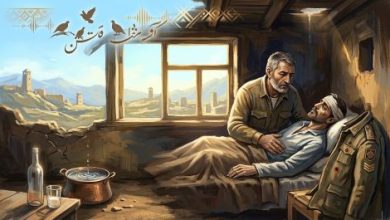
Through this award-winning novel, the author has attempted to illuminate a lesser-known chapter of Meerabai’s life
Meera
By Debasree Chakraborti
But Bhojraj feels as though this song isn’t meant for him. Even when Meera sings with her head resting on his chest, he feels as if she is not truly with him.
Meera and Bhojraj stay awake the entire night. As dawn breaks, Meera begins to sing:
“Heri main to dard diwani, mero dard na jaane koye.”
(I am mad in love’s sorrow; no one understands my pain.)
Holding Bhojraj tightly in a deep embrace, Meera continues to sing:
“Meera daasi janam janam ki, pari tumhare paay.”
(Meera is your servant for lifetimes; I have fallen at your feet.)
Meera’s song reaches even Kunwarbai’s palace. But Meera’s mother-in-law doesn’t want women of all ages in the royal household to hear these songs. It gives rise to all sorts of gossip. But who will dare explain this to Meera? No one has the courage. Because by her own strength, she has won over the Queen Mother, Rana ji, and the Crown Prince.
Every queen in this palace has her own jagir (land grant). With the earnings from it, they buy their adornments, clothing, and celebrate festivities. But Meera spends her jagir income on serving the poor of Chittor and supporting wandering ascetics. While the other women in the palace spend their days gossiping, Meera devotes her time to spiritual practices and composing her songs. Kunwarbai doesn’t like any of this. What’s more, it’s been years since Meera was married, and yet she has not borne a child. And the Rana has never even considered arranging a second marriage for the Crown Prince.
Though Dhanbai outwardly expresses sorrow at Meera not having a child, inwardly she is quite pleased. Because if Meera remains childless, then her own son, Ratan Singh, will inherit the throne after Kunwar Bhojraj. Dhanbai speaks little, but in secret, she conspires with her brother Maldev. Maldev is the Crown Prince of Marwar, meant to be in the capital Jodhpur, but he has left his kingdom and has been staying with his sister in distant Mewar.
All this gives rise to much whispering in the royal household. But Dhanbai tells everyone that her father, Rao Ganga ji, greatly respects Rana Sangha—hence her brother’s presence in the palace.
He (Rao Ganga ji) has kept the heir with him to educate him in the art of politics. But Rana Sangha has a different motive. He believes that if the future heir of Marwar is trained under his supervision for a long time and then sent back to Marwar, it will foster a cordial relationship between the two kingdoms.
However, the faction led by Suraj Mal in the Mewar court believes that Marwar is plotting to take over Mewar’s throne using Ratan Singh as a pawn. They suspect that Maldev has been stationed in Mewar for this very reason.
Rana Sangha’s junior queen, Karmabai or Karmavati, is Suraj Mal’s sister. Within the palace, there exists a secret network through which the queens exchange confidential information.
One evening, as the arti was being performed at the Kumbh Shyam Temple and the torchlight flickered on the stone walls of the Chittor Fort, in that dim-lit, sacred atmosphere, Karmetbai summoned her brother Suraj Mal into the subtle shadows of her palace quarters.
At such hours, the men of the fort are often immersed in wine, and the women are busy adorning themselves with jewels and garments. Even the servants are not as alert or involved in passing information during this time. It was this precise setting that Karmetbai considered safe.
In great secrecy, she said to her brother, “Dear brother, I received word through a maidservant that the senior queen Dhanbai and Maldev are involved in a deep conspiracy. They allegedly plan to remove Rana ji and Crown Prince Bhojraj and place Ratan Singh on the throne.
Brother, you must act. If this continues, I’ll be left in the streets with my children. Because as long as Rana ji is alive, we have a place in this palace. The people of Chittor already don’t see much value in my presence, and if Rana ji is removed, have you considered what will happen to us?”
Suraj Mal listened carefully, and a crease of worry appeared on his forehead. In the twilight of the room, he began to pace. After a while, he stood by the window, looking toward Meera’s palace, and said,
“The way you interpret the storm clouds gathering over Chittor’s political skies, I see them quite differently. What looks red to you appears saffron to me.”
He paused for a moment, then turned and looked directly at Karmetbai and said there is no possibility of Meera bearing a child anymore, and even in the future, it seems doubtful. But tell me one thing—does Ratan Singh ever go to Meera’s palace?
Karmetbai lowered her voice further and said, “Brother Sa, Meera is very affectionate toward Ratan. But Dhanbai has already poisoned Ratan’s mind. Though he used to like Meera, he no longer does. My maid heard that when Meera tried to offer him prasada of Giridharji, Ratan said, ‘This offering is laced with poison—I won’t eat it.’”
Surajmal, after hearing all this, replied, “That’s actually a very good sign. Why are you alarmed instead of pleased? Do one thing—start keeping Vikramjeet with Meera as much as possible. You’ll benefit if you listen to me.”
Karmetbai was a simple and innocent woman. Even though she was surrounded by gossip, she did not understand politics. But she deeply trusted her brother. Because, in all of Mewar, he was the only one who was truly her own. No one else really loved her.
She still remembered the day she first came to Chittor—leaving behind her childhood, her dolls, and entering into marriage with an aged Rana. When the marriage proposal from the Chittor king had arrived, her father had agreed, but her mother and brother were entirely against it. They simply couldn’t accept the match.
Though born a daughter, she was the apple of her mother’s and brother’s eyes. Little Karmet didn’t fully understand everything, but she could sense that something had disrupted the natural rhythm of their household. Her mother would hold her close night after night and weep silently. On those sleepless nights, she found a sense of security in the scent of her mother’s body.
Through whispered conversations among maids and family members, she had gathered that an old Rana was coming to marry her. In her tender young heart, this Rana had become a monster—unknown to others, he haunted her mind. She began sinking into a terrifying maze of insecurity.
Despite her mother’s and brother’s desperate attempts, the marriage couldn’t be stopped. On an evening in the month of Phalgun, she was completely veiled and carried into the wedding pavilion. Without even seeing the groom’s face, she was married off to a stranger.
Everything had felt like a game of dolls. She didn’t understand what was happening at all. But when she was made to perform the kankanjali ritual while leaving Bundi Fort for Chittor, she had her first outburst of emotion.
Karmetbai turned back, clung to her mother, and said that she wouldn’t go anywhere without her. In that moment, the handful of rice in her mother’s anchal (sari edge) scattered all over the ground. Seeing this, many people cried out that it was a terrible omen.
Among the arriving wedding guests, murmurs began. They said this girl was unlucky. Had anyone ever seen a bride turn back during the kankanjali ritual? Some even said, “Looking back was still tolerable. But the rice and coins scattering like that—it’s inauspicious. The Rana should never have married her. Hard days are coming for Chittor’s fortune.”
Hearing all this, Surajmal held his sister’s hand and declared, “From this day forward, I take on the responsibility of protecting not just my sister, but also Chittor. As long as I am alive, I will not allow harm to come to this land.”
And from that day on, Surajmal remained in Chittor—giving up all his personal hopes and ambitions to protect his sister and preserve the honor of Bundi.
And to my tribal mothers and sisters, I urge you: train your daughters in the art of warfare, just as your ancestors once gave strength and protection to Rana Kumbha. I want your women to stand alongside the men in defending Mewar. At any moment, we may be attacked by foreign enemies. But this time, not just men—women too must rise to resist those attacks.
On the other hand, after marrying the Rana and arriving at the palace of Mewar, Karmetbai found herself reduced to nothing more than a childbearing vessel. To her, that was her only role. She never felt any emotional connection or attraction toward her aged husband. Like Ambika and Ambalika of the Mahabharata, during certain moments she would simply shut her eyes tightly and endure, her chest heavy with fear.
She didn’t even realize when she had become pregnant. Everything in her life seemed to happen without her awareness or consent.
About a year after arriving in Chittor, her menstruation began. Blood flowed down between her legs and across the palace floor. It caused quite a stir. But the maidservants explained everything to her. Within that year after arriving from Bundi, Karmetbai had grown much wiser. So, it didn’t take long for her to understand the ways of the world. Three months after her first menstruation, one night Karmetbai’s palace chamber was decorated with flowers. Jasmine was placed all around, incense sticks were lit. Oil lamps were left glowing by the windows.
At first, Karmetbai didn’t understand what was happening. That night, a second plate of food was placed alongside hers in the chamber. As the maidservants left, they told her not to eat early—someone would be coming, and she was to dine with him.
She felt very sleepy—it wasn’t her habit to stay up this late. That night, as the surroundings fell eerily silent, Karmetbai was almost asleep when she heard the sound of footsteps, someone approaching in shoes.
Rubbing her eyes, she saw in the dimly lit room her elderly husband entering her bedchamber. It was the first time since their wedding in Chittor that she saw her husband in her chamber, and at first, she was terrified.
But in such a deserted setting—where even her brother would not be there to help her—she had no choice but to steel her heart. Over the past year, she had trained herself to endure any situation.
From that night onwards, sleepless nights became a part of her life. Despite oscillating between fear and despair, and despite giving birth to two sons and a daughter, she could never bring herself to feel any emotional closeness to her husband.
But Dhanbai seemed to possess some kind of magic. She had Rana ji wrapped around her little finger. The Rana had even increased her jagir (land grant). Perhaps this was due to the political influence and power of her paternal home—keeping Jodhpur on their side ensured Mewar’s stronger footing on the political map.
Karmetbai couldn’t understand how she might ever win the hearts of those in the palace. She felt helpless, as though abandoned in a corner of the royal household, with no way forward. She had no grasp of the inner politics of the palace.
Meera was the same age as her, yet Meera seemed to understand everything. Karmetbai felt an invisible emotional pull toward Meera—perhaps because her brother Surajmal had never once spoken against Meera or her family. And now, her brother himself had come and was asking her to send the boys to Meera.
And so, within the palace walls of Mewar, began the quiet rise of Surajmal and Karmetbai against the conspiracies that threatened the kingdom.
Without entangling herself in the dirty politics of Chittor Fort, Meera quietly undertook a mission to turn Chittor into the epicenter of Indian politics, unbeknownst to those around her.
During the reign of Rana Kumbha, the fort of Kumbhalgarh was established. The contribution and sacrifice of the local tribal communities in building this fort are inscribed in golden letters in the pages of history. While still living in Merta, Meera had heard that when Maharana Kumbha began its construction in 1433, the project faced numerous obstacles. Troubled by this, Rana Kumbha once confided his difficulties to a sage. After hearing everything, the sage said that if someone willingly sacrificed themselves, the construction of the wall would move forward.
This deeply disturbed Rana Kumbha, but then another sage came forward and said he was willing to offer himself for the cause. He added that after his throat was cut, he would walk a long distance on foot, and wherever his body finally fell, a temple should be built in his honor. In this way, the wall was finally completed. The local tribal people had also donated the land for the fort and had given their word to Rana Kumbha that they would protect Mewar for eternity. In recognition of this, Rana Kumbha incorporated the image of these tribal warriors into the royal emblem of his kingdom.
Meera realized that the tribal women of Kumbhalgarh, too, needed to be awakened. But unlike Merta, she couldn’t go outside the palace walls to raise awareness among them. So, she began inviting these tribal women into Chittor Fort. Alongside the women from the village within the fort, she started holding discussions with the tribal girls as well.
During the afternoons, the temperatures would soar. The sun’s harsh rays would reflect off the stone walls of the fort, making the environment even more oppressive. At such times, Meera would sit in the shade of the Ata Bagan (mango grove) beside the Kumbh Shyam temple to hold her discussions.
Today, as I show you a path to financial independence, we are facing fierce opposition from society. Today, I want to talk to you about the position of women in religion. For ages, women have not been regarded as fully human. They have been viewed as evolved animals. We have been taught all our lives that to be born a woman is a sin.
On one such afternoon, both village and tribal women had gathered. Meera spoke: “Religion guides people toward a better way of living. But through the ages, this same religion has been weaponized for political purposes. Religion has been used as a tool to keep women suppressed. This, too, is a shameful political game.” In our country, the women of tribal societies enjoy a kind of freedom and rights that we do not. Using religion as an excuse, we have been confined behind veils, while they are allowed to step beyond the veil and earn their livelihood freely. Our society, however, does not grant its women those rights.
Today, as I show you a path to financial independence, we are facing fierce opposition from society. Today, I want to talk to you about the position of women in religion. For ages, women have not been regarded as fully human. They have been viewed as evolved animals. We have been taught all our lives that to be born a woman is a sin.
Men have assumed the position of second gods and keep us under constant control. Whether it’s a father, husband, or son—women have no right to property. That is why, after a husband’s death, we are forced to commit sati. Even in ancient times, women did not have true freedom. In the Rigveda, there are references to the abduction of women.
It is written that Puru Mitra’s daughter was abducted by Bimad. There is also a verse where a man prays to abduct a woman at night, hoping her brothers don’t wake up and the dogs don’t start barking.
The Rigveda also contains references to men having multiple wives. This trend continues in today’s society—men are free to marry multiple times, but women still do not have that right.
However, in tribal communities, women do have the right to remarry—and even the right to property. In one verse of the Rigveda, there is even a mantra seeking dominance over co-wives. This shows that even then, polygamy among men was common and led to deep hostility among wives.”
Let that Sun rise above—may that divine fortune be mine.
I, being wise and powerful, shall overpower my co-wife.
May the fortunate wife, resplendent and triumphant over her rival,
Claim the wealth and brightness that sustains the home.
Let me triumph over my co-wives in this competition,
So that I may be the chief queen of this heroic man and his household.”
—
This verse highlights how even in the Vedic age, women were placed in a competitive and hierarchical structure within a patriarchal system—where their worth and survival often depended on outshining other wives in a man’s household. Everyone was astonished to hear the Vedic shloka from Meera’s mouth. Even the guards were taken aback, thinking to themselves—so many queens have come and gone in this fort, but none have ever displayed such profound scriptural knowledge as this young princess. In every word the young queen spoke, a deep wisdom was evident.
After a pause, Meera said, “Through the first hymn, we hear a woman declaring that her co-wives have been defeated by her, and she has succeeded in gaining control over her husband. In the following verses too, we see a woman’s pride shining through. She is showing how, by subduing her husband and overcoming her rivals, she has become the master of every member of the household.”
“We still witness the same picture in society today.”
One woman said, “We are all in the same situation. Who enjoys living in a household with co-wives!”
Everyone echoed their support: “Yes, a man keeps marrying until the day he reaches his funeral pyre. And as long as he lives, the struggle for dominance between co-wives continues. And when he dies, his living wives are burned alive on his pyre.”
Meera said, “Alongside abolishing sati, we must also abolish the practice of polygamy. A society where a devoted wife must endure the torment of living with co-wives can never be considered an ideal one. I believe the ancient tribal societies of India were far more advanced—there was no sati, and no such cruel tradition of women sharing a husband. Even today, among these tribal communities, we see such examples.”
“If we study our Hindu scriptures closely, we can understand that we were once nomadic people—herders—divided into clans, wandering from one place to another. But eventually, our ancestors learned agriculture and settled in one place. From that point on, the idea of family was born out of the need to live together, and the man became the head of that family. Even then, the position of women was equated with that of animals.”
Meera paused for a moment, sighed deeply, and said, “It was from that time—when men became the heads of families—that their lust for women began to intensify.”
A man is never content with just one woman—this tendency began during that time. Women were either abducted or bound into marriage and assigned a place in the household. During this same period, women were pushed out of the production system, and although their contribution to household labor increased, they were denied the rightful recognition and respect they deserved. From then on, in many families, a woman’s position deteriorated to that of a slave. And this condition still remains unchanged in our society today.
However, in tribal societies, men and women together manage both domestic and external affairs. Women participate equally in income generation. The idea that a woman must be sustained by her husband is something that was later codified in scriptures. The wife, being sustained by her husband, came to be known as bhāryā. Interestingly, the etymological roots of bhāryā (wife) and bhritya (servant) are the same—both mean “one who is sustained.”
While a man could have multiple wives, a woman was denied the right to have multiple husbands. Even though there was a time when polyandry existed, women were allowed that right only for a very brief period. Eventually, that right was snatched away from them.
Isn’t it written clearly in the Shatapatha Brahmana?
“Ekasya puṁso bahyo jāyā bhavanti”
“One man may have many wives.”
However, during the Rigvedic era, marriage was not mandatory. There is no mention of sati in the Rigveda—the ritual that later became known as the burning of widows. The idea of burning a living widow along with her dead husband only appears in the Atharvaveda. This means that the scriptures began to record all kinds of justifications for violence against women. What else can we call this, if not the vile politics of a patriarchal society?
One verse in the Atharvaveda says:
“Yaṁ nārī patilokaṁ vṛṇāmāmi padyate upatvā martyaṁ preetam”
“The woman chooses to go to the world of her husband; she follows the dead man.”
This shows that even in the Atharvaveda, living women were taken to be burned on the funeral pyres of their dead husbands.
But in tribal societies, not a single incident of sati has ever been recorded.
That is why a woman, helpless, once prayed: “May I be like Indrani—never widowed.”
But in no Vedic scripture do we find a man praying: “May I never become a widower.” I request all of you—do not distance yourselves from the tribal communities. Interact with them. In doing so, you will be enriched. Their way of thinking and their social systems are far more advanced than ours in many ways.
And to my tribal mothers and sisters, I urge you: train your daughters in the art of warfare, just as your ancestors once gave strength and protection to Rana Kumbha. I want your women to stand alongside the men in defending Mewar. At any moment, we may be attacked by foreign enemies. But this time, not just men—women too must rise to resist those attacks.
Hearing Meera’s words, the tribal women of Kumbhalgarh were filled with excitement. They raised their voices together and cried, “Victory to the Queen Mother! We will protect Mewar with our lives!”
Indeed, they had never received such honor before. No queen of Chittor had ever invited them with such respect.
Meera continued, “You must also be ready with the swords kept in your homes. If we can divide our women’s army into two groups in this way, then even alone, our women will be able to defend the motherland. We must all unite in the name of Shri Krishna. Our principal war cry shall be: Jai Shri Krishna!”
Then Meera looked at the tribal women and said, “It’s already past noon and evening is approaching. Soon the evening rituals at the Kumbh Shyam Temple will begin. I must leave now. I’ll see you again at the evening prayer. Tonight, take rest here in the Atabagan after partaking in Shyam’s prasada. Set out for Kumbhalgarh at dawn tomorrow. It is not safe to travel these hilly roads so late at night.” (Continues)
Click here for Part-1, Part-2, Part-3, Part-4, Part-5, Part-6, Part-7, Part-8, Part-9, Part-10, Part-11, Part-12, Part-13, Part-14, Part-15, Part-16, Part-17, Part-18, Part-19, Part-20,
___________________
 Debasree Chakraborti is a renowned novel writer of Bengali language. Based in Kolkata, West Bengal, India, she has done Master’s in Modern History from the Kolkata University, and authored some thirty books, mostly the novels, with historical perspective and themes. Her novel is ‘Maharaja Dahir’ that covers the history of Sindh from 662, the year of first attack on Sindh by the Arab armies till date, was published last year and translated by Nasir Aijaz into Sindhi language.