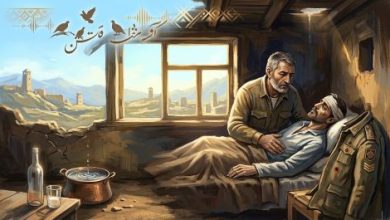
Through this award-winning novel, the author has attempted to illuminate a lesser-known chapter of Meerabai’s life
Meera
By Debasree Chakraborti
Location: Kurki, Merta
The village of Kurki is surrounded by an endless expanse of desert. The scorching rays of the sun reflect off the barren land and spread in all directions. From distant villages, women clad in black—rudalis—are approaching the fort. A white smoke envelops the entire village. From the sky, it looks as though the whole region is shrouded in the smoke of a funeral pyre. The deserted village silently weeps, gazing toward the fort. Today, the villagers have gathered at the fort to bid a final farewell to Rajlakshmi.
In a room in the southwest corner of the fort, little Meera sits with Kanha-ji in her lap, staring at her mother. Everyone is adorning her mother today like a new bride. Women from far and wide are applying vermilion in her mother’s parting hairline. Her mother has been sleeping since dawn—no matter how much Meera tries, she doesn’t open her eyes. Meera speaks in a soft voice and gently shakes her mother with her little hands, trying to wake her, but her mother does not stir. Standing beside her is Ramabai. Meera clutches the end of Ramabai’s veil tightly and looks toward the door. Someone is approaching, crying loudly.
Meera asks Ramabai, “Who are they?”
Ramabai doesn’t know what to say. She replies, “They’ve come to wake your mother. Maybe if she hears their crying, Rani Maa will wake up. Wouldn’t that be nice?”
Meera looks at her mother and asks, “But why won’t Maa wake up? What happened to her?”
Ramabai’s voice chokes with emotion. How could she explain to this little girl that her mother has gone to a place from which no one returns?
Moments later, a group of women dressed in black sarees entered the palace. They surrounded Meera’s mother and began to beat their chests and weep. The sound of their wailing was terrifying.
Meera doesn’t like so much noise. She prefers silence—just like the quiet atmosphere of this fort.
“Why are they shouting so much?” Meera asked. “And why isn’t Maa waking up?”
She couldn’t understand anything that was happening. And Ramabai had no answers either. Covering her face with the end of her veil, Ramabai wept silently. Just then, some women suddenly stood up and began to dance—an eerie, terrifying dance! Meera couldn’t take it anymore. Clutching Kanha-ji tightly to her chest, she buried her face into Ramabai’s bosom.
Following the darkness and quiet alleyways of Ramabai’s veil, Meera left the village of Kurki and arrived in Merta. After her mother’s death, little Meera came to Merta with Ramabai. Her grandfather, Rao Dudaji, began to raise this delicate little sapling with deep care and love. At first, he couldn’t come to terms with the sudden death of his daughter-in-law. But after much reflection, he felt that had his brave daughter-in-law not passed away, he would never have been able to become Meera’s complete guardian. Moreover, death often matures a person—especially the death of someone deeply loved. Meera’s mother had been the closest person in her life. Losing her at such a tender age would, in a way, help strengthen and shape her spirit.
In Merta, Meera grew up alongside Jayamal, the son of her elder uncle Veeramdevji. As they were nearly the same age, a close friendship developed between them. Standing in the palace veranda, the little girl gazed with wonder at the natural beauty surrounding her. She found a strange resemblance between this landscape and her mother’s beauty and nature. Standing in one corner of the veranda, she would silently weep for her mother as she watched the scenery.
Merta, nestled in the harsh terrain of Rajasthan, felt like a small paradise—like a fragment of Nandankanan. There was greenery all around. A narrow stream flowed through the palace grounds, bordered by gardens of colorful flowers, and on one side, amidst the orchard of delicious fruits, peacocks roamed freely with their feathers proudly spread. Rao Dudaji, out of fondness, had lovingly raised a few He even kept deer. This deeply religious man had established a grand temple dedicated to Chaturbhuj-ji in the courtyard of his palace. Vaishnava monks from various parts of India would come to take refuge there, and circles of religious discourse were often held.

In the company of a devout man like Dudaji, Meera’s inner self began to develop further. Every morning and evening, she would spend time with her grandfather at the temple. The rest of the day, she would sit and listen to him narrate stories from the Ramayana, the Mahabharata, and the Puranas.
One day, Meera was sitting in Dudaji’s room listening to tales from the Ramayana and the Mahabharata. A peacock sat by the window, seemingly listening too. The room sparkled with light.
As he told her various stories, Dudaji said, “Meera, a long time ago, a king named Mandhata ruled over our Merta. Back then, this region was known as Mandhatrapur.”
Listening attentively, Meera asked, “Grandfather, is that where the phrase ‘Mandhatar Amol’ comes from?”
Dudaji replied, “Yes, Meera, it comes from this king’s name. But this king was different from all other kings. Do you know how?”
Meera shook her head, indicating she didn’t know.
Then Dudaji said, “This king was unlike any other because, they say, despite being a man, King Mandhata once carried a child in his own womb.”
A look of astonishment spread across Meera’s face. Hugging Kanha-ji in her lap, she asked, “Kanhaji, how is that even possible? How can a man give birth to a child?”
Dudaji continued, “But do you know what I believe? I believe King Mandhata carried a feminine essence within him—otherwise he could never have conceived.”
He paused for a moment. The peacock at the window flapped its wings and entered the room, letting out a loud call. Meera gently stroked Kanha-ji’s head. After watching her for a while, Dudaji said, “I dream that one day my Meera will become a powerful ruler like Mandhata. I don’t believe in the division between man and woman. I believe in the existence of a capable human being. That’s why I’ve been training my Meera in both scriptures and the art of warfare.”
This was an extremely important phase in Meera’s life. A gust of wind came through the window and gently swayed the chandelier, making it tinkle softly. Meera looked at it and noticed that the glass of the chandelier reflected the images of her and her grandfather. It seemed as though many Meeras and Dudajis were sitting together, chatting and sharing stories.
Grandfather continued, “I’ve told you the story of our family’s struggles too, because I want these events to leave a deep and lasting impression on you. After King Mandhata, the Naga dynasty ruled this region, and later the Pratiharas. Eventually, these lands came under Muslim rule. During that period, life became unbearable for the local people. They had no religious freedom, and hundreds of families were forced to convert. None of my elder brothers had any real interest in this region. As the youngest son of my father, I lived a neglected life.
“But during that time, I decided to act on my own. I wanted to establish my own kingdom. I maintained secret contact with the common people of this region. Meera, always remember one thing: a good ruler always stays connected with the local people. The more you maintain that connection, the safer your kingdom will be. You’ll receive crucial information directly from them. The stronger that bond, the stronger your rule.
“The relationship between the foreign rulers and the locals was strained, and I took advantage of that. With very few soldiers and the help of the people, I conquered this land. I had even managed to sow deep dissatisfaction within the enemy’s army.”
After a brief pause, Dudaji asked, “So Meera, what did we learn today?”
A smile, gentle like moonlight, spread across Meera’s calm face. She replied with quiet joy
In a calm voice, Meera said, “A good ruler must always stay connected with the common people. Without that, it’s not possible to rule safely.”
Rao Dudaji wanted to raise his granddaughter in a way completely different from ordinary princesses. At that time, Rajput princesses were not given any formal education. From childhood, they were trained in household chores, how to control servants, and, most rigorously, how to become a sati. Not just princesses—even common Rajput women received the same training. From a young age, they were taught that their husbands were their gods, and that they were mere servants at their husband’s feet. They were told to live their lives entirely for their husbands and, upon the husband’s death, to sacrifice themselves on his funeral pyre.
Rao Dudaji believed that this kind of miseducation stunted the spiritual growth of Rajput women. These Rajput chiefs had no strength to raise swords against foreign invaders, yet each of them wanted to keep ten wives. And these wives were forced to live their entire lives considering such lustful men as divine. After a life of unchecked indulgence, when these immoral men died, their ten helpless wives were thrown onto the funeral pyre.
Almost every day, from the far stretches of Merta’s fields, the sound of drums for sati rituals could be heard. Many times, Rao Dudaji went personally to intervene when he heard of such events. But the ignorant women would tell him that they were willingly embracing death—driven by a deep-rooted blind faith. They believed that becoming a sati would grant them a place in heaven. But when they were actually placed on the burning pyre, only then did they realize the horrific, hellish pain of that act.
In the theater of memory, countless such scenes kept playing. In the early days of his reign, Rao Dudaji had rushed to many villages across Merta to protest the sati practice. He witnessed horrific scenes where ten or twelve wives were first bathed in ghee and other flammable substances, then a burning log from the pyre was used to set them alight. What followed were blood-curdling screams, and the burning women would run in agony. But their cries would be drowned out by the chants of “Jai Sati Mata ki Jai” and the loud noise of drums and cymbals.
Even today, across the Atabagan of Merta, a sati is supposed to take place. Rao Dudaji…
Rao Dudaji knew everything, but he also knew that going there would be of no use—he had tried many times in his youth, yet never succeeded. After much thought and reflection, he came to the conclusion that unless awareness was spread among women, true change would never be possible. But to achieve that, a woman must enter the inner quarters of these households as a messenger—someone who could help them understand that both men and women are equal wheels of the chariot of civilization. They must be made to realize that they deserve equal rights in all things and should never consider themselves as anyone’s servant or inferior. And for that, proper education was essential.
He decided that Meera must be given a real, well-rounded education, so she could someday enter these households as a messenger of change.
But where to find a person truly learned in Hindu scriptures?
Rao Dudaji summoned his eldest son, Veeramdevji.
When Veeramdev entered his father’s chamber, he saw him pacing back and forth, deeply worried. Rao Dudaji was usually a calm and composed man. For him to appear so disturbed, something serious must have been troubling him.
He asked, “Father, what has happened? Why do you seem so worried?”
Letting out a deep sigh, Rao Dudaji replied, “Son, I want to give proper scriptural education to Jayamal and Meera. But I haven’t been able to find a truly wise teacher capable of doing so.”
Veeramdevji said, “Father, why worry? Let me summon Ramdasji. After all, he was the teacher for both Ratan and me.”
Just then, little five-year-old Jayamal entered the room. Seeing his son, Veeramdevji said, “Son, children are not supposed to be present where elders are having an important discussion. Go now.”
Jayamal responded confidently, “I am going to be the future ruler of Merta. A prince has the right to know everything.”
Veeramdevji was clearly displeased by Jayamal’s boldness. A five-year-old boy forming such strong opinions was unacceptable to him.
But Rao Dudaji said, “Let him stay, Veeramdev. Let Jayamal listen.”
Then, turning back to the matter at hand, he added, “But Ramdas is extremely greedy. In the name of educating you and Ratan, he exploited me once. He’ll do the same again this time too.”
Veeramdevji said, “Father, he is quite old now. Age brings many changes in a man. I believe he’s no longer the way he used to be. If you permit, I’ll call him today itself.”
Rao Dudaji replied, “Very well, go ahead.”
Though Veeramdev left, little Jayamal remained seated. Rao Dudaji looked into his grandson’s eyes and noticed an unusual flicker of anger.
He asked him gently, “Jayamal, what’s the matter?”
Jayamal’s eyes seemed to blaze, and from his lips emerged a single name in a low, tense whisper: “Ramdas.”
That evening, at Veeramdevji’s invitation, Pandit Ramdas came to meet Rao Dudaji.
Dudaji received him with great respect, offered him a seat, and presented his proposal.
He said, “I would like you to take responsibility for the education of Jayamal and Meera.”
Upon hearing this, Pandit Ramdas said, “Jayamal is a prince—I can certainly teach him. But according to Hindu scriptures, educating a woman is a grave sin. I cannot do this.”
Rao Dudaji replied, “But in ancient India, women’s education was common. Many don’t know that numerous hymns of the Vedas were composed by women. Then why should Meera be denied education?”
Ramdas shot back, “Am I the Brahmin, or are you?”
Rao Dudaji answered, “You are.”
“Am I the scholar in Hindu scriptures, or are you?”
Rao Dudaji said, “You are.”
“Then you will not speak over me.”
At that moment, Rao Dudaji realized that this man had not changed at all. He remained the same as ever.
Just then, music started playing in the distance. Pandit Ramdas touched both hands to his forehead and exclaimed, “Victory to Sati Mata!”
Rao Dudaji thought to himself, Meera will never receive true education from a man like this. Whatever needs to be taught, I must teach her myself. But an initial, formal initiation into learning was necessary—something that only Ramdas could perform.
It was essential to bring Meera out of the darkness, and that was impossible without education. Understanding Ramdas’s mentality, Rao Dudaji changed his approach and made a new proposal.
Rao Dudaji said, “There must be some scriptural procedure for this. Please see what rituals or offerings are required. I will bear all the costs for the puja or yajna.”
At this, Ramdas’s expression softened. He said, “Yes, of course. I will conduct the puja on the day of Meera and Jayamal’s formal initiation into learning. For that, I will need two gold plates, 108 gold coins, golden idols of the Navagrahas (nine celestial deities), two gold pens, and a hundred sacks of rice along with other grains.”
Rao Dudaji realized that time had only made Ramdas more greedy. Still, it was necessary for a learned Brahmin to formally initiate the children into learning. And Rao Dudaji believed that the system could only be dismantled by operating from within it.
Just then, a commotion was heard from outside the palace. Rao Dudaji shouted, “What’s going on? Why so much noise?”
At that moment, Ramabai entered the palace with Jayamal and said, “Rana-ji, I came to take Jayamal, but he didn’t want to leave, so there was a bit of an argument.”
Rao Dudaji realized that Jayamal had been standing outside the palace all this time, listening to the conversation between him and Ramdas.
Ramdas said, “The waxing phase of the moon begins tomorrow. On this auspicious date, I would like to perform their haathekhori (initiation into learning).”
Following Ramdas’s instructions, all arrangements for Meera and Jayamal’s education were made. On two golden plates, rice was spread, and two golden pens were placed on top. In addition, 108 gold coins, golden idols of the Navagrahas, a hundred sacks of grain, and fine clothing were arranged by Dudaji.
When Meera and Jayamal sat side by side, Ramdas, beaming with satisfaction, turned to Jayamal and said, “Jayamal, now lift the golden pen and on the plate…”
“You will write Shri Ram. I will guide your hand myself. That is how your initiation into learning will take place,” said Ramdas.
Jayamal was only a five-year-old child, but no one would mistake him for just a child if they looked into his eyes—because they held such intensity, such hatred. He spoke sharply, “I consider myself an ordinary person, so I will have my haathekhori the way an ordinary person does. I will write on grains spread in an earthen plate using a bamboo reed pen.”
Ramdas, visibly displeased, asked, “Who told you about this method of initiation?”
Jayamal replied, “I wish to become the ruler of Merta in the future, and so I’ve started staying in touch with the servants and workers.”
“That’s how I’ve learned everything about this ceremony even before it began.”
Ramabai had been eavesdropping just outside the room. She was the one who had taught Jayamal these things. Now, hearing his words, she silently smiled to herself.
From the very first day, Ramdas was deeply dissatisfied with Jayamal. But under pressure, he had no choice but to allow Jayamal’s haathekhori over the grains on the earthen plate.
Then he turned to Meera and said, “Meera, now it’s your turn.”
Meera looked at Ramdas and smiled gently. “I have no problem writing in the golden plate,” she said, “but instead of Shri Ram, I want to write Shri Krishna.”
Once again, Ramdas felt deeply wounded. His name was Ramdas—servant of Ram—and his deity was Shri Ram. Yet here were his students refusing to write their initiation with the name of his chosen god.
This felt like his greatest humiliation. But due to his greed for riches and offerings, he completed the haathekhori ceremonies according to both Jayamal and Meera’s wishes.
From then on, incidents like this continued to happen in Ramdas’s presence. Attacking or opposing Ramdas became part of Jayamal’s daily routine.
But Ramdas wasn’t one to let it slide. Before leaving each day, he would report the entire sequence of events to Veeramdevji in great detail. As a result, Jayamal had to endure daily punishment from his father.
One day, Jayamal decided that instead of suffering this torment every day…
There needed to be a resolution. That evening, Ramdas came to teach. He asked:
“Tell me, what begins with the letter Ka?”
Meera replied, “Ka for komol (gentle), Ka for kokil (cuckoo).”
Jayamal sat quietly. Ramdas turned to him and said, “What’s wrong? Why aren’t you answering? Tell me, what begins with Ka?”
Jayamal said, “Ka for kuya (well).”
Ramdas became extremely angry and said, “Your choice of words reflects your character.”
Jayamal now grew furious and snapped, “You’ve been appointed here to teach a Rajput prince and princess, and you’re being paid handsomely for it. So you will address me as ‘Rajkumar-sa’. If not, I will be forced to call you simply ‘Ramdas’.”
Ramdas shouted, “Jayamal, don’t push the limits of my patience!”
Jayamal shot back, “It was you who reminded me of a kuya (well). You’re the well of greed—constantly draining my grandfather’s wealth.”
Ramdas, trying to control himself, thought, If I explode now, I’ll lose all my gain. So he decided to remain calm.
He turned to Meera and asked, “Meera, what begins with Ga?”
Before Meera could respond, Jayamal said, “Ga for gadha (donkey). And you are a donkey.” Hearing this, Meera burst out laughing.
That was the final straw for Ramdas. He could take no more. He permanently left the palace of Merta that very day.
The news reached Rao Dudaji’s ears through the palace maidservant Rama, who always lingered near the doors. After hearing everything, he summoned both Jayamal and Meera.
Jayamal came and said to his grandfather, “I don’t understand why I need to study scriptures. I’m a Kshatriya—teach me weapons training, horse riding, and such things instead.”
Rao Dudaji turned to Meera and asked, “And you, Meera, what do you want?”
With a smile on her face, Meera replied, “Dadaji, I want to learn from you. No one teaches the way you do—through stories. I want to learn from you alone.”
That night, in his palace chamber, Rao Dudaji lit a small lamp and began to teach his little granddaughter himself…
Meera 49
He would sit her down in front of him and hold discussions on the scriptures. This was Meera’s favorite time of day. She spent these moments with her grandfather—and to her, this evening hour felt the same in two places at once.
In one corner of the room, a lamp burned beside the idol of Lord Krishna, while cool breezes drifted in through the windows. The cry of peacocks was dear to Meera—it felt eternally linked to her soul. Rao Dudaji would often observe Meera’s eyes welling up with devotion as she listened to these discourses. Grandfather and granddaughter would sit in deep meditation for hours.
From afar, Rama Bai watched them and silently shed tears. Ever since Meera’s mother had died, Rama had been deeply concerned about Meera’s future. One day, after gathering courage, she spoke to Rao Dudaji:
“Ranaji, I am very worried about Meera. I would like to talk to you about her.”
Though a former king himself, Dudaji loved to maintain simple and direct relationships with those around him. So he reassured Rama and said:
“Rama, I know you love Meera as your own child. You’ve devoted your life to protecting her like a shadow, observing strict celibacy and staying close to her always. So please, speak to me about her without hesitation. Here, you are one of her guardians too.”
Encouraged, Rama said:
“From the moment she was born, this child has grown up in an unusual spiritual atmosphere under her mother’s care. Her mother instilled in her a deep and direct love for Lord Krishna. Ever since her mother passed away, I’ve constantly worried about how Meera’s life will unfold. Because this child isn’t like other Rajput girls. She may appear calm and composed, but within her flows a deep spiritual current—I can feel it in my soul. And I know this current cannot be contained by any force.
She wasn’t raised like other princesses. Queen Virkuari and Ranaji Ratan Singh arranged for her to be taught by various spiritual mentors. After the death of the Rajmata, Ranaji was shattered. And now, with your growing age as well, I’ve become truly anxious about Meera’s future.”
Rao Dudaji listened to every word with great attention and finally said:
“Rama, you need not worry. Meera will be even better here than she was in her earlier home. I will raise her to be equal to a worthy ruler,” said Rao Dudaji. “I do not know what is written in Meera’s destiny, but I will shape this girl in such a way that the entire Hindustan will remember her.”
One night after Meera’s arrival, a monk came to meet Dudaji. Many ascetics regularly visited the palace, but seeing this monk waiting in the dark of night stirred something familiar in Rama. Peering through the jharokha beside the stairs, she recognized him. This was the same monk who had once given little Meera the idol of Giridhar and whose disciples would occasionally come to secretly train her.
Rama could sense why he had come tonight.
A secret meeting took place between Dudaji and the monk in the dead of night. Near dawn, Rama Bai was summoned and asked to bring little Meera. The discussion between them continued for quite some time. What they discussed, Rama Bai did not know. Even when she asked Meera about it, the child gave no reply—because Meera was always so quiet, so calm.
Click here for Part-1, Part-2, Part-3, Part-4,
__________________
 Debasree Chakraborti is a renowned novel writer of Bengali language. Based in Kolkata, West Bengal, India, she has done Master’s in Modern History from the Kolkata University, and authored some thirty books, mostly the novels, with historical perspective and themes. Her novel is ‘Maharaja Dahir’ that covers the history of Sindh from 662, the year of first attack on Sindh by the Arab armies till date, was published last year and translated by Nasir Aijaz into Sindhi language.