US System Decline May Trigger Worldwide Ripples
Noor Muhammad Marri Advocate | Islamabad
The United States has long represented not just a nation but a system — an intricate web of military, economic, and technological dominance that shaped the post–World War II order. From the Bretton Woods financial structure to the creation of the United Nations, the International Monetary Fund, and the World Bank, America built the architecture of global governance. Its dollar became the universal currency; its corporations became the face of modern capitalism; its military bases encircled the globe as guardians of a self-proclaimed “free world.” With more than 700 naval and military bases spread across continents, the United States extended its security umbrella from Southeast Asia to the Middle East and across the entire European continent. This vast network not only safeguarded sea routes and trade but also ensured that no regional power could rise unchecked.
However, power in history is never absolute nor eternal. Every empire, from Rome to Britain, reached a point where its internal contradictions exceeded its external control. The same pattern can now be observed in the American system. Its decline is not merely political; it is systemic — rooted in overexpansion, moral fatigue, and the illusion that global order can be maintained indefinitely by force or finance.
The decline began subtly, through economic overstretch and political fragmentation. The wars in Afghanistan and Iraq drained not only resources but also credibility. The 2008 financial crisis exposed the fragility of the dollar-based order. Internally, the American political system became polarized, while externally, its allies began questioning its reliability. The rise of China as an economic rival and Russia’s strategic resurgence further weakened the illusion of uncontested American supremacy.
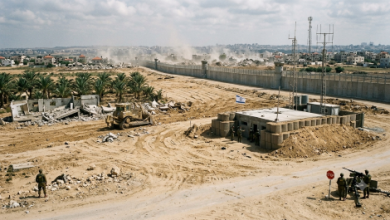
The impact of such decline will not be limited to America itself. The entire world is deeply integrated into the American system — from the global financial markets and technology networks to the security structures that define regional balances. A sudden disruption or collapse of this system could trigger worldwide instability. The dollar’s fall would shake the foundations of global trade; the decline of American innovation would affect every sector dependent on its technology, from space exploration to pharmaceuticals; and the weakening of U.S. military power could embolden regional conflicts long suppressed under its shadow. The American withdrawal from Afghanistan already demonstrated how the retreat of U.S. influence can destabilize entire regions — the vacuum it left behind reignited rivalries, empowered militant groups, and unsettled neighboring states, showing that even a partial withdrawal can cause geopolitical tremors far beyond its borders.
If America falters, the consequences will not necessarily mean freedom for others — rather, confusion for all. History has shown that when dominant powers retreat without a stable successor, chaos follows. The fall of the Roman Empire led to centuries of dark ages in Europe; the decline of British power produced two world wars before a new order emerged. Similarly, a disorderly American decline could unleash competing regional ambitions, destabilizing regions from East Asia to the Middle East and Eastern Europe.
Read: The Erosion of the Post-World War II International Order Due to Expansionist Policies
Therefore, while many may desire an end to American dominance, few truly understand the weight of its collapse. The global system — from finance to communication — runs on American architecture. Every continent, directly or indirectly, depends on its networks. Thus, any abrupt breakdown would not be a local event but a planetary shock.
The real challenge lies in managing transition. A responsible decline, accompanied by gradual redistribution of power and cooperation among emerging centers, may ensure stability. But a collapse driven by confrontation, isolationism, or internal disunity could lead to global disarray. The key question for the future, therefore, is not how to destroy American power, but how to transform it into a shared global responsibility.
The American system may indeed decline, but its legacy — both creative and destructive — will remain embedded in the world’s institutions, economies, and minds. What follows will depend on the wisdom of nations: whether they repeat the mistakes of the past, or construct a more balanced, humane order out of the ruins of dominance.
Read: The Illusion of Equality and Anarchy
_____________
 Noor Muhammad Marri is a Lawyer and Mediator based in Islamabad.