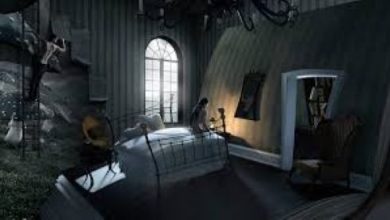
The man unbuckled his belt — the sound reached her ears and she felt as though several lashes landed sharply across her back…
By Debasree Chakraborti | Kolkata
Through the gaps in the broken fence, the light from the street seeps into the room. The shadows of the broken fence fall across her face, making it feel as if someone has clawed at the center of her forehead. Her face is not still — two restless eyes stare at the gap, trying to figure out who it is tonight.
Behind the shack, a dog let out a desperate howl from the pile of garbage. The wail of the hungry dog hit her ears, and her face turned backward. Slowly, she began to grow more and more restless. Sweat dripped off her, her whole body felt uneasy tonight.
As the shadows moving beyond the fence stilled, and there was a faint rustle, the girl began to untie the string of her pants. She knew that once the transaction was over, the closed door would open again. As she loosened the string, the rough fabric scraped against the burnt patch on her waist, making it throb with pain.
A sound rose in her throat but never came out. The stifling dark room was filled with the smell of the drain, mixed now with the acrid smell of a bidi. The girl pulled her pajama down to below her knees with her hand and stood up — warm blood suddenly gushed out from between her legs. In the darkness, the color of the blood was invisible, but its warmth stained the raw floor of the hut red like a symbol.
As the door slowly creaked open, a beam of light entered the room through the long crack of the door, dividing the entirety of her existence into two. The door opened bit by bit, and in the light stood a shadowy figure, its hair bristling behind its head. At the creak of the door, the rats inside the room began to scurry about frantically — just like the war drums that rise before a sacrifice.
By the pond, the cymbals and bells begin to ring at the Kali temple beside the police station. The evening arati must have begun — just another form of worship of the Mother. In the girl’s eyes floats the image of the goddess’s framework drifting in the pond’s water, the one that’s dragged out the day after immersion and taken away to Milu Pal’s house. The frameworks lie there in the courtyard for days on end, neglected — dogs and cats climb over them, she too used to play games of touch and run, scrambling over those abandoned idols.
Lost in these thoughts, she didn’t even notice when the door of the room had been shut. She took off her tunic, spread her legs, and lay down on the cot. Inside the room, the smell of fresh blood drew a swarm of mosquitoes, who began their buzzing song. The light seeping in through the cracks in the fence fell on the girl’s naked body — hundreds of mosquitoes hovered in that shifting half-light, their hum turning into a death song.
The man unbuckled his belt — the sound reached her ears and she felt as though several lashes landed sharply across her back. From the pain, a strangled groan rose in her throat but never found its way out. Outside the fence, a few men lingered — when the creaking sounds from within reached them, the shadows chuckled, reassured, pocketed their money, and slipped away. So the medicine worked tonight too.
In her mind, images flashed of Milu Pal’s courtyard, where the abandoned frameworks lay, where clay would be molded over them to shape the Mother’s idol. Before the festival, Milu would spend whole nights shaping the goddess. She was born on the sixth day of Durga Puja — so her grandmother named her Pratima, the idol. Watching Milu craft the idol would always bring tears to Pratima’s eyes; it reminded her of her grandmother.
She was born at the moment of the Mother’s invocation — so she was Pratima, and her heart would swell with a strange emotion. She would gaze at that creation with wide eyes, trying to understand the secret of her own birth. Again and again, one thought returned to her — why only Pratima, why couldn’t she be Durga too, the destroyer of suffering? An idol has no life — but once it is consecrated, it becomes the goddess. Did she too have no life within her? Seven years of her life had passed searching for an answer to this one question.
As these thoughts circled her mind, she felt a sharp pressure between her legs — but she could not make a sound.
No, if she made a sound, there might be another burn from the tip of the cheap bidi. Pratima could feel her torn bedsheet soaking in the warm blood — the more the pressure built, the more the blood flowed. Clenching her teeth and shutting her eyes tight, she tried to focus on the image of Milu the potter shaping an idol. Milu’s daughter, Buri, was her dearest friend — every year, it was through Buri that Pratima would learn when the goddess’s eyes would be painted.
On the night when the eyes were painted, tears of joy would flow from Pratima’s own eyes the whole night. She would feel Milu’s devotion in her heart — how much faith and reverence he poured into painting the goddess’s eyes. In her mind’s eye, Pratima could see Milu’s son, Kalu, standing with a lamp in hand, its light falling across the Mother’s face. With each stroke of the brush, the goddess’s eyes slowly came alive. A strange play of joy and emotion stirred in Pratima’s mind.
She would soak up the silence of the whole room with every breath. It was in this one-room shack that Pratima’s own “life” had been consecrated too. Thinking of this, dawn would slip in unnoticed. Soon it would be time for the festival — she would run straight from her primary school to Milu’s house. From a distance, she would stand and gaze at the rows of goddess idols standing in line, but their faces always seemed tinged with sorrow. Pratima felt that the Mother looked so sad because she was leaving her own home — the place where she was born and spent all this time — to go somewhere else. Pratima’s eyes too would fill with tears.
At first, she hadn’t understood any of it, but gradually she realized why the goddess looked so sad. Huge Lorries would come and park in front of the potter’s house. The idols of Mother Durga would be loaded onto them, and Milu the potter would be paid, counted out to the last coin, for each idol. Pratima would stare, amazed, at Milu’s content face. The same hands that had shaped the idol were selling it now, receiving the price for it — was such a thing even possible? Could anyone sell their own daughter like that?
A sound reached Pratima’s ears — some dogs were fighting and tearing at each other on the garbage pile out back. Suddenly, a biting pain shot through her chest — in moments, she heard a slick, wet sound. Pratima felt a hungry dog sink its teeth into her chest, licking and tearing at her flesh. Her whole body squirmed in revulsion — her eyes
Before her eyes floated the scene of the Maha Ashtami Anjali — everyone offering their prayers with devotion, confiding their heart’s wishes to the Mother, while the priest understood and accepted their offerings. Writhing in unbearable pain, when she could take it no longer, the girl clung to the dog. Her hands fumbled over its back until she found a scar running right down the middle of its spine.
That scar was so familiar — in the darkness, black and white images flickered before her eyes: the familiar lap of her childhood, riding on that very back to see the Durga idols, the little stick of candy placed in her tiny hand, toast biscuits — all of it disappearing now into that scar. So, in the end, she had to see this too. Ugh — her whole body was going numb with disgust.
When her father’s mill shut down, Pratima’s childhood dissolved into the dull twilight of harsh reality. One day she came back from school only to learn she would never go again — one by one, her books fed the cooking fire for lack of fuel. That’s how it began. Night after night passed with empty stomachs — no bread, no lentils. At night, her mother would go out of the house, while Pratima stayed inside with her father and brother. Some nights, on her mother’s orders, she would feed her father and brother the last bit of bread and go to bed herself with only water. That’s how it went on — when her mother would leave at night, she would come back at dawn with money. But then her mother slowly fell ill — she could no longer go out, and the terrible nights of hunger began again. From then on, she learned to spend the nights gritting her teeth against hunger.
Then one day her maternal uncle arrived at their house. Seeing her uncle brought a smile to Pratima’s face — he brought bags full of groceries from the market, all kinds of sweets too. After so long, the starving family had smiles on their faces again. When the street lights flickered on that evening, Pratima felt as if it was Diwali. Her father and brother went out to the market, while her mother made lemon tea for her uncle and told Pratima to take it inside to him in the shack.
Pratima took the cup of tea and went into the shack. As soon as she handed him the cup, her uncle pulled her down beside him, sipping the hot tea while staring at her face. When he finished the tea, he placed the empty cup under the cot.
Her uncle gripped Pratima’s hand tightly. For the first time, Pratima felt real fear — a deep, paralyzing fear. When she tried to scream out Ma, her uncle bit down on her small, flower-like lips. Her tiny legs kicked and struggled, the broken cot squeaked and creaked under the strain. Pratima could hear her mother sitting outside, listening to songs on the new radio her uncle had brought.
That’s how it began. After her uncle came, then came her father’s brother, then her mother’s brother-in-law, then the boys from the neighborhood — no one was left. The familiar faces dissolved; in their place emerged terrifying masks in a merciless reality. Instead of protest, there came burns from bidi tips and lashes from belts. Her colorful childhood faded away — Pratima turned into a sex slave. She gradually lost all sense of what relationships truly meant. Her life became a cruel joke.
When it was all over, her mother would make lemon tea and serve it. In her mother’s eyes, Pratima saw a terrifying indifference — as if nothing had happened at all, as if this was normal. But the bleeding became a daily ordeal. With her family’s cold indifference, there was no question of hospitals — not even a single medicine ever came her way.
Milu’s daughter Buri would often tell her to go to the police, but Pratima always felt it would be pointless. Going to the police would mean answering endless questions, only to be violated again in another way. Better to stay silent.
Lost in these thoughts, Pratima found herself back in her shack. Her hand was still clutching that scar. From outside, she could smell the sharp tang of her mother’s lemon tea. The demon still clung to her chest, tearing at her. She could take it no more. This Pratima could not drift toward immersion with a plate full of her family’s offerings like this — she would have to fight back. This could not go on. A terrifying strength filled her body.
She remembered the Durga she had seen during the Chhau dance on the school grounds during Durga Puja — her body shivered the same way now. She shoved the demon off her with one fierce push. The man, intoxicated by Pratima’s tender body, could not resist for long.
She always kept a knife under her pillow — Buri had given it to her. Keep this, Buri had said. You might need it. The streetlight streamed through the cracks in the fence into the room…The light from the street fell inside, and blood dripped from between Pratima’s legs onto the floor. The raw earthen floor was awash with blood. The man tried to get up but couldn’t — every time he struggled to stand, he slipped again in the pool of blood spreading across the floor.
Pratima lunged at him, knife in hand, and pinned him down by his chest. The man folded his hands, begging for mercy, but in the darkness Pratima’s eyes blazed like fire. She was born on the sixth day of Durga Puja — that’s why she was named Pratima — but she would not allow herself to be reduced, bit by bit, to a drifting, lifeless framework in the water.
In the dark, the knife flashed. In moments, its strikes shredded the demon to pieces. Outside, the radio kept playing its song — and within the four walls of the shack, the wails of the slain demon fell silent, drowned by the music.
When it was all over, Pratima opened the door and stepped outside. Her mother saw her daughter’s body covered in blood, the bloodied knife in her hand. She rushed into the shack — inside, she saw. Pratima heard her mother’s scream — Monster! You devoured your own uncle! Her mother ran outside to catch her, but Pratima was no longer there.
There was a splash in the pond. Her mother ran to the water’s edge and found the bloodied knife lying by the pond. The next day was Mahalaya — on the radio, an advertisement played the Mahalaya invocation:
Ya Devi Sarvabhuteshu Matri Rupena Samsthita,
Namastasyai Namastasyai Namastasyai Namo Namah.
Read: Mad Girl – A Shot Story from Kolkata
________________
 Debasree Chakraborti is a renowned novel writer of Bengali language. Based in Kolkata, West Bengal, India, she has done Master’s in Modern History from the Kolkata University, and authored some thirty books, mostly the novels, with historical perspective and themes. Her novel is ‘Maharaja Dahir’ that covers the history of Sindh from 662, the year of first attack on Sindh by the Arab armies till date, was published last year and translated by Nasir Aijaz into Sindhi language.