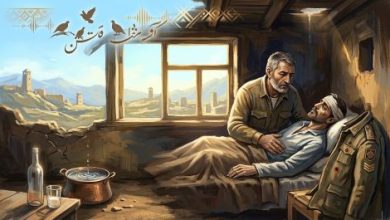
I crossed the bridge on purpose to see you; the shore remains,
But you, have stepped beyond the landscape.
Xiao Yingjie, an eminent poet from China, shares his poetry
 Xiao Yingjie, born in Shaoyang, Hunan in 1982, now lives in Nanjing and serves as the general manager of Jiangsu Provincial Cultural Relics General Store. His creations cover poetry, children’s novels, literary and art criticism, etc. He has published poetry collections such as Landscape Lessons. He is a member of the China Folklore Society, a council member of the Jiangsu Society of Aesthetics, a member of the Nanjing Writers Association, and a senior appraiser and evaluator of cultural relics and artworks.
肖英杰,1982年出生于湖南邵阳。创作涉及诗歌、儿童小说、文艺评论等。代表作诗集《山水课》。中国民间文艺家协会会员,江苏省美学学会理事会员,南京市作协会员,文物艺术品高级鉴定估价师。
Translated by Ma Yongbo

Empty Mountain
I crossed the bridge on purpose to see you; the shore remains,
But you, have stepped beyond the landscape.
Destined not to wait for your arrival. A faint mist drifts
From the damp, darkened stones, spreading outward,
Chill rising above the wind’s crest, sound clear and sharp.
Trees that have been blown by the wind and those that haven’t
Are equally silent, yet their postures, each has its own form.
I call out to you across the long embankment—
One shout, and the low water rises slightly;
Another shout, and the empty mountain rustles in response.
I mustn’t shout again, for you have already heard,
Yet deliberately stay silent, letting the leaves
Circle slowly above my head. If I dare to shout once more,
The mountains’ golden hues will bury me in an instant.
And you, like a distant stretch of water, watch quietly,
Triumphant, yet indifferent.
***
空山
专程赶过桥去看你,岸还在,
你人,已经走出风景之外。
注定等不到你来。淡雾从
潮湿发黑的石头上向外弥漫,
寒意高过风顶,声音清亮。
被风吹过的树与没被风吹过的树
沉默一样,姿态,各有模样。
冲着长长的岸堤喊你——
喊一声,枯水微微上涨;
再喊一声,空山沙沙作响。
不能再喊了,因为你已听见,
只是故意默不作声,任由叶子
头顶缓缓盘旋,冒然再喊一声,
漫山金黄,瞬间便会将我掩埋。
而你,如一抹远水,静静看着,
得意,而且淡然。
***

Toasting Together
I’ve asked someone to toast together in
Mi Fu’s Spring Mountains and Auspicious Pines,
The place is that empty pavilion beneath the pines,
Small it may be, but steady enough, never
To be swept away by some strange mountain wind. At most,
The person, the pavilion, the mountain itself, all submerged in faint mist.
Whether we know each other matters not; what counts is
We’ve noticed a few trees have traveled farther than the road,
Which makes one believe there must be a reason for this.
We cherish the chance to meet, cherish cold faces,
Cherish the black snow spent to smother passion, time and again.
On the way, trees keep leaping into view, seizing the eye,
First a row, then a stretch, silent and speechless,
Not waving from afar, but hurrying to retreat.
The blackbirds flying by create symmetry with the lofty water surface,
Their hue unfixed, a blend of shades absorbed by the gaze,
Secretly aligning with the birds’ forms and light’s shadows.
We sit in the pavilion, talking, half reconstructing facts,
Half mimicking our hearts, pretending to be each other’s friends,
To be part of the painting, with a sheep buried inside,
Grains merging into the dark landscapes linked to waterfalls,
Carried back in earthen wine flasks. We are both drunk,
After waking up, you and I have become the pair of green peaks in the painting.
[Note: Spring Mountains and Auspicious Pines is a paper painting by Mi Fu, a calligrapher and painter of the Song Dynasty. The painting depicts a mountain forest scene veiled in clouds and mist: white clouds fill the valleys, distant mountains tower above the cloud layer, and several ancient pine trees in the foreground loom faintly in the mist. There is a pavilion under the pines, empty with no one inside.]
***
对饮
约人去米芾《春山瑞松图》里对饮,
地点,是松下那个空空无人的亭子,
小是小了点,但足够稳当,绝不会
被一阵怪异的山风吹走,最多是,
人,亭子,山体,俱湮没淡雾之中。
人,认识与否并不重要,重要的是,
我们注意到有几棵树走的比路要远,
这让人相信,如此,必事出有因。
我们珍惜见面机会,珍惜冰冷的脸,
珍惜场场为覆盖热情所耗费的黑雪。
赶去途中不断有树跃出,占据视线,
先是一排,接着是成片,不言不语,
不为远远招手,只为匆匆往后退却。
借助黑鸟飞过用以对称高远的水面,
颜色不固定,由目光所吸收的成色
杂合而成,与鸟体和光影存在暗合。
我们坐亭子里说话,一半重构事实,
一半模仿内心,假设是彼此的友人,
是画面一部分,将一只羊埋藏体内,
五谷,汇入与瀑布相连的黑色山水,
用陶制的酒瓶搭载送回。我们皆醉。
醒来后,你我,已然画里那对青峰。
[注解:《春山瑞松图》是宋代书画家米芾的一幅纸本画,图中描绘云雾掩映的山林景色,白云满谷,远山耸立云端,近处古松数株隐显于雾气中。松下有亭,空无一人。]
***

Notes on Sitting Quietly
If it’s May, you don’t need to do anything,
All you have to do is let things complete themselves.
Sit quietly, let the wind blow across your neck and back,
You, close your eyes to contemplate, or take a peaceful nap.
Time won’t be wasted; it crowds in trees, in stones,
People strolling by thus pass through life after life.
Around you, those things that are dead or thriving,
They merely choose to resist or keep drinking the rain.
What can be affirmed at this moment is that those dangerous
And seemingly gentle existences, they sit in the same boat,
Now the waves are turbulent, and in a while, calm and peaceful.
Some details that cannot be ignored and need to be reminded—
When a leaf falls, another one will grow, or more.
If you miss a gust of wind, you miss an entire life.
And sitting quietly is like killing in the heart, the scene
Is clear and concise, as if nothing has ever happened.
***
静坐记
如果是五月,你不需要干任何事,
要做的,是让事情自己去完成。
静坐,任风吹过脖子与后背,
你,闭眼参悟,或是小憩静睡。
时间不会浪费,拥挤树里,石头里,
闲步经过的人因此经过一生又一生。
身边,那些死去或正生机勃勃的事物,
它们仅是选择抗拒或继续吸食雨水。
这时能够肯定的,是那些看似凶险与
看似温柔的存在,它们坐一条船上,
这会儿波涛汹涌,过会儿,风平浪静。
还有些不能忽略的细节,需要提示——
落过一片叶子会再长一片,或者更多,
错过一阵风,你就错过整整一生。
而静坐,就是在内心里杀人,场景
清清落落,如同什么,都没有发生。
_________________